

Over 60 percent of australian adults begin to notice difficulties with close-up vision once they reach their forties. As these changes appear, even everyday tasks like reading a menu or sending a text can quickly become frustrating. Prescription reading glasses offer a personalised solution that goes beyond what basic store-bought pairs provide. Discover how the right eyewear supports australian lifestyles and delivers sharper comfort tailored specifically to your needs.
Table of Contents
- What Prescription Reading Glasses Are
- Types of Prescription Reading Glasses Explained
- Everyday Benefits and Practical Applications
- Choosing the Right Prescription Strength
- Common Risks and How to Avoid Them
Key Takeaways
| Point | Details |
|---|---|
| Understanding Prescription Reading Glasses | These glasses are custom-made to correct vision issues associated with presbyopia and age-related changes, offering tailored lens power. |
| Types of Lenses | Common lens types include single-vision, bifocals, and progressive lenses, each catering to different visual needs and lifestyles. |
| Importance of Professional Guidance | Regular eye examinations and consultations with optometrists are crucial for determining the correct prescription strength and ensuring optimal visual comfort. |
| Risks of Incorrect Usage | Using improper lens strength or poorly fitting glasses can lead to discomfort and long-term vision issues, highlighting the need for professional evaluation. |
What Prescription Reading Glasses Are
Prescription reading glasses are specialised visual aids designed to help individuals who experience difficulty reading or performing close-up tasks due to age-related vision changes. Unlike standard over-the-counter reading glasses, these precision optical tools are custom-made to address specific vision correction needs based on individual prescriptions.
These glasses are typically recommended for people experiencing presbyopia, a natural vision condition that develops around age 40-45. As we age, the eye’s lens becomes less flexible, making it challenging to focus on nearby objects and text. Understanding the types of reading glasses can help individuals select the most appropriate vision correction solution.
Prescription reading glasses offer several distinct advantages over generic reading glasses:
- Precise lens power tailored to individual vision requirements
- Corrected for astigmatism and other specific vision irregularities
- Enhanced optical quality and clarity
- Available in various frame styles and designs
- Customisable for different working distances
Typically, an optometrist determines the exact lens prescription through comprehensive vision testing. This ensures that the reading glasses provide optimal visual correction, reducing eye strain and improving overall reading comfort and performance. The prescription takes into account factors like near vision strength, potential astigmatism, and individual eye health characteristics.
Types of Prescription Reading Glasses Explained
Prescription reading glasses come in several distinct types, each designed to address specific vision correction needs and lifestyle requirements. Understanding lens types for reading glasses can help individuals make informed decisions about their visual health.
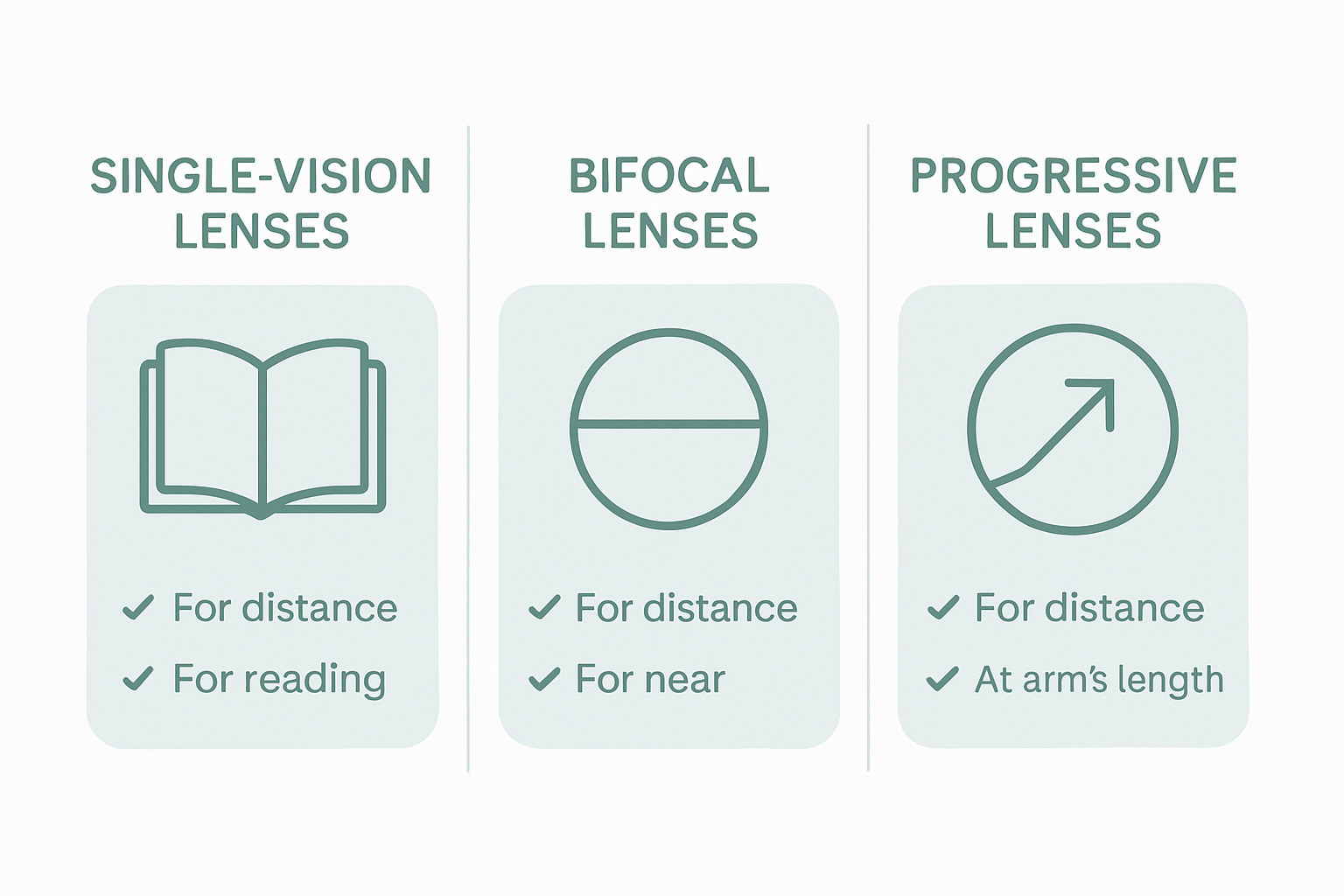
The most common types of prescription reading glasses include single-vision lenses, bifocals, and progressive lenses. Single-vision lenses provide a consistent lens power across the entire lens, ideal for people who need correction specifically for close-up tasks like reading or computer work. These glasses are straightforward and work best for individuals with presbyopia who do not require distance vision correction.
Bifocal lenses offer a more complex solution, featuring two distinct lens powers in a single pair of glasses. Typically, these lenses have a visible line separating the near-vision correction zone at the bottom from the distance vision zone at the top. This design allows wearers to switch between reading and distance vision by shifting their gaze across different lens sections.
Progressive lenses represent the most advanced type of prescription reading glasses. Unlike bifocals with distinct zones, progressive lenses feature a gradual power transition from distance to near vision. This seamless design provides a more natural visual experience, eliminating abrupt vision changes and reducing eye strain. These lenses are particularly beneficial for individuals who require multiple vision corrections and want a more aesthetically pleasing option without visible lens lines.
Additionally, prescription reading glasses can be customised with various lens coatings and treatments:
- Anti-reflective coating to reduce glare
- Blue light filtering for digital screen protection
- Scratch-resistant treatments
- UV protection
- Photochromic options that darken in sunlight
Choosing the right type of prescription reading glasses depends on individual vision needs, lifestyle, and personal preferences. Consulting with an optometrist can help determine the most suitable lens type and ensure optimal visual correction and comfort.
Everyday Benefits and Practical Applications
Prescription reading glasses offer transformative advantages that extend far beyond simple vision correction, dramatically improving quality of life for individuals experiencing age-related visual changes. How reading glasses improve reading reveals the profound impact these specialised visual tools can have on daily activities and personal comfort.
Professional productivity represents one of the most significant practical applications of prescription reading glasses. Knowledge workers, writers, accountants, designers, and professionals who spend considerable time reading documents, working on computers, or performing detailed tasks benefit immensely from precisely calibrated vision correction. These glasses reduce eye strain, minimise headaches, and enable sustained focus during complex cognitive tasks that require extended close-up visual concentration.

In personal life, prescription reading glasses unlock numerous everyday capabilities. From enjoying newspapers and books to threading needles, managing household finances, crafting, or pursuing hobbies like knitting and model building, these glasses restore independence and pleasure to activities that might otherwise become frustratingly difficult. The ability to read medication labels, recipe instructions, or personal correspondence without squinting or holding documents at arm’s length can be life-changing for many individuals.
The versatility of prescription reading glasses extends across multiple life domains:
- Enhanced digital device usage (smartphones, tablets, computers)
- Improved crafting and hobby engagement
- Better medication management
- More comfortable reading experiences
- Increased confidence in professional and personal settings
- Reduced eye fatigue and associated headaches
Beyond functionality, these glasses also contribute to psychological well-being. By maintaining visual independence and enabling continued engagement with cherished activities, prescription reading glasses help individuals maintain a sense of autonomy and connection, counteracting potential feelings of age-related limitation and supporting overall quality of life.
Choosing the Right Prescription Strength
Selecting the appropriate prescription strength for reading glasses requires careful consideration and professional guidance. Understanding lens strength for reading glasses provides critical insights into matching vision correction with individual needs, ensuring optimal visual performance and comfort.
The process of determining prescription strength begins with a comprehensive eye examination conducted by a qualified optometrist or ophthalmologist. These vision professionals use sophisticated diagnostic tools to measure near vision acuity, assessing how well you can see objects at close range. Factors such as age, existing vision conditions, and specific daily visual tasks all play crucial roles in determining the precise lens power required for your reading glasses.
Prescription strength is typically measured in diopters, a standardised unit representing the lens’s corrective power. Most adults experiencing presbyopia will require reading glasses with strengths ranging from +1.00 to +2.50 diopters. However, individual needs vary significantly. Some people might need lower strengths for occasional reading, while others require more powerful corrections for extended close-up work like detailed crafting or extensive computer use.
Key considerations when selecting prescription strength include:
- Age and natural vision changes
- Typical reading and viewing distances
- Type of work or hobbies requiring close-up vision
- Existing vision conditions like astigmatism
- Comfort and eye strain levels
- Frequency of close-up visual tasks
It’s essential to understand that prescription strength is not a one-size-fits-all solution. Regular eye examinations, typically recommended every two years for adults over 40, help track vision changes and ensure your reading glasses continue to provide optimal correction. Wearing incorrectly powered glasses can lead to eye strain, headaches, and potential long-term vision complications.
Common Risks and How to Avoid Them
Prescription reading glasses, while incredibly beneficial, can pose certain risks if not selected and used correctly. Best reading glasses for mature men highlights the importance of understanding potential vision challenges and taking proactive measures to protect eye health.
One of the most significant risks associated with prescription reading glasses is using incorrect lens strength. Wearing glasses with inappropriate magnification can lead to eye strain, persistent headaches, and potential long-term vision complications. This risk is particularly pronounced for individuals who purchase over-the-counter reading glasses without professional consultation or who continue using outdated prescriptions. Symptoms of incorrect lens strength include temporary blurred vision, eye fatigue, difficulty focusing, and recurring headaches during close-up tasks.
Another critical risk involves improper fit and alignment. Reading glasses that do not sit correctly on the face can cause uneven vision correction, leading to eye muscle tension and potential asymmetrical vision development. Cheap, poorly manufactured glasses might have manufacturing inconsistencies that create visual distortions, potentially exacerbating existing vision problems. Professional optometrists recommend regular fittings and adjustments to ensure optimal lens positioning and comfort.
Key strategies to mitigate risks include:
- Annual comprehensive eye examinations
- Professional lens strength assessment
- Selecting glasses from reputable providers
- Checking for proper frame alignment
- Monitoring vision changes
- Replacing glasses when prescription becomes outdated
- Using glasses specifically designed for intended tasks
Individuals with pre-existing vision conditions such as astigmatism, glaucoma, or diabetic retinopathy face additional complexities. These conditions require specialised lens designs and more frequent professional monitoring to prevent potential vision deterioration. Consulting with an eye care professional becomes crucial in managing these nuanced visual health requirements and selecting appropriate prescription reading glasses that provide safe, effective vision correction.
Enhance Your Daily Vision with Stylish Prescription Reading Glasses
Living with presbyopia or other close-up vision challenges can make everyday tasks feel frustrating and tiring. Prescription reading glasses tailored to your exact needs provide clear, comfortable vision whether you are reading, working on your computer, or enjoying hobbies. The right glasses reduce eye strain and allow you to focus effortlessly on the moments that matter most.
Discover our wide range of options including fashionable Retro Reading Glasses, classic Rectangular Reading Glasses, or timeless Round Reading Glasses designed to suit every style and prescription need.
Don’t let vision difficulties hold you back. Visit Ministry of Sight today to explore expertly crafted prescription reading glasses with free shipping across Australia and special offers available now. Find your perfect fit and regain the joy of clear, easy reading right now.
Frequently Asked Questions
What are prescription reading glasses?
Prescription reading glasses are custom-made visual aids designed to correct vision for close-up tasks, specifically for individuals experiencing presbyopia and other age-related vision changes.
How do I choose the right type of prescription reading glasses?
Choosing the right type involves consulting with an optometrist to evaluate your vision needs, lifestyle, and the types of tasks you engage in, whether they require single-vision, bifocal, or progressive lenses.
What benefits do prescription reading glasses offer in daily life?
They enhance clarity for close-up tasks, reduce eye strain, improve productivity, and help maintain independence in daily activities such as reading, crafting, or using digital devices.
How often should I have my prescription for reading glasses updated?
It’s recommended to have an eye examination every two years, or more frequently if you notice changes in your vision, to ensure your prescription is accurate and your glasses provide optimal correction.
Recommended
- Understanding the Role of Reading Glasses for Adults – ministry of sight
- Understanding Your Reading Glasses Checklist for Better Vision – ministry of sight
- 7 Essential Tips for Stylish Glasses for Over 40s Men – ministry of sight
- Understanding the Types of Reading Glasses for Better Vision – ministry of sight
- 可穿戴健康设备:助力加拿大中老年健康生活 – Real Healthy Haven


