

Staring at screens all day has become the norm for work and play, but it is quickly taking a toll on our eyes and leaving many Aussies feeling foggy and sore. More than 70 percent of people who use computers for work report symptoms linked to digital eye strain, including headaches and blurry vision. Most people think grabbing any cheap readers off the shelf will fix it, but the real solution is reading glasses made for computer use and they do a lot more than just make words look bigger.
Table of Contents
- The Importance Of Reading Glasses For Computer Use
- How Reading Glasses Work: Understanding Prescriptions
- Key Features To Look For In Computer Reading Glasses
- The Impact Of Screen Time On Eye Health
- Choosing The Right Reading Glasses For Your Needs
Quick Summary
| Takeaway | Explanation |
|---|---|
| Use reading glasses for computer work. | They help reduce eye strain, providing better visual comfort during long screen time. |
| Ensure correct screen positioning. | Position your screen at an arm’s length to minimise digital eye strain and improve posture. |
| Invest in blue light filtering lenses. | These lenses protect your eyes from harmful blue light emitted by digital devices, aiding long-term eye health. |
| Take regular eye breaks. | Implementing breaks can reduce the risk of fatigue and help maintain visual clarity during extensive screen use. |
| Get regular eye examinations. | Routine check-ups ensure your glasses fit your current vision needs and help track changes in eye health. |
The Importance of Reading Glasses for Computer Use
Computer screens have become an integral part of modern work and leisure, but prolonged screen time can significantly impact visual comfort and eye health. Reading glasses specifically designed for computer use are more than just a fashion accessory they are a critical tool for maintaining eye wellness and preventing long-term vision strain.
Understanding Digital Eye Strain
Digital eye strain occurs when your eyes become fatigued from extended screen exposure. Symptoms include blurred vision, headaches, neck tension, and dry eyes. The blue light emitted by digital screens and the constant focusing required for close-up work can cause significant visual discomfort. Computer Readers: Protecting Your Vision offers more insights into managing these challenges.
Key factors contributing to digital eye strain include:
- Incorrect screen positioning
- Inadequate lighting conditions
- Uncorrected vision problems
- Prolonged screen time without breaks
How Reading Glasses Mitigate Computer Vision Problems
Reading glasses for computer use are engineered to address specific visual challenges. They feature specialized lens coatings that reduce blue light exposure and provide optimal magnification for intermediate screen distances.
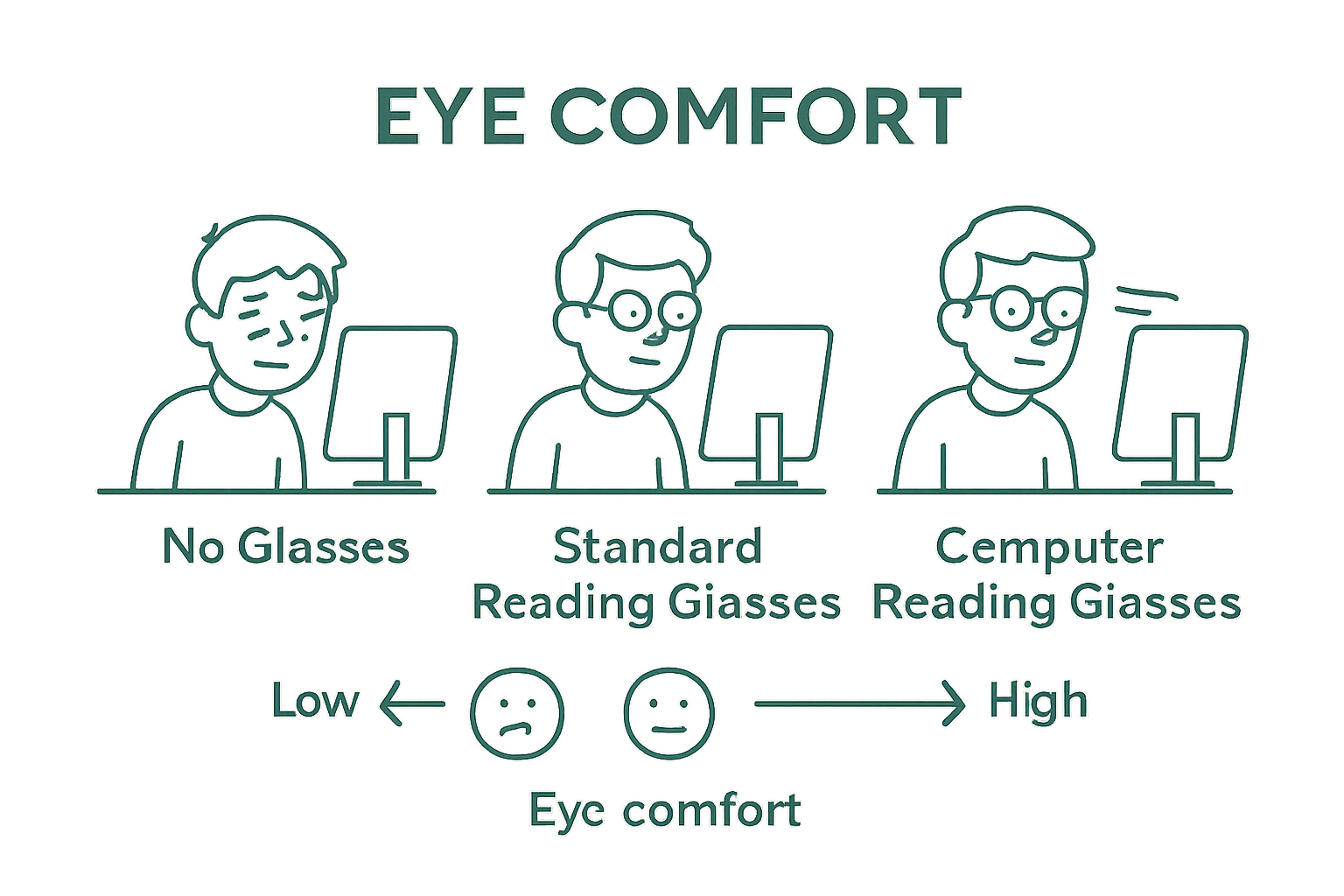 Unlike standard reading glasses, computer readers are calibrated to the typical arm’s length of digital screens, typically around 50-70 centimetres.
The benefits of using proper computer reading glasses include:
- Reduced eye fatigue
- Improved visual clarity
- Better posture during screen work
- Decreased likelihood of developing long-term vision problems
By investing in quality reading glasses designed specifically for computer use, you protect your vision and enhance overall visual comfort during extended digital interactions.
The table below compares standard reading glasses and computer reading glasses, helping you understand the key differences and why computer-specific options are recommended for digital work environments.
| Feature | Standard Reading Glasses | Computer Reading Glasses |
|---|---|---|
| Focal Distance | Designed for close reading (30–40 cm) | Optimised for intermediate distance (50–70 cm) |
| Blue Light Protection | Rarely included | Usually includes blue light filtering |
| Lens Coatings | Basic, sometimes anti-scratch | Multi-coated, anti-glare, blue light blocking |
| Intended Use | Books, printed materials | Digital screens, workstations, devices |
| Ergonomic Design | Standard frame shapes | Lightweight, adjustable nose pads, flexible arms |
| Benefit During Screen Time | Can cause eye strain with prolonged use | Reduces eye fatigue and improves comfort |
| Regular eye examinations and understanding your unique vision requirements remain crucial in maintaining optimal eye health in our increasingly digital world. |
How Reading Glasses Work: Understanding Prescriptions
Reading glasses are precision optical instruments designed to compensate for natural vision changes, particularly as people age. Understanding how these glasses work requires insight into the complex relationship between eye physiology and visual correction.
The Science Behind Reading Glass Prescriptions
Prescription reading glasses address a common age-related vision condition called presbyopia, where the eye’s natural lens becomes less flexible. This reduced flexibility makes it challenging to focus on close-up objects, such as books, smartphones, or computer screens. Understanding the Role of Reading Glasses for Adults provides deeper insights into this natural vision progression.
Key elements of reading glass prescriptions include:
- Measurement in diopters (+1.00 to +3.50)
- Specific correction for near-vision focusing
- Individual assessment of vision requirements
- Potential customisation for astigmatism
Decoding Your Reading Glass Prescription
Reading glass prescriptions are not one-size-fits-all solutions. They are precisely calculated measurements that indicate the lens strength required to compensate for your specific vision needs. The prescription strength determines how much magnification is needed to restore clear near vision.
Important prescription considerations include:
- Higher numbers indicate stronger lens magnification
- Prescriptions can differ between left and right eyes
- Regular eye examinations help track vision changes
- Over-the-counter readers may not suit complex vision requirements
Professional optometrists conduct comprehensive eye examinations to determine the most appropriate reading glass prescription. These assessments consider factors beyond simple magnification, including potential astigmatism, overall eye health, and specific visual demands of your daily activities. By understanding your unique vision profile, you can select reading glasses that provide optimal visual comfort and clarity.
Key Features to Look for in Computer Reading Glasses
Computer reading glasses represent a sophisticated solution designed to address the unique visual challenges posed by digital screens. Unlike traditional reading glasses, these specialised optical tools are engineered to provide targeted visual support during extended digital interactions.
Essential Optical Technologies
The most advanced computer reading glasses incorporate multiple sophisticated features to enhance visual comfort. Blue light filtering technology plays a crucial role in protecting eyes from potentially harmful high-energy light emitted by digital screens. Wearing Reading Glasses Improved My Productivity explores how these technological innovations can transform digital workspace experiences.
Key optical technologies include:
- Multi-coated lenses for reduced glare
- Precise intermediate distance focusing
- Blue light blocking capabilities
- Anti-reflective surface treatments
Ergonomic Design Considerations
Beyond optical technologies, the physical design of computer reading glasses significantly impacts their effectiveness. Frame materials, lens curvature, and weight distribution contribute to overall wearing comfort during prolonged screen time. Lightweight materials like titanium or flexible polymers provide durability without compromising comfort.
Important ergonomic features to consider:
- Adjustable nose pads for personalised fit
- Flexible temple arms to reduce pressure
- Balanced weight distribution
- Scratch-resistant lens coatings
Quality computer reading glasses go beyond simple magnification. They represent a holistic approach to visual wellness, integrating advanced optical technologies with thoughtful ergonomic design. By understanding these critical features, users can select glasses that not only improve visual clarity but also protect long-term eye health during our increasingly digital lifestyle.

The Impact of Screen Time on Eye Health
In our increasingly digital world, screens have become an unavoidable part of daily life. From smartphones and tablets to computers and televisions, our eyes are constantly exposed to digital displays that can significantly impact visual wellness and long-term eye health.
Understanding Digital Eye Strain
Digital eye strain represents a complex physiological response to prolonged screen exposure. When our eyes focus on digital screens, they must work harder than during traditional reading or viewing activities. The constant micro-movements, blue light emission, and reduced blinking rate contribute to visual fatigue and potential long-term eye complications. Understanding Reading Glasses and Migraines: A Clear Guide provides additional context on how digital strain can affect overall visual comfort.
Key physiological responses to extended screen time include:
- Reduced natural blinking frequency
- Increased eye muscle tension
- Decreased tear production
- Heightened visual processing demands
Long-Term Visual Health Considerations
Prolonged screen exposure goes beyond immediate discomfort, potentially contributing to more significant vision-related challenges. The cumulative effect of consistent digital interaction can accelerate age-related vision changes and increase the risk of developing chronic eye conditions.
Critical factors affecting eye health during screen use include:
- Inappropriate screen positioning
- Inadequate ambient lighting
- Uncorrected vision problems
- Insufficient visual breaks
Protecting your eyes requires a proactive approach that combines technological awareness, ergonomic practices, and appropriate visual correction. Regular eye examinations, using specialised computer reading glasses, and implementing strategic screen breaks can significantly mitigate the potential negative impacts of our digital lifestyle on long-term eye health.
Choosing the Right Reading Glasses for Your Needs
Selecting reading glasses is a nuanced process that requires understanding your unique visual requirements, lifestyle demands, and specific vision challenges. These specialised optical tools are not merely fashion accessories but critical instruments for maintaining visual comfort and productivity.
Assessing Your Vision Profile
Determining the right reading glasses begins with a comprehensive understanding of your individual vision characteristics. Factors such as age, existing vision conditions, and daily digital interaction patterns play crucial roles in selecting appropriate eyewear. Understanding the Reading Glasses Fit Guide offers additional insights into personalising your vision correction approach.
Key considerations for vision assessment include:
- Current prescription strength
- Specific visual challenges
- Dominant eye characteristics
- Lifestyle and screen time patterns
Matching Glasses to Personal Requirements
Reading glasses are not universal solutions but precision instruments tailored to individual needs. Different lens technologies address specific visual challenges, from blue light filtering for digital screens to multifocal designs for complex vision requirements. The magnification strength represents a critical selection parameter, typically ranging from +1.00 to +3.50 diopters.
Important selection criteria encompass:
- Precise intermediate distance focusing
- Compatibility with digital screen use
- Comfort during extended wear
- Ergonomic frame design
Professional optometrists recommend regular eye examinations to ensure your reading glasses evolve alongside your changing vision. By understanding your unique visual profile and selecting glasses that complement your lifestyle, you can maintain optimal visual performance and comfort in an increasingly digital world.
Take the Strain Out of Screen Time With the Right Computer Reading Glasses
Do your eyes ache or blur after long hours at the computer? You are not alone. Digital eye strain and poor posture from unsuitable eyewear are all too common, as discussed in our guide on reading glasses for computer use. The right pair of reading glasses is your solution for clearer vision, better comfort, and lasting eye health.
Rectangular Reading Glasses from Ministry of Sight are designed to give you precise focusing distance and advanced blue light protection, perfect for reducing the headaches and tired eyes linked to heavy digital work.

Do not put up with eye fatigue another day. Choose from our range of high-quality, stylish options for men and women, and see the difference a tailored fit makes. Visit Ministry of Sight to find your perfect frames or explore our Glasses Frames collection. Upgrade your screen time comfort now.
Frequently Asked Questions
What are reading glasses for computer use?
Reading glasses for computer use are specialized eyewear designed to reduce digital eye strain by providing optimal magnification for intermediate distances typical of digital screens. They often include blue light filtering technology and ergonomic features to enhance visual comfort during extended screen time.
How do reading glasses help reduce digital eye strain?
Reading glasses help reduce digital eye strain by improving visual clarity at the distance of computer screens, generally between 50-70 centimetres. They also feature coatings that block blue light and reduce glare, which can contribute to eye fatigue and discomfort during prolonged digital interactions.
What should I look for when choosing reading glasses for computer use?
When choosing reading glasses for computer use, look for features such as blue light filtering, anti-reflective lenses, ergonomic design, and precise intermediate distance focusing. Additionally, consider frame materials that ensure comfort during long periods of wear.
How often should I have my vision checked for reading glasses?
It is recommended to have your vision checked at least once a year or whenever you notice changes in your eyesight. Regular eye examinations ensure your reading glasses prescription is up to date and meets your current visual needs, especially with increasing screen time.
Recommended
- Computer Readers: The Secret to Comfortable Screen Time – ministry of sight
- Understanding the Role of Reading Glasses for Adults – ministry of sight
- Understanding the Reading Glasses Fit Guide for Better Vision – ministry of sight
- Wearing Reading Glasses Improved My Productivity, Here’s How – ministry of sight


