

TL;DR:
- Proper frame fit ensures glasses stay comfortably in place and flatter your facial features. Measuring key dimensions like bridge width, temple length, and face width helps select the most accurate and comfortable fit. Prioritizing fit enhances both style confidence and eye health, making everyday wear effortless.
You finally find a pair of glasses you love the look of, but within an hour they’re sliding down your nose, digging into your temples, or sitting so wide they make your face look swamped. Sound familiar? This is one of the most common frustrations for Australians buying eyewear, and the culprit is almost always the same: poor frame fit. Getting the fit right is what separates glasses you’ll wear every single day from ones gathering dust in a drawer. This guide breaks down everything you need to know about frame fit so your next pair looks great and feels effortless from the first wear.
Table of Contents
- What does frame fit actually mean?
- How do you measure frame fit?
- Frame styles and face shapes: finding your match
- Common frame fit mistakes and how to avoid them
- Why frame fit matters more than ever: an insider perspective
- Find your perfect frame fit at Ministry of Sight
- Frequently asked questions
Key Takeaways
| Point | Details |
|---|---|
| Frame fit defined | Frame fit is how glasses sit and feel on your face—affecting comfort, function, and style. |
| Key measurements matter | Bridge width, temple length, and lens size are crucial components for the right fit. |
| Style meets comfort | The best frames balance your personal look with how well they fit your facial features. |
| Avoid fitting mistakes | Ignoring fit can lead to discomfort or poor vision, so always double-check key measurements. |
What does frame fit actually mean?
To build a foundation, let’s break down exactly what “frame fit” means in practice.
Frame fit is simply how a pair of glasses physically sits on your face. It covers the relationship between your facial dimensions and the key measurements built into every frame. When those dimensions are well matched, your glasses stay in place, feel comfortable for hours, and flatter your features. When they’re not, you’ll know quickly.
The key measurements involved in frame fit include bridge width, temple length, lens width, and total frame width. Each one plays a distinct role:
- Bridge width is the distance between the two lenses, measured in millimetres. It sits directly on your nose. Too narrow and it pinches; too wide and your glasses slip constantly.
- Lens width refers to the horizontal width of a single lens. This determines how much of your field of vision is covered and contributes to the overall look.
- Frame width is the total width from one outer edge to the other. This should roughly match the width of your face for a balanced appearance.
- Temple length is the measurement of the arm that reaches from the front of the frame back to (and behind) your ear. A temple that’s too short causes pressure; too long and the frame droops.
Every pair of glasses carries a series of numbers stamped on the inside of one temple arm. They follow a standard format: lens width / bridge width / temple length. A frame marked 52 □ 18 140, for example, has a 52mm lens, an 18mm bridge, and 140mm temples. Understanding this makes comparison shopping far easier, whether you’re browsing in store or online. You can also refer to a vintage size conversion guide to cross-reference different eras and brands, which is especially useful when shopping secondhand or for vintage-style frames.
Here’s a quick reference for standard adult frame sizing:
| Measurement | Small fit | Medium fit | Large fit |
|---|---|---|---|
| Lens width | 44 to 48mm | 49 to 53mm | 54mm and above |
| Bridge width | 14 to 17mm | 17 to 19mm | 19mm and above |
| Temple length | 130 to 135mm | 135 to 145mm | 145mm and above |
| Frame width | 120 to 128mm | 128 to 138mm | 138mm and above |
Poor fit has real consequences beyond mild annoyance. Glasses that sit too tight leave red marks on your nose and temples. Frames that sit too loosely slip forward constantly, forcing you to push them up dozens of times a day. When choosing glasses frames, understanding these measurements first saves a lot of trial and error.

How do you measure frame fit?
Once you know what frame fit involves, the next step is understanding how to measure and compare options.
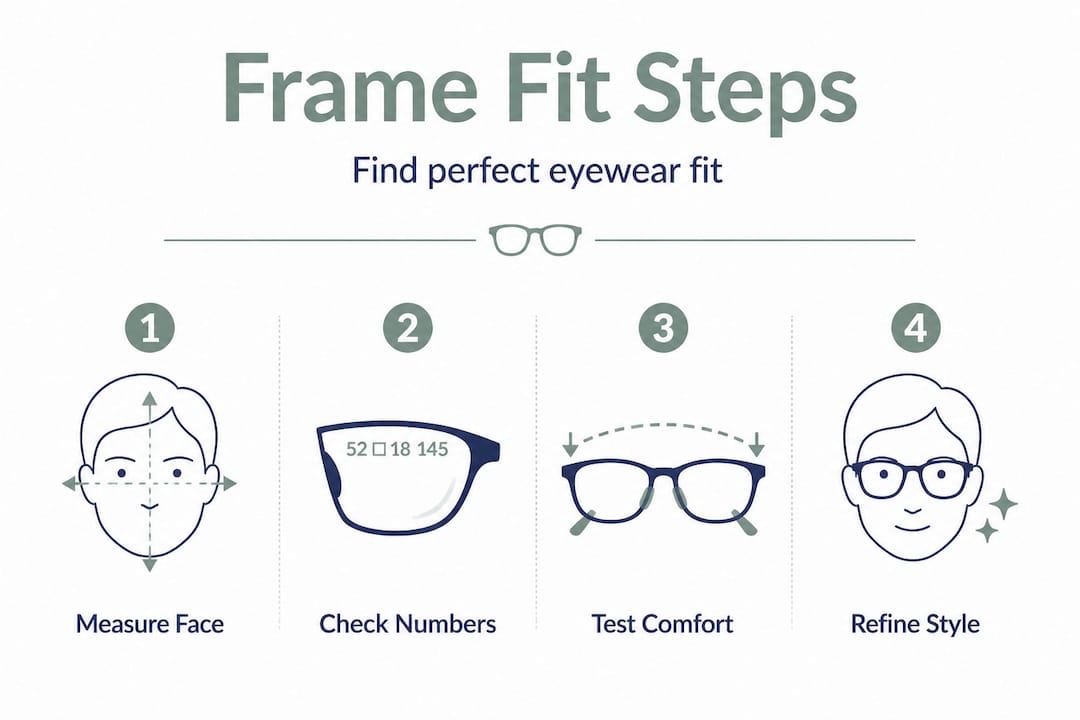
The easiest starting point is a pair of glasses you already own and find comfortable. Flip them over and read the numbers stamped on the inside of the arm. These give you a reliable reference point for any new frames you consider. If your current pair sits perfectly, aim to stay within a millimetre or two of those measurements.
Here’s a step-by-step process for comparing your face size to frame size:
- Measure your face width. Using a soft tape measure or a ruler held against a mirror, measure the widest point of your face from temple to temple. This is typically 130 to 145mm for adults.
- Check the frame width. This should sit within roughly 5mm of your face width on either side. If it’s much wider, the frames will look oversized; much narrower and they’ll feel cramped.
- Assess the bridge. Pinch your thumb and forefinger across the top of your nose where glasses would naturally sit. That gap gives you a rough sense of the bridge width you need.
- Consider temple length. The arms should curve gently over your ears and rest comfortably, not gripping tightly or dangling.
- Look at eye position. When wearing the frame, your pupils should be roughly centred in the lens, both horizontally and vertically. Off-centre eye placement can affect your vision, especially with prescription lenses.
Frame sizing information on retail products is standardised but can vary slightly between manufacturers, so always check numbers rather than relying on labels like “small” or “large.” These labels are inconsistent across brands.
Australians also deal with a few specific conditions that affect fit. High UV exposure means many people wear glasses outdoors for extended periods, so a frame that slips in the heat or humidity becomes a genuine problem. If you’re active, whether at the beach, on a bike trail, or at a footy match, you need a snugger fit than someone who wears glasses only at a desk.
For those who wear reading glasses, a proper fit is just as critical. Our reading glasses fit checklist walks through all the key checks, and if you’re new to readers, reading glasses comfort tips covers how to wear them correctly to avoid fatigue.
Pro Tip: If you’re buying online and are unsure of your measurements, use a piece of string and a ruler to replicate a soft tape measure. Measure twice and compare against the product specs before you add to cart.
Frame styles and face shapes: finding your match
Measuring is only half the equation. Style and face shape finish the picture.
Face shape is one of the most useful guides when selecting frames because it helps predict which shapes will balance or complement your natural proportions. Practical frame selection advice consistently reinforces that matching frame style to face shape is just as important as getting the measurements right.
There are six commonly recognised face shapes: oval, round, square, heart, diamond, and oblong. Here’s how popular frame styles interact with them:
| Face shape | Best frame styles | Styles to approach with care |
|---|---|---|
| Oval | Most styles work well | Very small or narrow frames |
| Round | Angular, rectangular frames | Round or small circular frames |
| Square | Round, oval, curved frames | Very angular or wide square frames |
| Heart | Oval, light bottom-heavy frames | Top-heavy or very wide frames |
| Diamond | Oval, cat-eye, rimless | Narrow rectangular frames |
| Oblong | Wide or deep frames, strong brow lines | Very small or narrow frames |
Beyond face shape, frame width has a strong visual effect on perceived face width. A frame that extends past the edges of your face makes it look broader; one that sits narrower than your face can appear to compress it. This is something that a retro sunglasses comparison illustrates well, showing how the same person looks dramatically different in frames of varying widths.
For practical style guidance, here’s what works well for some of the most common scenarios in Australia:
- Oversized frames suit oval and oblong faces particularly well and offer excellent sun protection for outdoor wear.
- Round metal frames complement square and angular jawlines by softening the overall look.
- Cat-eye or upswept frames add lift to rounder or fuller faces and have a timeless elegance.
- Browline frames (where the top half of the frame is bold and the lower half is thin or rimless) work beautifully on heart and diamond shapes.
Explore on-trend frame shapes if you’re after current styles, or check out men’s glasses style tips for a focused breakdown of frame choices for men. Style preferences are personal, but frame fit should always come first because a beautifully designed frame that doesn’t sit right will never look as good as it should.
Common frame fit mistakes and how to avoid them
With the basics under your belt, it’s just as important to know where most people go wrong.
The single most common mistake is choosing glasses based entirely on how they look on someone else, in a photo, or on a mannequin, without considering how those measurements translate to your own face. What looks stunning on a model with a narrow face can overpower someone with broader features, even if the style is identical.
Poor frame fit can cause headaches, eyestrain, red marks on the nose and temples, and even neck stiffness from constantly tilting your head to compensate. These aren’t minor inconveniences. For people who wear glasses all day, they compound into real daily discomfort.
Here’s a numbered list of the most frequent mistakes and how to sidestep them:
- Ignoring the numbers. Many buyers focus entirely on how a frame looks and skip the measurements entirely. Always check lens width, bridge width, and temple length before purchasing.
- Buying for photos, not daily wear. A wide, dramatic frame might look incredible in photos but feel unbearable after two hours of wear. Think about your typical day and how long you’ll actually have them on.
- Assuming “one size fits all.” This myth persists, but every face is different. Sizing varies significantly between brands, so always confirm measurements rather than trusting size labels.
- Skipping the nose bridge check. The bridge fit is often overlooked but it controls the entire resting position of the frame. A bridge that’s even 2mm off will cause glasses to tilt, slip, or dig in.
- Not accounting for adjustment. Frames can be adjusted by a professional optician, but only within limits. If the fit is significantly wrong from the start, no amount of bending will fix it properly.
“The frame that fits is the frame you’ll actually wear. The most stylish pair in the world won’t help your vision or your confidence if you’re constantly readjusting it.”
Pro Tip: When shopping online, look for retailers that provide a full measurement breakdown in the product description. If those numbers aren’t listed, ask before you buy.
For a complete breakdown of styles and their fitting requirements, the glasses frame style guide is a thorough resource. And if you’re shopping for men specifically, men’s fitting tips addresses the nuances of fit for a wider range of face shapes and builds. An eyewear size conversion guide is also worth bookmarking when comparing frames from different brands or eras.
Why frame fit matters more than ever: an insider perspective
All this technical advice is important, but here’s a more personal take on why it truly matters.
We’ve spoken to many customers over the years who came to us frustrated. They had spent good money on glasses they loved the look of, only to find them unwearable within weeks. Headaches behind the eyes. Glasses constantly sliding down during meetings. Arms that left sore grooves in their temples by the end of a work day. In almost every case, the problem wasn’t the design. It was the fit.
Here’s what most stylists and salespeople won’t always tell you: a pair of glasses that fits well will look better and feel better, even if it’s not the most fashion-forward option on the shelf. Fit gives you confidence because you’re not constantly conscious of your glasses. You stop fussing, stop adjusting, and start just wearing them.
Small adjustments can be transformative. A 2mm tweak to a bridge. Arms bent slightly closer. Nose pads repositioned by a fraction. These minute changes can turn an uncomfortable pair into an all-day favourite. We’ve seen it happen repeatedly, and it never stops being satisfying.
There’s also a health dimension that often gets overlooked. When glasses don’t sit properly, your eyes work harder to compensate. Lenses that sit too low mean you’re constantly looking through the wrong zone of a progressive or reading lens. This causes fatigue that people often blame on screen time when it’s actually a fit issue. For those who rely on readers at work, choosing reading glasses for work addresses this connection between fit and daily function really clearly.
The broader truth is this: prioritising fit isn’t a compromise on style. It’s the foundation that makes every style choice actually work. When fit is right, even a simple, classic frame looks polished and intentional. When fit is wrong, even an extraordinary designer frame looks off.
Find your perfect frame fit at Ministry of Sight
Ready to explore better frame fit for yourself? Here’s how Ministry of Sight can help.
At Ministry of Sight, we know that finding the right pair of glasses is about more than picking something that looks good in a thumbnail. Our range is curated with Australian lifestyles in mind, from frames built for long days in the sun to lightweight options designed for all-day desk wear.
Whether you’re after prescription frames, sun readers, or purely optical styles, our team can help you navigate the sizing and style questions that matter. Browse our full range of eyewear accessories to complete your look, add a practical and stylish eyewear chain to your favourite pair, or try our popular Lumière sun readers for a blend of UV protection and reading function. Free shipping across Australia, buy-one-get-one deals, and a satisfaction guarantee make it easy to find your perfect fit without the risk.
Frequently asked questions
How do I know if my glasses fit correctly?
Your frames shouldn’t slip or pinch, the arms should rest gently just above your ears, and your eyes should be centred within the lens area. Red marks on your nose or temples after short wear are a reliable sign the fit needs adjustment.
What do the numbers on my glasses frame mean?
They represent lens width, bridge width, and temple length in millimetres. These frame sizing numbers are the most reliable way to compare fit across different brands and styles.
Does frame fit affect my prescription accuracy?
Yes. When frames sit too low or sit unevenly, lens position shifts away from the optical centre your prescription was calibrated for. Poor fit from incorrect measurements reduces the effectiveness of your lenses and can cause eyestrain or blurred vision.
Are certain frame styles better for small or large faces?
Absolutely. Frame width should closely match your face width to avoid looking overpowering or too tight. Frame width guidance consistently shows that oversized frames can overwhelm petite features while narrow frames can feel constricting on broader faces.
How can I adjust my frame fit at home?
Carefully running warm water over the temple arms can make them pliable enough for gentle reshaping. For precise adjustments, visiting an optician is always the safer option, especially for metal frames or any adjustment near the lenses.
Recommended
- Why eyewear fit is essential for style and comfort – MINISTRY OF SIGHT
- Find your perfect on-trend frame shapes for style – MINISTRY OF SIGHT
- Find the perfect designer frames for style and fit – MINISTRY OF SIGHT
- Flexible frames: comfort, style and versatility for Australians – MINISTRY OF SIGHT
- Top Cushioned Footwear Examples: Comfort Meets Style – Dracoslides
Our Best Reading Glasses Australia guide covers frame quality, lenses, fit and the features worth considering before you buy.


