

Long stretches in front of a computer can leave your eyes feeling tired, sore, and unfocused. For Australian professionals juggling Zoom meetings, email, and endless spreadsheets, this daily discomfort quickly adds up. Stylish reading glasses designed for screen use now offer a solution, blending sharp vision correction with features like anti-glare coatings and modern frame design to bring relief and confidence back to your digital routine.
Table of Contents
- What Are Reading Glasses For Screen Use?
- Popular Lens Types And Blue Light Filters
- Key Features: Anti-Glare And Comfort
- Choosing Style And Strength For Your Needs
- Common Pitfalls And Smart Buying Tips
Key Takeaways
| Point | Details |
|---|---|
| Specialised Design | Reading glasses for screen use are specifically engineered to reduce digital eye strain and enhance visual comfort during prolonged device usage. |
| Lens Options | Various lens types, including single vision, bifocal, progressive, and computer-specific lenses, cater to different visual needs. |
| Importance of Coatings | Anti-reflective coatings are essential for minimising glare and improving visual clarity in digital environments. |
| Personal Consultation Recommended | A professional eye examination is crucial to determine the correct prescription and lens configuration for individual visual requirements. |
What Are Reading Glasses for Screen Use?
Reading glasses for screen use represent specialised eyewear designed to alleviate digital eye strain and improve visual comfort during extended periods of digital device usage. These specialised glasses address the unique challenges professionals face when working with computers, tablets, and smartphones for prolonged periods.
Unlike traditional reading glasses, screen-specific readers are engineered to support intermediate vision ranges typical of digital workspaces. Digital screen reading glasses provide targeted visual support by:
- Reducing blue light exposure from digital screens
- Minimising eye muscle strain during prolonged computer work
- Enhancing text clarity at typical computer viewing distances
- Preventing potential headaches associated with digital eye fatigue
The primary function of these glasses involves compensating for presbyopia, a natural age-related vision change that reduces near-focus flexibility. As our eyes age, focusing on close-range digital screens becomes increasingly challenging, making specialised reading glasses essential for maintaining visual comfort and productivity.
Understanding the lens technology is crucial. Screen reading glasses typically utilise single vision or multi-focal lens designs that bend light precisely to improve focus at computer viewing distances. The lenses are specifically calibrated to provide sharp, comfortable vision between 50-70 centimetres - the typical distance between a person’s eyes and their computer screen.
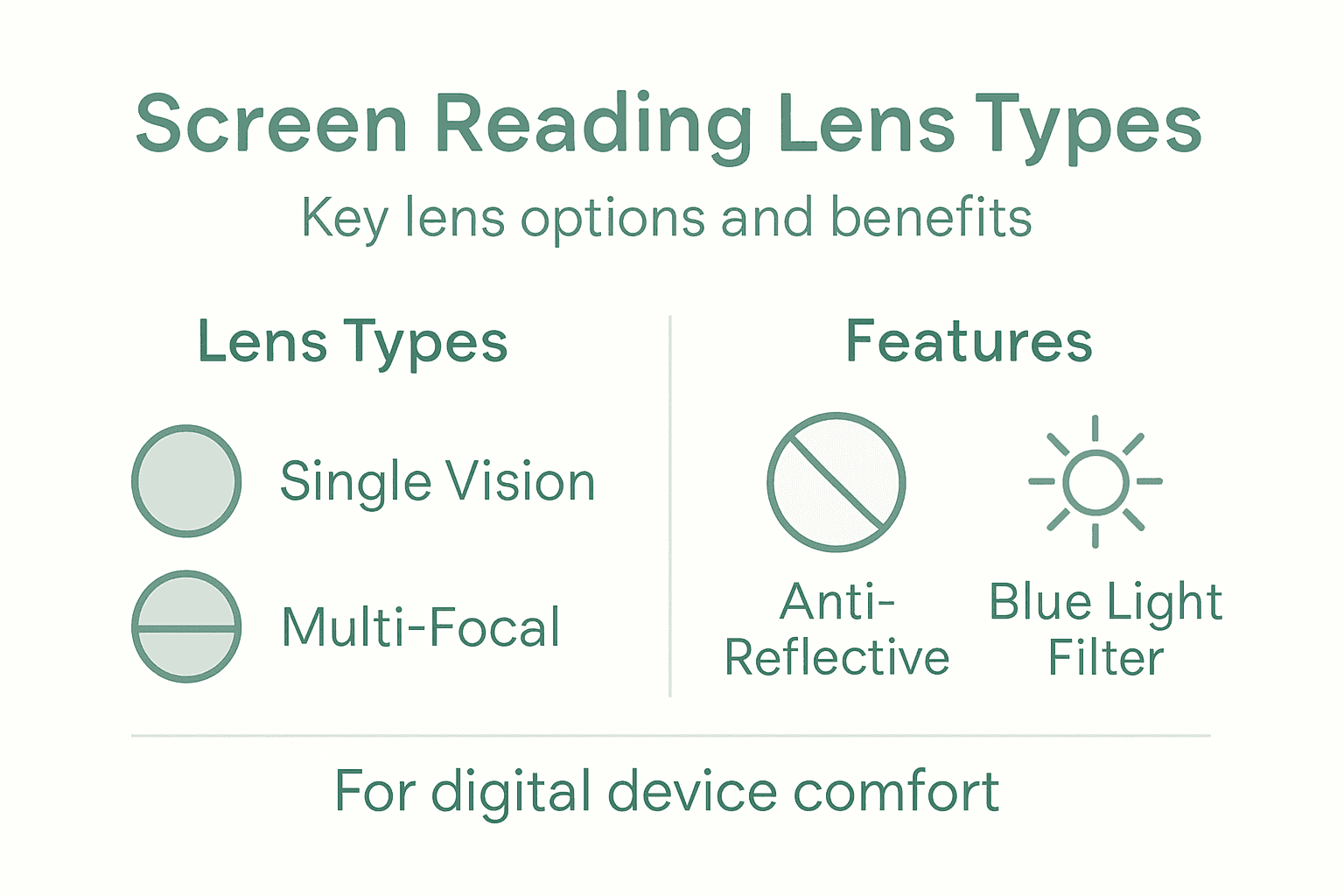
Pro tip: When selecting reading glasses for screen use, prioritise lenses with anti-reflective coatings to further reduce eye strain and improve visual clarity.
Popular Lens Types and Blue Light Filters
Reading glasses for digital screens come in several lens configuration types designed to address different visual needs and comfort levels for professionals spending extensive time in front of digital devices. The most common lens types range from single vision to progressive designs, each offering unique benefits for screen-based work.
The primary lens categories include:
- Single Vision Lenses: Provide consistent magnification for near-distance viewing
- Bifocal Lenses: Offer two distinct viewing zones for near and intermediate distances
- Progressive Lenses: Create smooth transitions between near, intermediate, and distance vision ranges
- Computer Glasses: Specifically optimised for intermediate screen viewing distances
Understanding lens types for reading glasses reveals that blue light filtering represents a critical technological innovation in modern eyewear. Blue light filtering lenses aim to reduce potential eye strain by blocking specific wavelengths of light emitted by digital screens.
Research from optometry experts indicates that while blue light filtering technology is promising, its direct impact on eye health remains scientifically inconclusive. Current studies suggest these specialised lenses may offer marginal benefits in reducing visual fatigue, but cannot definitively prevent long-term digital eye strain.
Blue light filtering technologies are evolving, but their effectiveness remains a subject of ongoing scientific investigation.
Professionals should consider multiple factors when selecting screen-reading glasses, including lens type, blue light protection, and personal visual comfort requirements. The goal is finding a solution that minimises eye strain while maintaining optimal visual performance during extended digital device usage.
Here is a quick comparison of common screen lens types and their typical benefits:
| Lens Type | Visual Range Supported | Best For | Distinctive Benefit |
|---|---|---|---|
| Single Vision | Near or intermediate | Reading or standard screens | Simplicity; broad availability |
| Bifocal | Near and intermediate | Mixed screen tasks | Separate zones for dual focus |
| Progressive | Near, intermediate, distal | Tasks at multiple distances | Seamless, no visible lines |
| Computer Glasses | Intermediate (50–70cm) | Desktop or laptop screens | Optimised for screen placement |
Pro tip: Combine blue light filtering lenses with regular screen breaks to maximise eye comfort and reduce potential digital eye strain.
Key Features: Anti-Glare and Comfort
Reading glasses for screen use have evolved beyond simple magnification, incorporating advanced optical technologies designed to enhance visual comfort and reduce digital eye strain. The intersection of style, functionality, and ergonomic design has transformed these essential accessories into sophisticated visual solutions for professionals.
Key comfort and performance features include:
- Lightweight Frame Materials: Reducing physical pressure on nose and ears
- Anti-Reflective Coatings: Minimising glare from digital screens and ambient lighting
- Flexible Nose Pads: Ensuring personalised fit and reduced pressure points
- Ergonomic Temple Design: Distributing weight evenly for prolonged wearing comfort
Reading glasses lens coatings play a critical role in enhancing visual clarity and reducing eye fatigue. Anti-glare technologies work by applying multi-layer nano-coatings that cancel out reflected light, dramatically improving optical performance during extended screen use.
The physical design of reading glasses significantly impacts long-term comfort. Professionals should prioritise frames constructed from lightweight, durable materials like titanium or flexible polymers that adapt to individual facial structures while maintaining minimal weight and maximum flexibility.
Optimal reading glasses balance technological innovation with personal comfort, creating a seamless visual experience for screen-based professionals.
Material selection goes beyond aesthetics, directly influencing wearing comfort and visual performance. Impact-resistant lens materials like polycarbonate provide additional protection while maintaining exceptional optical clarity for digital workspace environments.

Use this chart to understand how material and coating options impact comfort and performance:
| Feature | Impact on Comfort | Impact on Durability |
|---|---|---|
| Lightweight Frames | Less pressure on nose/ears | May use flexible polymers |
| Anti-Reflective Coating | Reduces distracting glare | Multi-layer for longer wear |
| Flexible Nose Pads | Custom fit to user’s face | Minimises wear pressure |
| Polycarbonate Lenses | Keeps glasses light | High impact resistance |
Pro tip: Test multiple frame styles and lens coatings to find the most comfortable configuration for your specific work environment and personal visual needs.
Choosing Style and Strength for Your Needs
Selecting the right reading glasses involves more than just picking a stylish frame; it requires understanding your unique visual requirements and personal comfort preferences. Professionals navigating the world of screen-based work need glasses that seamlessly blend functionality, aesthetics, and precise vision correction.
Key considerations when selecting reading glasses include:
- Prescription Strength: Matching magnification to your specific vision needs
- Frame Shape: Complementing facial structure and personal style
- Material Durability: Balancing lightweight design with long-term wear resistance
- Lens Configuration: Choosing between single vision and multifocal options
What glasses are good for computer use involves understanding how different lens strengths impact visual performance. Prescription strengths are measured in diopters, with common ranges from +1.00 to +3.00 for screen-based professionals experiencing age-related near vision changes.
Frame selection goes beyond aesthetics, directly influencing comfort and visual clarity. Professionals should consider factors like temple width, nose pad flexibility, and overall weight distribution to ensure all-day wearability.
Optimal reading glasses are a personalised solution that adapts to your unique visual landscape and professional demands.
Multi-focal lens options provide comprehensive vision correction, allowing seamless transitions between screen distances and peripheral vision. Progressive lenses offer the most sophisticated approach, eliminating visible lines while providing graduated magnification across different viewing ranges.
Pro tip: Schedule a professional eye examination to precisely determine your ideal reading glass prescription and explore personalised lens configurations.
Common Pitfalls and Smart Buying Tips
Navigating the world of reading glasses requires more than casual selection; it demands strategic decision-making to avoid common vision correction mistakes. Professionals need to understand the nuanced landscape of eyewear to make informed choices that protect their visual health and productivity.
Major purchasing pitfalls include:
- Skipping Professional Eye Exams: Relying on self-assessment of vision needs
- Ignoring Prescription Accuracy: Purchasing generic readers without precise measurements
- Overlooking Lens Coatings: Neglecting critical protective technologies
- Prioritising Price over Quality: Compromising visual comfort for short-term savings
What are computer glasses highlight the importance of targeted eyewear solutions. Professionals should recognize that off-the-shelf readers often fail to address individual vision complexities, potentially exacerbating eye strain and discomfort.
Frame and lens selection requires careful consideration beyond aesthetic preferences. Crucial factors include pupillary distance, individual eye prescription variations, and specific screen-use ergonomic requirements that generic readers cannot adequately address.
Smart eyewear purchasing prioritises long-term visual health over immediate convenience.
Technology and vision correction are deeply interconnected, requiring professionals to stay informed about emerging lens technologies, blue light filtering options, and personalised vision solutions that adapt to changing digital work environments.
Pro tip: Invest in a comprehensive eye examination annually to ensure your reading glasses precisely match your evolving vision requirements and digital workspace demands.
Discover Comfortable Reading Glasses Built for Screen Use
Struggling with eye strain after long hours in front of your computer or digital device? Modern screen reading glasses offer targeted relief by reducing glare, filtering blue light, and optimising intermediate vision to keep your eyes comfortable and your focus sharp. Whether you need a sleek frame or precise lens strength, finding the right pair can make a significant difference in your daily comfort and productivity.

Explore our range of Rectangular Reading Glasses designed to deliver the perfect blend of style and eye relief. Don’t compromise your visual health or comfort. Take advantage of Ministry of Sight’s free shipping across Australia and buy-one-get-one deals to upgrade your eyewear now. Visit Ministry of Sight to find your ideal glasses today and protect your vision for the busy digital world.
Frequently Asked Questions
What are reading glasses for screen use?
Reading glasses for screen use are specially designed eyewear that alleviates digital eye strain and enhances visual comfort for prolonged use of digital devices like computers, tablets, and smartphones.
How do reading glasses for screen use differ from traditional reading glasses?
Unlike traditional reading glasses that focus primarily on near vision, screen-specific readers are engineered to support intermediate vision ranges typical of digital workspaces, which helps reduce eye muscle strain and improve text clarity at normal computer viewing distances.
What lens types are available for reading glasses aimed at screen use?
Common lens types include single vision lenses for consistent magnification, bifocal lenses for near and intermediate distances, progressive lenses for seamless transitions between different viewing ranges, and computer glasses optimised specifically for screen viewing distances.
How can I reduce digital eye strain while using reading glasses for screen use?
To minimise digital eye strain, consider using anti-reflective coated lenses, taking regular screen breaks, and ensuring your workspace is ergonomically set up. Combining blue light filtering lenses with these practices can also enhance comfort during extended screen time.


