

Smudged lenses and streaky glasses can turn daily tasks into a real source of frustration for anyone across Australia who relies on prescription eyewear. Clear vision depends on more than just prescription accuracy — regular, careful cleaning is just as important for protecting both your eyesight and your investment. This guide lays out a simple, well-organised cleaning routine so you can keep your glasses spotless, prolong their life, and enjoy the sharpest vision possible at home.
Table of Contents
- Step 1: Gather Cleaning Tools And Set Up Workspace
- Step 2: Rinse Lenses To Remove Loose Debris
- Step 3: Apply Cleaning Solution And Gently Wipe Lenses
- Step 4: Dry And Polish With A Microfibre Cloth
- Step 5: Inspect Lenses For Streaks Or Residue
Quick Summary
| Key Point | Explanation |
|---|---|
| 1. Organise your cleaning tools | Gather essential cleaning tools, like a microfibre cloth and lens solution, to enhance your glasses cleaning process. |
| 2. Rinse lenses with lukewarm water | Use lukewarm running water to remove dirt and debris without damaging lens coatings or frames. |
| 3. Apply cleaner to the cloth | Dispense lens cleaning solution onto a microfibre cloth to avoid putting excess liquid directly on the lenses. |
| 4. Dry lenses with gentle pressure | Use a clean, dry microfibre cloth to softly polish lenses, ensuring clarity and avoiding scratches. |
| 5. Inspect for streaks or residue | After cleaning, check lenses under bright light for any remaining smudges or particles and re-clean if necessary. |
Step 1: Gather cleaning tools and set up workspace
Preparing your workspace and assembling the right cleaning tools is crucial for effectively maintaining your reading glasses. A well-organised setup ensures you can clean your lenses thoroughly and safely without risking damage.
Start by collecting the essential tools you’ll need for a professional-grade glass cleaning routine:
- Microfibre cleaning cloth (lint-free and soft)
- Lens cleaning solution specifically designed for glasses
- Distilled water for rinsing
- Clean, lint-free paper towels
- Soft, non-abrasive tissues
Choose a clean, well-lit workspace like a kitchen bench or bathroom counter with a clear, flat surface. Ensure the area is free from dust, grease, and other potential contaminants that might transfer onto your glasses during cleaning. Place all your tools within easy reach before beginning.
A clean, organised workspace is half the battle when maintaining pristine reading glasses.
When setting up, consider laying down a clean white towel or cloth to catch any drips and provide a soft surface that prevents accidental scratching. This simple preparation step can make your entire cleaning process smoother and more effective.
Here’s a quick reference comparing various cleaning tools for reading glasses:
| Cleaning Tool | Best Use | Potential Risks | Care Tips |
|---|---|---|---|
| Microfibre cloth | Removing fingerprints and smudges | Can redeposit dirt if not clean | Wash regularly to maintain quality |
| Lens cleaning solution | Dissolving oils and residue | May damage lenses if unsuitable | Check compatibility with coatings |
| Distilled water | Rinsing away loose debris | None if properly handled | Store in a sealed container |
| Lint-free paper towels | Drying lenses quickly | May scratch if not truly lint-free | Use only with soft pressure |
| Non-abrasive tissues | Gentle drying or surface touch-ups | Potential lint left behind | Select brands labelled as gentle |
Pro tip: Keep your cleaning tools in a dedicated, sealed container to prevent dust accumulation and maintain their cleanliness between uses.
Step 2: Rinse lenses to remove loose debris
The initial rinsing stage is critical for preparing your reading glasses for a thorough cleaning. By carefully removing loose dust, dirt, and potential debris, you’ll prevent scratching and ensure a more effective cleaning process.
To rinse your lenses effectively, follow these key steps:
- Hold glasses under lukewarm running water with the lenses facing downward
- Gently rotate the glasses to ensure water covers all lens surfaces
- Use a steady, gentle water stream to dislodge loose particles
Avoid using hot water, which can damage lens coatings, or cold water, which might cause lens material to contract. The water should be at a comfortable, moderate temperature that allows thorough rinsing without causing thermal stress to your glasses.
Proper rinsing is your first defence against potential lens scratches and buildup.
Ensure the water pressure is soft and consistent. Too much force can potentially push debris into lens coatings or damage delicate frames. Move the glasses slowly under the water stream, allowing gravity and gentle water flow to help remove particles naturally.
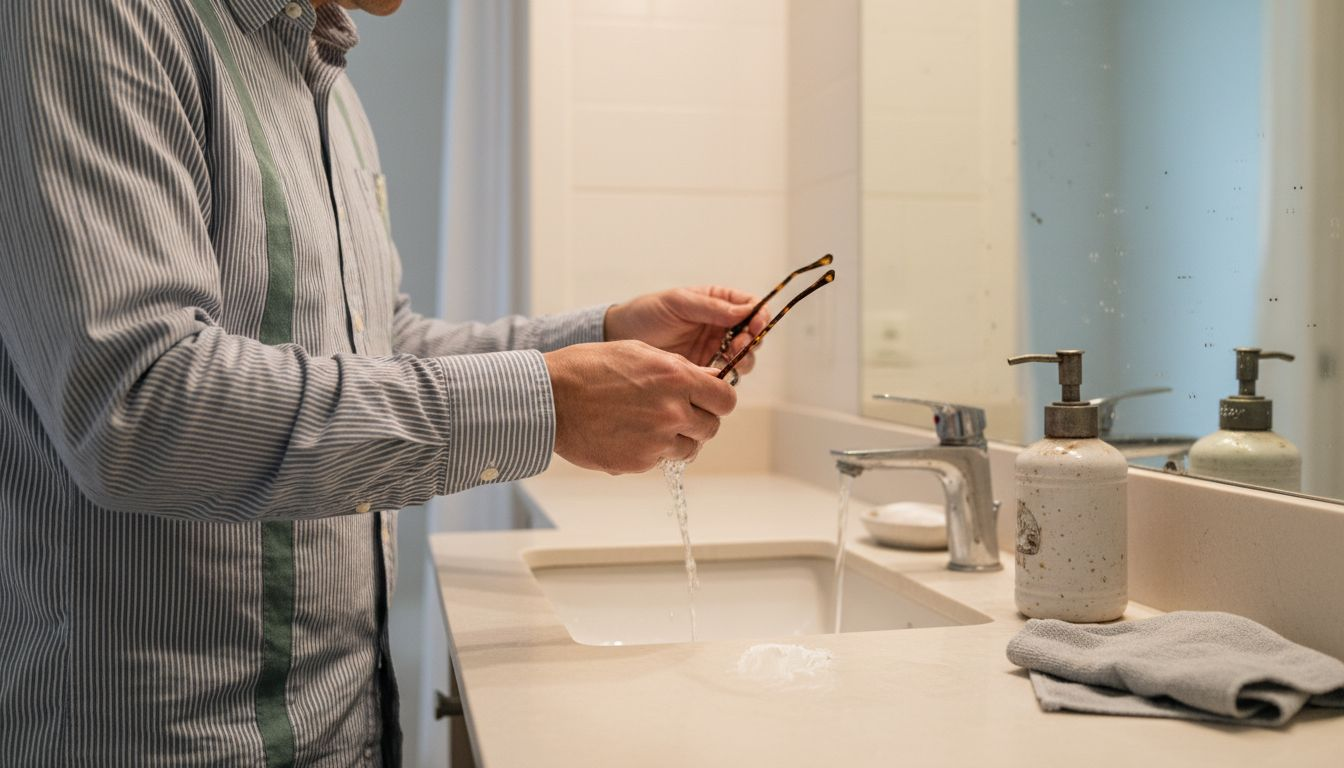
Top tip: If tap water seems mineral-heavy or contains impurities, consider using distilled water for a more pristine initial rinse.
Step 3: Apply cleaning solution and gently wipe lenses
Applying the right cleaning solution and wiping technique is crucial for maintaining your reading glasses without causing damage. The goal is to remove stubborn oils, fingerprints, and microscopic debris while preserving your lens coatings.
Prepare your cleaning approach with these essential steps:
- Use only specialised glasses cleaning solution
- Apply solution to microfibre cloth (not directly on lenses)
- Work in gentle, circular motions
- Avoid excessive pressure
- Clean both sides of each lens thoroughly
Carefully dispense a small amount of lens cleaner onto your microfibre cloth. Hold the glasses by the frame to prevent additional fingerprints. Gently wipe each lens using soft, circular motions that start from the centre and move outwards. This technique helps distribute the cleaning solution evenly and prevents streaking.
Gentle, consistent motions are key to achieving crystal-clear lenses without risking scratches.
Ensure you’re using a clean section of the microfibre cloth for each lens to prevent redistributing dirt. Pay extra attention to the edges and corners where grime tends to accumulate. When you’ve completed cleaning, inspect the lenses in good lighting to confirm you’ve removed all smudges and particles.
Insider tip: Rotate your microfibre cloth frequently during cleaning to ensure you’re always using a clean surface and preventing potential lens scratching.
Step 4: Dry and polish with a microfibre cloth
The final stage of cleaning your reading glasses involves carefully drying and polishing the lenses to achieve a crystal-clear, streak-free finish. Using the right technique with a high-quality microfibre cloth can make all the difference in maintaining your glasses’ pristine appearance.
Follow these essential drying and polishing techniques:
- Use a clean, dry microfibre cloth
- Fold cloth to create multiple clean surfaces
- Apply gentle, consistent pressure
- Work from centre to edges
- Inspect lenses in good lighting
Choose a fresh section of your microfibre cloth that’s completely dry and lint-free. Hold the glasses by the frame to prevent reintroducing fingerprints. Using soft, circular motions, gently polish each lens surface. Start from the centre and move outwards, ensuring you’re using a clean part of the cloth for each pass.
A high-quality microfibre cloth is your secret weapon for achieving professional-level lens clarity.
Carefully examine your lenses in bright, natural light to confirm you’ve removed all remaining moisture and achieved a completely clear, streak-free finish. Rotate the cloth frequently to ensure you’re always using a clean surface, which prevents potential scratching or redepositing of dirt.
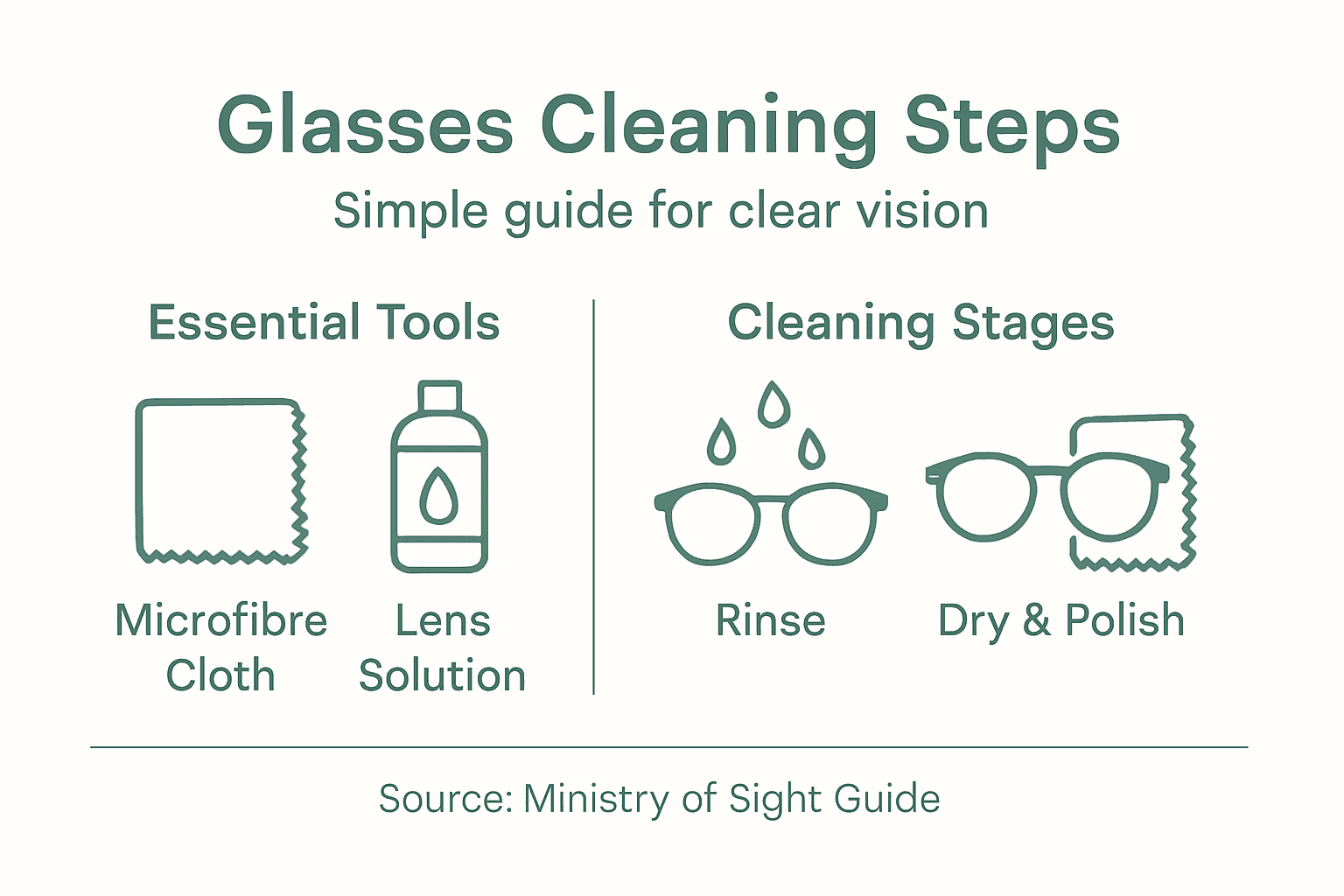
Expert tip: Keep multiple microfibre cloths on hand and wash them regularly with gentle, unscented detergent to maintain their optimal cleaning performance.
Step 5: Inspect lenses for streaks or residue
The final quality check in your glasses cleaning routine is a meticulous visual inspection that ensures your lenses are truly pristine. Catching any remaining streaks or residue before wearing your glasses will guarantee optimal visual clarity and comfort.
Inspect your glasses using these critical techniques:
- Check in bright, natural lighting
- Rotate glasses at different angles
- Examine both lens surfaces thoroughly
- Look for subtle streaks or smudges
- Re-clean if any residue remains
Position yourself near a well-lit window or under bright, natural light. Hold glasses at arm’s length and slowly rotate them, examining each lens surface from multiple perspectives. Look carefully for any remaining streaks, water spots, or subtle smudges that might have been missed during previous cleaning stages.
A thorough inspection is the difference between adequate and exceptional glasses maintenance.
If you notice any lingering residue, don’t hesitate to repeat the cleaning process. Pay special attention to lens edges and corners, where cleaning solution and dirt can often accumulate unnoticed. A patient, methodical approach ensures your reading glasses cleaning technique delivers professional-level results.
Expert tip: Keep a small, bright LED light handy for conducting precise lens inspections, as it can reveal microscopic imperfections standard lighting might miss.
For readers, here’s a stepwise overview of the entire cleaning process:
| Stage | Main Goal | Key Tip for Success |
|---|---|---|
| Tool Setup | Prevent contamination | Lay a soft towel underneath tools |
| Debris Rinse | Remove loose particles | Use only lukewarm water |
| Solution Application | Eliminate residues and oils | Apply cleaner to cloth, not lens |
| Drying & Polishing | Achieve streak-free clarity | Always rotate the cloth |
| Inspection | Ensure pristine lens finish | Use bright LED for final check |
Keep Your Vision Crystal Clear with the Perfect Reading Glasses
Cleaning your reading glasses thoroughly is essential, but having the right pair makes all the difference. After following our detailed guide to remove smudges and streaks carefully your next step is choosing glasses designed for lasting clarity and comfort. Explore our exclusive range of Clear Reading Glasses crafted to enhance your vision and style.

Experience the confidence that comes with crystal-clear lenses and exceptional quality. Visit Ministry of Sight today to discover our collections including Rectangular Reading Glasses and Round Reading Glasses. Take advantage of free shipping Australia-wide and enjoy your buy-one-get-one deals now. Don’t wait to upgrade your eyewear and see the world in sharper detail.
Frequently Asked Questions
How often should I clean my reading glasses for optimal vision?
Cleaning your reading glasses should ideally be done daily to maintain clarity and prevent dirt buildup. Start by rinsing your lenses, applying cleaning solution, and drying with a microfibre cloth to achieve a clear finish.
What cleaning materials are safe to use on reading glasses?
Use a microfibre cloth, a specialised lens cleaning solution, and distilled water for optimal cleaning. Avoid paper towels and household cleaners, as they may scratch or damage the lens coatings.
Can I use tap water to rinse my reading glasses?
While you can use tap water, it’s best to opt for distilled water to avoid potential mineral deposits. Rinse your glasses under lukewarm distilled water to remove loose debris safely.
What should I do if my glasses still have streaks after cleaning?
If your lenses have streaks, re-clean them using a fresh section of your microfibre cloth and a small amount of lens cleaner. Gently wipe in circular motions until you achieve a streak-free finish.
How can I prevent scratches while cleaning my glasses?
To prevent scratches, always use a clean, soft microfibre cloth and apply gentle pressure when wiping. Avoid using any rough or abrasive materials during the cleaning process to protect your lenses.
Is it necessary to inspect my lenses after cleaning?
Yes, inspecting your lenses after cleaning is crucial to ensure they are free from streaks and debris. Examine them in bright light and re-clean if you notice any imperfections.
Recommended
- Reading Glasses Cleaning Checklist for Spotless Lenses – ministry of sight
- Ultimate Reading Glasses Maintenance Guide for Longevity – ministry of sight
- 7 Essential Tips for Choosing Retro Round Reading Glasses – MINISTRY OF SIGHT
- Complete Guide to Reading Glasses Care Tips – ministry of sight
- 10 Essential Tips for Your Spring Cleaning Kitchen Checklist


