

More than 60 percent of Australian adults rely on reading glasses every day, yet many risk scratching their lenses by using the wrong cleaning products. Taking proper care of your eyewear preserves both clarity and comfort. By learning the safest way to clean your glasses, you will protect your investment and enjoy sharper vision for longer.
Table of Contents
- Step 1: Gather Suitable Cleaning Supplies For Glasses
- Step 2: Remove Surface Dust From Lenses And Frames
- Step 3: Apply Cleaning Solution Evenly To Lenses
- Step 4: Wipe Lenses Gently With A Soft Cloth
- Step 5: Inspect For Streaks And Repeat If Needed
Quick Summary
| Key Point | Explanation |
|---|---|
| 1. Use optical-specific solutions | Always opt for specialised lens cleaning solutions to prevent damage to lens coatings and ensure safety during cleaning. |
| 2. Soft microfibre cloth is essential | A microfibre cloth prevents scratches and removes dust effectively without leaving lint or debris on your lenses. |
| 3. Rinse glasses with lukewarm water | Rinsing with lukewarm water removes loose particles, minimizing the risk of scratching when you clean manually. |
| 4. Inspect lenses under natural light | Check your glasses in bright, natural light post-cleaning to spot any remaining smudges or streaks for further cleaning. |
| 5. Avoid using paper products | Paper towels and tissues can scratch lenses; always use a dedicated microfibre cloth for safe cleaning. |
Step 1: Gather suitable cleaning supplies for glasses
Cleaning your reading glasses effectively starts with assembling the right supplies. You do not want to risk damaging your lenses by using inappropriate materials or harsh chemicals. The key tools you’ll need are a high-quality microfibre cloth and a specialised lens cleaning solution designed specifically for eyewear.
Your basic cleaning kit should include three essential items a gentle microfibre cloth with soft fibres that wo not scratch delicate lens surfaces, a professional eyewear cleaning solution formulated to safely remove dirt and oils, and optionally some lukewarm water. While some people recommend using lotion-free dish soap as an alternative cleaning solution, reading glasses accessories guide suggests sticking with products specifically made for optical lenses to prevent potential damage.
Avoid using paper towels, tissues, or clothing fabrics which can leave lint or potentially scratch your glasses. Instead, invest in a dedicated microfibre cloth that comes with most glasses purchases or can be bought separately from optometry stores. These cloths are designed to trap dust and oils without creating micro-abrasions on your delicate lens coatings.
Ready to tip: Carry a small microfibre cloth and travel-sized lens cleaner in your bag or pocket for quick touch-ups throughout the day, ensuring your reading glasses stay crystal clear no matter where you are.
Here’s a quick overview of common cleaning supplies for glasses and how they compare:
| Cleaning Supply | Main Advantage | Potential Drawback |
|---|---|---|
| Microfibre cloth | Scratch-free, lint-free clean | Requires regular washing |
| Optical lens solution | Safely removes oils and dirt | May be pricier than alternatives |
| Lukewarm water | Gentle debris removal | May not remove oily smudges |
| Dish soap (lotion-free) | Removes oils effectively | Risk of residue on lenses |
| Paper towels/tissues | Cheap and accessible | High risk of scratching |
Step 2: Remove surface dust from lenses and frames
Removing surface dust from your reading glasses is a delicate process that requires gentle technique to prevent potential scratching or damage. Your primary goal is to eliminate loose particles without dragging abrasive materials across the lens surface.
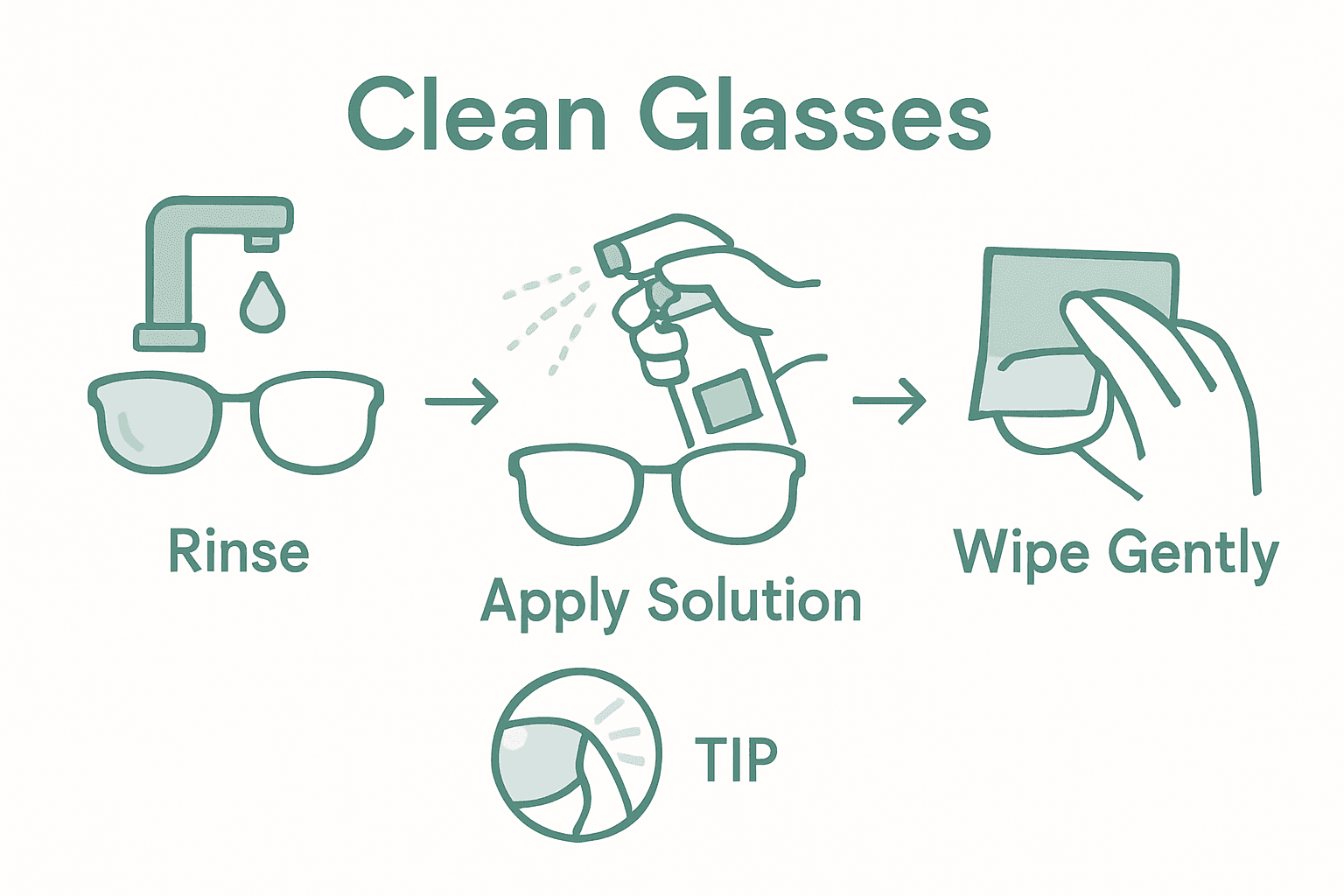
Begin by rinsing your glasses under lukewarm water to wash away initial dust and loose debris. This preliminary rinse helps prevent scratching when you start manual cleaning. Hold your glasses under a gentle stream of water, allowing the water to flow across both sides of the lenses and around the frames, effectively dislodging surface particles without applying direct pressure. Ultimate Reading Glasses Maintenance Guide recommends ensuring the water temperature is mild to avoid potential damage to lens coatings or frame materials.
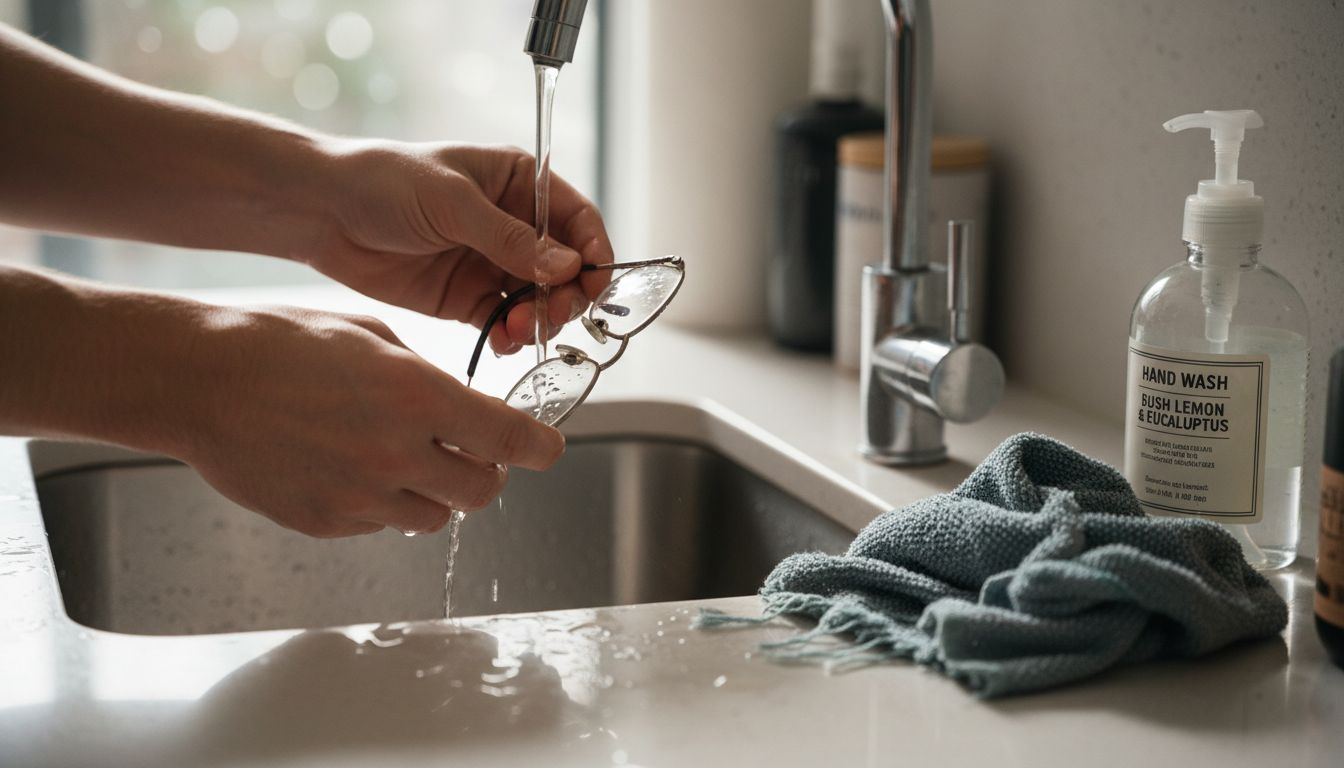
After rinsing, gently shake off excess water and prepare your microfibre cloth for the next cleaning stage. Ensure the cloth is clean and free from previous dust or oils that could redeposit onto your lenses. Avoid using paper towels, tissues, or clothing fabrics that might introduce additional scratching or lint.
Ready to tip: Always hold your glasses by the frame when rinsing to maintain a secure grip and prevent accidental dropping during the cleaning process.
Step 3: Apply cleaning solution evenly to lenses
Applying cleaning solution to your reading glasses requires precision and care to ensure thorough yet gentle cleaning. Your objective is to distribute the solution uniformly across both lens surfaces without creating excess moisture that could potentially damage lens coatings.
Hold your glasses by the frame and spray a small amount of professional lens cleaning solution directly onto both sides of the lenses. The key is to use a light misting technique that provides even coverage without saturating the glasses. 7 Must-Have Accessories for Reading Glasses recommends using specialised optical cleaning solutions that are specifically formulated to protect delicate lens treatments and prevent potential damage.
If you are using a cleaning solution in a spray bottle, maintain a distance of approximately 15 centimetres from the lens to ensure an even, fine distribution. Avoid concentrating the solution in one spot, as this can create uneven cleaning and potentially leave residue. For those using a pre moistened lens cleaning wipe, gently unfold the wipe and sweep it across the entire lens surface in a systematic manner, ensuring complete and uniform coverage.
Ready to tip: Always check your cleaning solution bottle to confirm it is specifically designed for optical lenses, as generic cleaning products can potentially harm lens coatings.
Step 4: Wipe lenses gently with a soft cloth
Wiping your reading glasses requires a delicate touch to ensure you remove all smudges and cleaning solution without risking damage to the lens surface. Your goal is to create a streak-free finish using minimal pressure and a clean microfibre cloth.
Take your dedicated microfibre cloth and start by folding it into a clean, flat surface to prevent any potential grit or debris from scratching the lenses. Gently sweep the cloth across each lens using soft, circular motions that move from the centre outwards. Essential Tips for Glasses Storage emphasises the importance of using consistent, light pressure to avoid creating additional scratches or wearing down protective lens coatings.
Work methodically across both lens surfaces, rotating the cloth to ensure you are using a clean section each time. Pay special attention to edges and corners where dirt and residue can accumulate. If you notice any stubborn marks, resist the temptation to apply more pressure. Instead, reapply a small amount of cleaning solution and repeat the gentle wiping process.
Ready to tip: Always inspect your microfibre cloth before use and wash it regularly to prevent transferring old dirt or oils back onto your clean lenses.
Step 5: Inspect for streaks and repeat if needed
After cleaning your reading glasses, a thorough visual inspection is crucial to ensure you have achieved completely spotless lenses. Your final objective is to identify and address any remaining smudges or streaks that might compromise your visual clarity.
Hold your glasses up to a bright, natural light source preferably near a window where soft daylight can help you detect even the most subtle imperfections. Rotate the lenses slowly, examining them from multiple angles to catch any lingering streaks or missed spots. Ultimate Reading Glasses Maintenance Guide recommends a comprehensive inspection technique that involves checking both the front and back surfaces of each lens, ensuring no residual cleaning solution or dust remains.
If you notice any persistent streaks or smudges, do not become frustrated. Simply return to the previous cleaning steps by reapplying a small amount of lens cleaning solution and using a fresh section of your microfibre cloth. Use gentle, consistent motions and avoid applying excessive pressure that could potentially damage the lens coatings. Remember that achieving perfectly clean lenses might require two or three careful attempts.
Ready to tip: Create a habit of checking your glasses in good lighting immediately after cleaning to catch any missed spots while the cleaning solution is still fresh.
This summary table outlines critical mistakes to avoid when cleaning your glasses:
| Mistake | Risk Involved | Better Alternative |
|---|---|---|
| Using paper towels/tissues | Potential lens scratching | Microfibre cloth |
| Skipping water rinse | Grinding debris into coatings | Gentle lukewarm rinse |
| Applying heavy pressure | Wearing down protective layers | Light, circular motions |
| Generic cleaning liquids | Damaging special lens coatings | Optical-specific solution |
Keep Your Reading Glasses Spotless with the Right Accessories
Cleaning your reading glasses is essential for clear vision but doing it the right way can be a real challenge. The article highlights common pain points like avoiding scratches, preventing streaks, and using specialised cleaning solutions. These can be frustrating when your lenses end up smeared or damaged despite your efforts. Using the correct tools such as a microfibre cloth and optical lens cleaner is key to preserving your glasses’ longevity and clarity.

Explore our range of Reading Glasses Accessories and Storage designed to protect and maintain your glasses every day. Whether you need gentle cleaning cloths, premium lens solutions, or practical storage cases, Ministry of Sight has you covered. Don’t let smudges and scratches hold you back – visit our home page today and discover the difference quality accessories make. Upgrade your care routine now for crystal clear vision and comfort.
Frequently Asked Questions
What cleaning supplies do I need for my reading glasses?
To clean your reading glasses effectively, you will need a high-quality microfibre cloth and a lens cleaning solution specifically designed for eyewear. Ensure you avoid using paper towels, tissues, or clothing, as these can scratch the lenses or leave lint.
How do I remove surface dust from my reading glasses?
Start by rinsing your glasses under lukewarm water to wash away loose dust and debris. This will help prevent scratches when you clean them; remember to hold your glasses by the frame throughout the process to maintain a secure grip.
How should I apply cleaning solution to my reading glasses?
Hold your glasses by the frame and spray a light mist of the specialised lens cleaning solution onto both sides of the lenses. Maintain a distance of approximately 15 centimetres from the lenses to ensure even distribution without saturating them.
What is the best technique for wiping the lenses after applying the cleaning solution?
Use a clean microfibre cloth folded into a flat surface, and gently wipe the lenses in soft, circular motions from the centre outwards. Ensure you use a clean section of the cloth each time to avoid transferring dirt back onto the lenses.
How can I check if my reading glasses are streak-free after cleaning?
After cleaning, hold your glasses up to a bright natural light source to visually inspect the lenses for any remaining smudges or streaks. Rotate the lenses slowly while examining them from different angles to catch any imperfections.
What should I do if there are still streaks or marks on my glasses?
If you find stubborn streaks or marks after your initial cleaning, reapply a small amount of lens cleaning solution and wipe again gently with a clean section of your microfibre cloth. This may require two or three attempts to achieve perfectly clean lenses.
Recommended
- Ultimate Reading Glasses Maintenance Guide for Longevity – ministry of sight
- 7 Must-Have Accessories for Reading Glasses – ministry of sight
- How to Store Glasses Properly for Long-Lasting Use – ministry of sight
- How to Store Reading Glasses: A Step-by-Step Guide – ministry of sight
- Top Ten - Vintage Sunglasses
- Step by Step House Cleaning Guide for a Spotless Home


