

Choosing reading glasses is more than just a style decision. The wrong fit can lead to discomfort, headaches, and even affect your vision. Over 60 percent of people wear glasses that do not properly fit their face. Understanding your face shape and getting accurate measurements empowers you to select frames that both look great and feel comfortable. This guide will help you find reading glasses that suit your features and provide all day comfort.
Table of Contents
- Step 1: Assess Your Face Shape and Measurements
- Step 2: Choose Frames That Match Your Fit Needs
- Step 3: Adjust Temples and Nose Pads for Comfort
- Step 4: Check Vision and Stability of the Fit
- Step 5: Verify Comfort During Everyday Use
Quick Summary
| Key Point | Explanation |
|---|---|
| 1. Measure your face accurately | Proper measurements ensure you choose frames that fit well and enhance your features. |
| 2. Match frames to your face shape | Select frames that complement your face shape for a balanced and flattering look. |
| 3. Adjust for comfort and fit | Proper adjustments to temples and nose pads can enhance how your glasses wear throughout the day. |
| 4. Test stability and vision clarity | Ensure your glasses remain stable and provide clear vision during various activities. |
| 5. Monitor comfort during daily use | Pay attention to discomfort signs while wearing glasses to make necessary adjustments for optimal comfort. |
Step 1: Assess Your Face Shape and Measurements
Getting the right reading glasses isn’t just about picking a stylish frame. It’s about understanding how those frames complement your unique facial structure. You will learn how to measure your face and determine which frame styles will look best on you.
Start by grabbing a flexible measuring tape or a straight ruler and standing in front of a mirror with good lighting. First measure your face width by placing the tape measure from the left to right cheekbone. Next measure your face length by running the tape vertically from the centre of your hairline to the bottom of your chin. Write these measurements down carefully.
To determine your face shape, compare your measurements. If your face width and length are roughly equal, you likely have a round face.
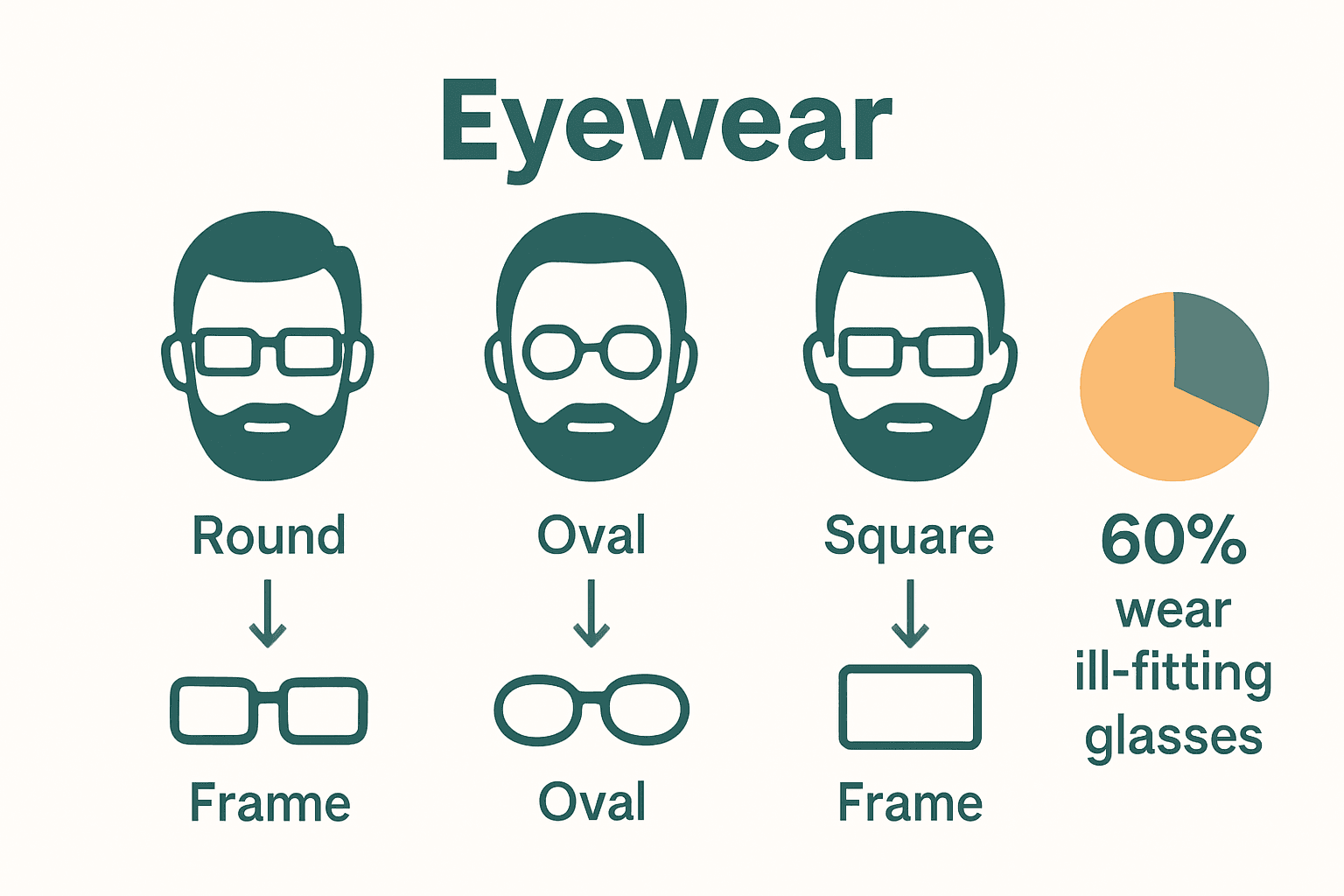 If your face is longer than it is wide with softer angles, you probably have an oval shape. Square faces typically have similar width across the forehead and jawline with more angular features. Triangular faces will have a wider forehead and narrower chin.
Pro Tip: Measure twice to ensure accuracy. Small measurement differences can impact frame selection.
Once you understand your face shape, you will be ready to choose reading glasses that enhance your natural features and provide comfortable wear. The next step will help you match your measurements to specific frame styles that complement your look.
Step 2: Choose Frames That Match Your Fit Needs
Now that you have measured your face, it is time to select reading glasses frames that not only look great but feel comfortable. Your goal is to find frames that balance your facial features and provide optimal fit and functionality.
Start by matching your face shape to frame styles that complement your natural contours. For round faces, choose angular or rectangular frames that create visual contrast and add definition. Oval faces have the most versatility and can experiment with most frame shapes. Square faces look best in round or oval frames that soften strong jawlines. If you have a triangular face with a wider forehead, opt for frames that are wider at the bottom to create visual balance.
Consider frame width carefully. Your frames should be roughly as wide as the broadest part of your face. Frames that extend too far beyond your cheekbones will look awkward, while frames that are too narrow will feel pinched and uncomfortable. Pay attention to the bridge fit as well. A well fitted bridge will rest comfortably on your nose without sliding or creating pressure points.
Pro Tip: When trying on frames, move your head around. Good frames should stay in place without constant readjustment.
Understanding Reading Glasses Frame Styles for Your Needs can provide additional insights into selecting the perfect pair. Your next step will involve trying on different frames to find the most comfortable and flattering option.
Step 3: Adjust Temples and Nose Pads for Comfort
With your frames selected, the next crucial step is ensuring they fit perfectly. Proper adjustment of temples and nose pads can transform an average pair of reading glasses into a personalised comfort experience that feels like they were custom made just for you.
Temple adjustments are key to preventing glasses from slipping or feeling too tight. Gently bend the temple arms slightly inward or outward to match the contour of your head. If the temples feel too loose, warm the metal or acetate slightly with your hands and carefully curve them to hug your ears more snugly. For nose pads, use small needle nose pliers to make micro adjustments. Spread the pads slightly wider if they feel pinched or closer together if they are too wide apart. The goal is to have the glasses rest evenly without pressing uncomfortably on your nose bridge.
Material matters when making adjustments. Titanium and memory metal frames offer more flexibility and can be adjusted multiple times without weakening. Plastic frames require more careful handling and may need professional adjustment to prevent cracking. Always make small incremental changes and test the fit after each adjustment.
Pro Tip: If you are unsure about making adjustments yourself, visit an optical professional who can fine tune the fit precisely.
Understanding Reading Glasses Frame Styles for Your Needs can provide additional guidance on frame maintenance. Your next step will involve testing the comfort and stability of your newly adjusted reading glasses.
Step 4: Check Vision and Stability of the Fit
You have carefully selected and adjusted your reading glasses. Now comes the critical moment of testing their performance and comfort. This step will help you verify that your new glasses provide clear vision and remain stable during different activities.
Start by performing a comprehensive stability test. Put on your glasses and move your head in various directions sideways, up and down. The glasses should remain firmly in place without sliding or shifting. Pay attention to how they feel when you look down to read or tilt your head. A well fitted pair will stay centred on your face without constant readjustment. Check the peripheral vision clarity by looking at objects from different angles. Your vision should remain crisp and unobstructed across the entire lens surface.
Next evaluate the three point contact principle. Your glasses should touch three key points softly but securely: the bridge of your nose and behind both ears.
 These contact points distribute weight evenly and prevent uncomfortable pressure. If you feel persistent pinching or slipping, minor additional adjustments might be necessary. Test your reading glasses while performing typical daily activities like reading a book, working on a computer or doing close detail work to ensure consistent comfort and visual clarity.
Pro Tip: If you experience persistent discomfort or vision issues, consult an optician for professional fitting.
Understanding Reading Glasses Frame Styles for Your Needs can offer additional insights into optimising your eyewear experience. Your final step will involve making any last refinements to achieve the perfect reading glasses fit.
Step 5: Verify Comfort During Everyday Use
Congratulations on finding your perfect reading glasses. Now begins the real test of comfort and functionality through actual daily wear. This final step helps you ensure your glasses truly work seamlessly with your lifestyle and reading habits.
Spend the first few days wearing your glasses during various activities to assess their real world performance. Pay attention to how they feel during extended reading sessions like working on a computer or reading books. Notice if the nose pads create any pressure points or if the temples press uncomfortably behind your ears. Some initial minor adjustments might be necessary as your face becomes accustomed to the new frames. Track any areas of discomfort and make small incremental adjustments to improve fit. If nose pads feel rigid or cause skin irritation, consider replacing them with softer silicone or rubber alternatives that provide gentler contact.
Consider the weight distribution and balance of your glasses throughout different tasks. A well fitted pair should feel almost invisible while providing clear vision. They should not slip when you look down or move your head quickly. If you experience persistent sliding or pinching after multiple adjustments, it might indicate that the frames are not ideally suited to your facial structure. In such cases consulting an optical professional for personalised fitting can help resolve ongoing comfort issues.
Pro Tip: Keep your glasses clean and store them in a protective case when not in use to maintain their shape and comfort.
Understanding Reading Glasses Frame Styles for Your Needs can provide additional maintenance insights. Your journey to finding the perfect reading glasses is now complete.
Find Your Perfect Fit with Ministry of Sight Today
Struggling to find men’s reading glasses that fit comfortably and complement your face shape is a common challenge. The article highlights important steps like measuring your face, selecting frames that match your features, and adjusting temples and nose pads for all-day comfort. Avoid frustration from slipping frames or uncomfortable pressure points by choosing glasses designed with your needs in mind.
Discover our wide range of stylish and well-fitting options including Round Reading Glasses that soften angular features, Rectangular Reading Glasses that add definition for round faces, or Square Reading Glasses that balance your look with softer lines. Shop now at Ministry of Sight where you benefit from free shipping across Australia, buy one get one deals, and expert guidance to ensure you leave with reading glasses that feel custom made just for you.
Frequently Asked Questions
How do I measure my face for the perfect men’s reading glasses fit?
To measure your face, use a flexible measuring tape or straight ruler and note the width from cheekbone to cheekbone and the length from your hairline to your chin. Write these measurements down, as they will guide you in selecting suitable frame styles.
What frame styles should I choose based on my face shape?
Select frames that complement your face shape: angular or rectangular for round faces, round or oval for square faces, and versatile styles for oval faces. To enhance comfort, pick frames that visually balance your features while ensuring they fit your specific measurements.
How can I adjust the temples and nose pads for a better fit?
Gently bend the temple arms inward or outward to match your head’s contour. Adjust the nose pads using pliers for a snug fit; spread them apart if they’re pinching or bring them closer if they’re too wide.
What should I check to ensure my reading glasses are stable and comfortable during wear?
Put on the glasses and move your head in different directions to see if they stay in place. Also, check that they make soft contact at three key points: the nose bridge and behind both ears for even weight distribution.
How do I verify if my reading glasses are comfortable during everyday use?
Wear your glasses during various daily tasks to assess comfort and fit. Pay attention to any pressure points or discomfort, and make small adjustments to improve the fit if necessary, ensuring they don’t slip or pinch during activities like reading or using a computer.
What maintenance tips can help keep my reading glasses fitting well?
Keep your glasses clean and store them in a protective case when not in use to maintain their shape. Regularly check for any loose parts and make minor adjustments as needed to ensure ongoing comfort and functionality.
Recommended
- Men’s Reading Glasses Guide: Everything You Need – ministry of sight
- Essential Reading Glasses Style Tips for Men Over 40 – ministry of sight
- Understanding the Reading Glasses Fit Guide for Better Vision – ministry of sight
- 7 Best Reading Glasses for Ladies and How to Choose – ministry of sight
Our Best Reading Glasses Australia guide covers frame quality, lenses, fit and the features worth considering before you buy.


