

TL;DR:
- Proper daily care and storage significantly extend glasses lifespan and maintain optimal performance.
- Avoid common mistakes like using clothing or household cleaners that cause lens and frame damage.
- Regular maintenance, including screw checks and professional adjustments, prevents unnecessary replacements.
Your glasses work hard every single day, yet most people treat them like disposable items. Scratched lenses, bent frames, and loose screws are frustrating, especially when you realise a few simple habits could have prevented the damage entirely. Quality eyewear is a real investment, and Australians spend hundreds of dollars on frames and lenses that often wear out far sooner than they should. This guide covers practical, expert-backed care routines for cleaning, storage, handling, and everyday maintenance, so your glasses stay sharp, comfortable, and stylish for years rather than months.
Table of Contents
- What you need to keep your glasses in top shape
- Step-by-step guide to everyday glasses care
- Avoiding common mistakes that shorten glasses lifespan
- Smart storage for maximum glasses longevity
- Why caring for your glasses is a lifelong investment
- Find the right accessories and professional support
- Frequently asked questions
Key Takeaways
| Point | Details |
|---|---|
| Use the right cleaning tools | Always use microfibre cloths and lens solutions to avoid scratching and wear. |
| Check screws regularly | Tightening and adjusting frames keeps your glasses secure and extends their life. |
| Store glasses safely | Use a quality hard case and avoid risky spots like the dashboard or bedside tables. |
| Avoid common mistakes | Never use clothing or paper products on lenses and don’t skip regular cleaning. |
| Invest in accessories | Leashes and stylish storage help you keep track of your glasses and reduce loss or damage. |
What you need to keep your glasses in top shape
With the problem of premature wear in mind, let’s start by getting the right care materials together. You wouldn’t clean a delicate silk shirt with a rough sponge, and your glasses deserve the same thoughtfulness. Having the right tools on hand is the single biggest factor that separates people whose glasses last five years from those replacing them every twelve months.
The core essentials every glasses wearer should own:
- Microfibre cloth: The only safe fabric for wiping lenses. Unlike cotton or polyester, microfibre lifts oils and dust without abrading lens coatings.
- Lens cleaning spray: Specifically formulated for optical lenses. Avoid anything with ammonia, bleach, or acetone.
- A small precision screwdriver: The flat-head type designed for eyewear. Tightening a loose screw takes thirty seconds and can save a frame.
- A hard-shell protective case: Not the soft pouch that came in the box. A rigid case absorbs impact and resists crushing.
- Lens cleaning solution: Slightly different from spray, this liquid works well for soaking heavily soiled lenses or cleaning around nose pads.
Beyond the essentials, a few extras make a genuine difference in daily life. Anti-fog spray is a game-changer for anyone moving between air-conditioned offices and warm outdoor environments. Pre-moistened lens wipes are convenient for your bag or car. Eyewear leashes or chains keep glasses accessible and reduce the risk of accidental drops, which are one of the most common causes of frame damage.
| Care item | Purpose | Replace when? |
|---|---|---|
| Microfibre cloth | Lens wiping, oil removal | Every 3 months or when dirty |
| Lens cleaning spray | Daily lens cleaning | When bottle runs low |
| Precision screwdriver | Tightening frame screws | No replacement needed |
| Hard-shell case | Transport and storage | When latch or hinge breaks |
| Anti-fog spray | Visibility in humidity | Every 4 to 6 weeks |
Professional adjustments are another tool people consistently underestimate. Even a well-fitted frame shifts over time due to heat, pressure, and regular use. Experts recommend you check and tighten screws regularly and book periodic professional adjustments to keep fit and alignment correct. Your local optometrist or optician will usually perform minor adjustments for free.
For a thorough breakdown of what to check at each stage of your eyewear’s life, our reading glasses maintenance checklist covers every item you should be monitoring.
Pro Tip: Store your microfibre cloth in your glasses case so it’s always with your glasses. You’ll be far more likely to use it rather than reaching for a shirt hem out of habit.
Step-by-step guide to everyday glasses care
Once you have your materials, it’s time to put them to work with smart daily care routines. The goal here is consistency. Five minutes of proper care each day prevents the kind of cumulative damage that makes lenses look foggy and frames feel floppy.
Daily cleaning routine:
- Rinse your glasses under lukewarm water before wiping. This removes grit and dust particles that would otherwise scratch the lens during the wiping motion. Never use hot water as it can warp plastic frames.
- Apply one small drop of lens cleaning spray or a tiny amount of dishwashing liquid (fragrance-free) to each lens.
- Rub gently in circular motions using your fingertips, covering the entire lens surface, including edges and the bridge area.
- Rinse thoroughly until all soap residue is gone.
- Shake off excess water and then dry with a clean microfibre cloth using gentle circular motions.
- Inspect lenses against a light source to check for streaks or remaining smudges, repeating if needed.
For a more detailed breakdown of lens-specific techniques, the glasses lens care steps guide walks through anti-reflective (AR) coating care, blue-light lens maintenance, and photochromic (light-reactive) lens handling, which all need slightly different approaches.
Safe screw tightening and when to step back:
Loose screws are among the most common causes of frame misalignment. Check screws weekly by holding your frame up to light and looking for any gap between hinge plates. Use your precision screwdriver to turn screws clockwise, but stop the moment you feel resistance. Overtightening strips the screw thread and can crack the frame around the hinge. If a screw keeps coming loose, a tiny drop of clear nail polish on the thread will hold it without permanent damage.
“Regularly check and tighten screws and get professional adjustments for fit to keep glasses performing at their best.” — Best Way to Clean Glasses
The right way to take glasses on and off:
Always use both hands, holding each arm of the frame and lifting straight forward. Pulling from one side flexes the frame unevenly, which gradually bends the temples (the arms that rest on your ears) out of alignment. It sounds minor, but this single habit is responsible for a huge proportion of ill-fitting frames.
| Method | Effect on lenses | Effect on frames |
|---|---|---|
| Microfibre cloth, lens spray | Safe, preserves coatings | No stress on frame |
| Clothing or paper towels | Microscratches, coating damage | Potential bending |
| Household window cleaner | Chemical coating damage | Can bleach plastic |
| Dry wiping without rinsing | Grit scratches, hazing | None directly |
For comprehensive strategies to keep lenses pristine over time, including what to do after beach or pool visits, our scratch-free glasses care guide is worth bookmarking.
Pro Tip: Do your daily clean first thing in the morning before putting your glasses on. It takes two minutes and means you start every day with crystal-clear vision.
Avoiding common mistakes that shorten glasses lifespan
Even with the best intentions, small mistakes can quickly undo good habits, so it’s important to know what to avoid. Some of the most damaging behaviours are so common they feel normal, which is exactly why glasses wear out far sooner than they should.
The most frequent mistakes Australians make with their eyewear:
- Wiping lenses with clothing. A shirt hem feels soft, but even fine cotton fibres create micro-abrasions on lens coatings. These microscratches scatter light and make lenses appear foggy over time, and no amount of cleaning will reverse the damage.
- Using household cleaning products. Window spray, kitchen cleaner, and even some hand sanitisers contain alcohols, ammonia, and solvents that dissolve anti-reflective and hydrophobic (water-repellent) coatings within weeks.
- Placing glasses face-down on surfaces. This one is obvious in hindsight, yet most people do it multiple times a day. Every time the lens touches a surface, it picks up microscratches.
- Ignoring screw checks. A loose screw doesn’t just affect fit. When a hinge moves unevenly, it puts asymmetric pressure on the frame and lenses, eventually cracking the lens seat or bending the bridge.
- Storing glasses unprotected. Tossing glasses into a bag without a case means they’re sharing space with keys, coins, pens, and every other sharp object you carry.
Research into proper screw maintenance consistently shows that neglecting minor hardware issues leads to accelerated frame failure and increased prescription lens replacement costs.
The hidden damage from heat and sunlight:
Australian summers are particularly brutal on eyewear. Temperatures inside a parked car can exceed 70 degrees Celsius on a hot day. At that temperature, polycarbonate (a common lightweight lens material) and acetate frames (a plant-based plastic used in premium eyewear) begin to soften and warp. Even a few repeated heat exposures can permanently alter frame shape and affect the optical centring of your lenses, meaning the lenses no longer sit where they should in front of your eyes.
If you wear premium or luxury frames, the investment case for careful maintenance becomes even stronger. Our luxury glasses maintenance tips guide covers specific care considerations for acetate, titanium, and wood-inlaid frames that standard advice doesn’t address.
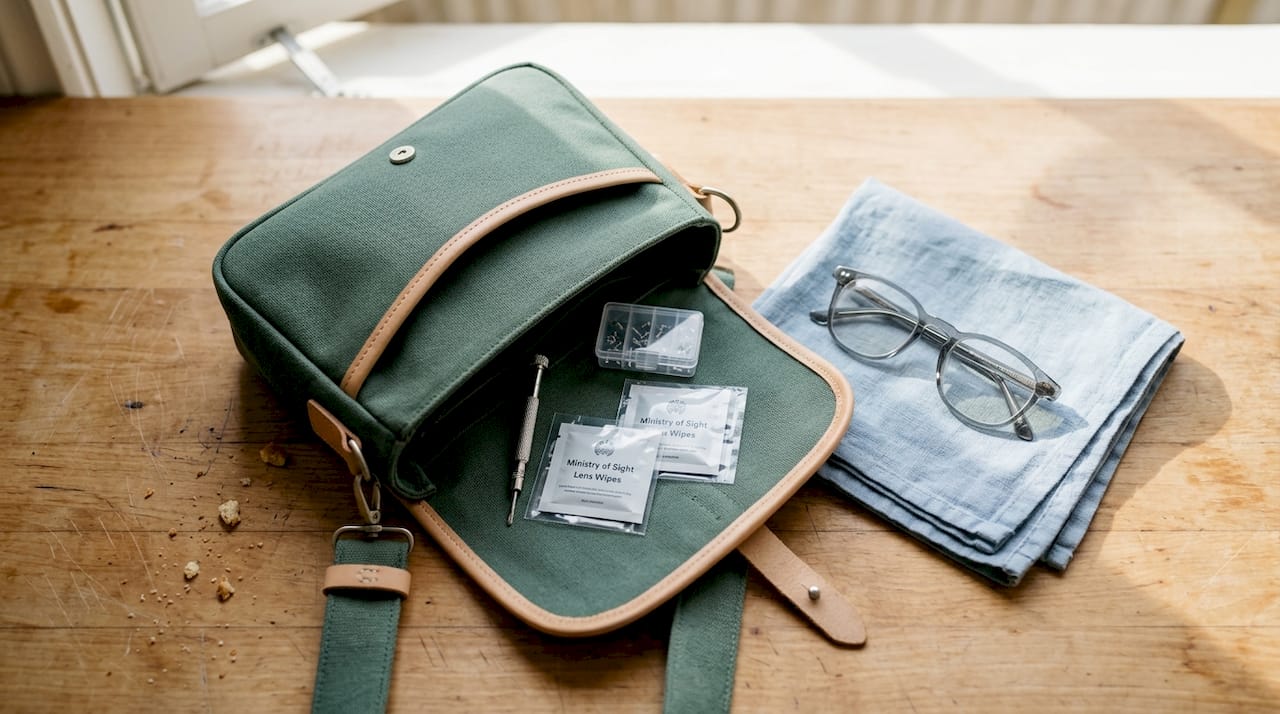
Pro Tip: Keep a small glasses repair kit (spare screws, a mini screwdriver, and two lens wipes) in your work bag and car glove box. When you need it, you’ll be very glad it’s there.
Smart storage for maximum glasses longevity
Proper care goes hand-in-hand with smart storage to truly extend your glasses’ lifespan. Where you keep your glasses when you’re not wearing them matters just as much as how you clean them.
At home:
- Always keep glasses in a hard case when not in use, even on your bedside table. A case prevents accidental rolling off a surface and keeps lenses away from dust.
- Designate one consistent spot for your glasses at home. This removes the daily search-and-grab moment that so often ends with glasses being snatched up roughly.
- Keep glasses away from bathrooms when possible. Humidity accelerates metal corrosion on hinges and nose pads, and steam from hot showers can warp frames over time.
- Never rest glasses on top of your head for extended periods. This stretches the temples apart, loosening the fit around your ears.
When travelling:
- Use a rigid travel case inside your luggage rather than soft pouches, which offer almost no crush resistance.
- Pack glasses in the middle of your bag surrounded by soft clothing, not in an outer pocket where they’re vulnerable to impact.
- If flying, carry glasses in your hand luggage rather than checked bags, where luggage handling can be rough.
- In beach or outdoor environments, use a glasses strap or leash to prevent accidental drops into sand or water.
| Storage situation | Best option | Worst option |
|---|---|---|
| At home overnight | Hard case on bedside table | Face-down on a flat surface |
| In a bag or handbag | Hard-shell case in an inner pocket | Loose in main compartment |
| At the beach or outdoors | Leash and protective case | Resting on a towel or chair |
| In the car | Case in glove box, not dashboard | On the dashboard in sunlight |
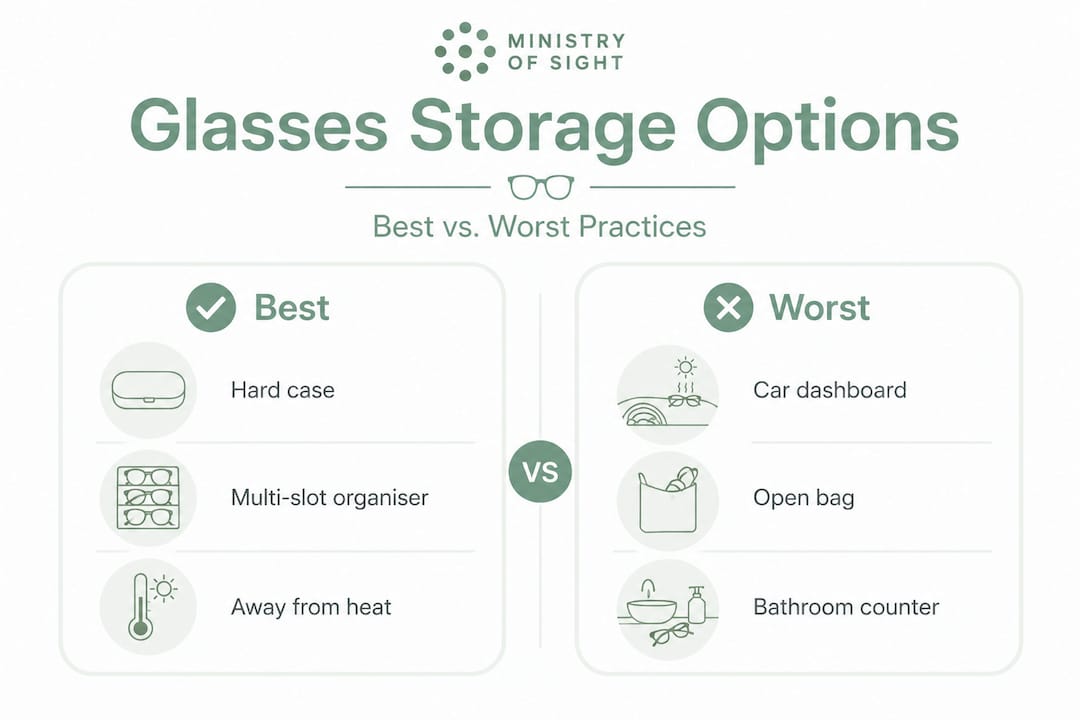
For more practical organisation ideas and home storage solutions, our glasses storage tips guide is packed with room-by-room advice. If you want focused advice for home environments specifically, storing glasses at home covers the most common household scenarios in detail.
Experts consistently highlight that proper storage practices are one of the most overlooked factors in extending the usable life of eyewear, yet require almost no effort once they become habitual.
Pro Tip: If you own multiple pairs, invest in a glasses stand or multi-slot organiser for your dressing table. It keeps frames accessible, prevents stacking, and honestly looks great.
Why caring for your glasses is a lifelong investment
Bringing all the practical tips together, let’s step back and look at the bigger picture of why glasses care is so genuinely important.
There’s a cultural habit in Australia, as in many countries, of treating glasses as functional tools to be replaced when they stop working optimally. But this mindset quietly costs people a lot of money and creates unnecessary frustration. A quality pair of frames, properly maintained, should last five to eight years comfortably. Most people replace frames every two to three years, often not because the frames have failed, but because they’ve accumulated damage that could have been prevented.
Think about what that means financially. If a good pair of frames costs $300 and lasts three years with poor care, that’s $100 per year. The same frames cared for properly might last six years, cutting that cost in half. And this doesn’t account for the replacement lens costs when scratched lenses need regrinding, which can easily add another $150 to $300 per incident.
Beyond money, there’s a comfort and vision argument. Glasses that fit well and have clean, undamaged lenses simply perform better. Your eyes work harder to compensate for scratched or misaligned lenses, leading to eye strain, headaches, and fatigue over the course of a day. Many people don’t connect these symptoms to their glasses because the lens degradation happens so gradually.
We’d also argue that there’s real satisfaction in caring for your possessions. Quality eyewear is personal. It sits on your face, frames your expression, and contributes to how you present yourself to the world. Treating it as valued rather than disposable is a small but meaningful shift in mindset. Our comprehensive maintenance guide brings together everything you need to make this mindset practical and sustainable over the long term.
The uncomfortable truth is that most glasses damage is entirely preventable. The tips in this guide aren’t complicated or time-consuming. They take minutes a day. The barrier is simply knowing what to do and making the decision to be consistent.
Find the right accessories and professional support
Ready to put these tips into action? The right accessories and backup support make it genuinely easy to follow through on good habits.

At Ministry of Sight, we stock a curated range of glasses accessories including microfibre cloths, hard cases, and cleaning solutions designed to keep your eyewear in excellent condition day after day. Our popular eyewear leashes come in styles that are both practical and genuinely stylish, so you’re never choosing between fashion and function. If you’d like to learn more about our commitment to quality eyewear and customer satisfaction, visit our about Ministry of Sight page to discover why thousands of Australians trust us for their vision needs. We offer free shipping across Australia on every order, making it easy to get everything you need delivered to your door.
Frequently asked questions
How often should I clean my glasses to prolong their life?
Clean your glasses daily with a microfibre cloth and lens solution to prevent build-up and scratching. Daily cleaning is far easier than trying to remove hardened oils or grime that has bonded to lens coatings over several days.
What materials should I avoid when cleaning my lenses?
Avoid paper towels, tissues, or clothing as these can scratch or damage lens coatings. Even fabrics that feel soft to the touch contain fibres that create micro-abrasions on optical-grade lens surfaces.
How do I prevent my glasses from getting loose?
Check and tighten screws regularly and have periodic professional adjustments to keep frames secure. Most optometrists offer free adjustments as part of their ongoing customer care.
Is it okay to leave my glasses on the car dashboard?
It’s best to avoid this because extended heat and sunlight can warp frames and damage lens coatings, particularly in Australia’s intense climate. Store them in a case in the glove box instead.
Can the case I use really affect how long my glasses last?
Yes, using a quality hard case significantly reduces the risk of breakage and scratches compared to soft pouches or no case at all. A rigid case is the single most effective passive protection you can give your eyewear.
Recommended
- Benefits of scratch-resistant lenses for lasting eyewear – MINISTRY OF SIGHT
- Reading glasses for over 40s in Australia: the guide – MINISTRY OF SIGHT
- Top Tips to Prevent Eye Strain for Aussie Eyewear Shoppers – MINISTRY OF SIGHT
- 7 Best Tips for Choosing Reading Glasses for Australia Climate – MINISTRY OF SIGHT
- How to Clean Diamond Jewelry: Restore Sparkle and Longevity – Diamonds


