

Choosing glasses that last can feel like a gamble. You’ve probably experienced the frustration of frames that snap at the hinges, lenses that scratch within weeks, or nose pads that loosen after minimal wear. Understanding what makes glasses genuinely durable saves you money and hassle. This guide walks you through certified standards, material choices, practical inspection methods, and maintenance strategies that help you confidently identify glasses built to withstand daily Australian life. You’ll learn exactly what to look for before you buy.
Table of Contents
- Key takeaways
- Understand certified durability standards and why they matter
- Assess frame weight, materials and hinge quality to spot durability
- Understand how frame tension and mounting affect impact resistance and durability
- Explore durable glasses and accessories at ministry of sight
- Frequently asked questions about identifying durable glasses
Key Takeaways
| Point | Details |
|---|---|
| Certification standards | AS/NZS 1067 and AS/NZS 1337.6 indicate tested UV protection and frame durability. |
| Durable materials | Titanium frames resist corrosion and bending while polycarbonate lenses offer strong impact resistance. |
| Lightweight frames | Frames under twenty grams feel comfortable during extended wear and are less prone to distortion. |
| Hinge quality checks | Test hinge tension and inspect adjustable parts to detect quality before buying. |
| Frame materials matter for lenses | Frame material impacts lens impact resistance more than frame tension. |
Understand certified durability standards and why they matter
When you’re shopping for glasses in Australia, certification markings provide your first reliable indicator of quality. The AS/NZS 1067 standard for sunglasses ensures UV protection meets tested benchmarks, whilst AS/NZS 1337.6 addresses structural durability requirements for frames and lenses. These aren’t just bureaucratic labels. They represent rigorous testing that confirms your glasses can handle real-world conditions without compromising your eye health or falling apart prematurely.
Look for these certification codes printed on the temple arms or etched into the lens edges. Reputable manufacturers display them prominently because they’ve invested in meeting these standards. If you can’t find any certification markings, that’s a red flag. You’re essentially trusting the manufacturer’s word without independent verification.
Key certification benefits:
- AS/NZS 1067 confirms UV protection levels appropriate for Australian sun exposure
- AS/NZS 1337.6 validates frame and lens durability through impact and stress testing
- Certified products undergo independent laboratory assessment before reaching consumers
- Standards compliance typically correlates with superior materials like titanium and polycarbonate
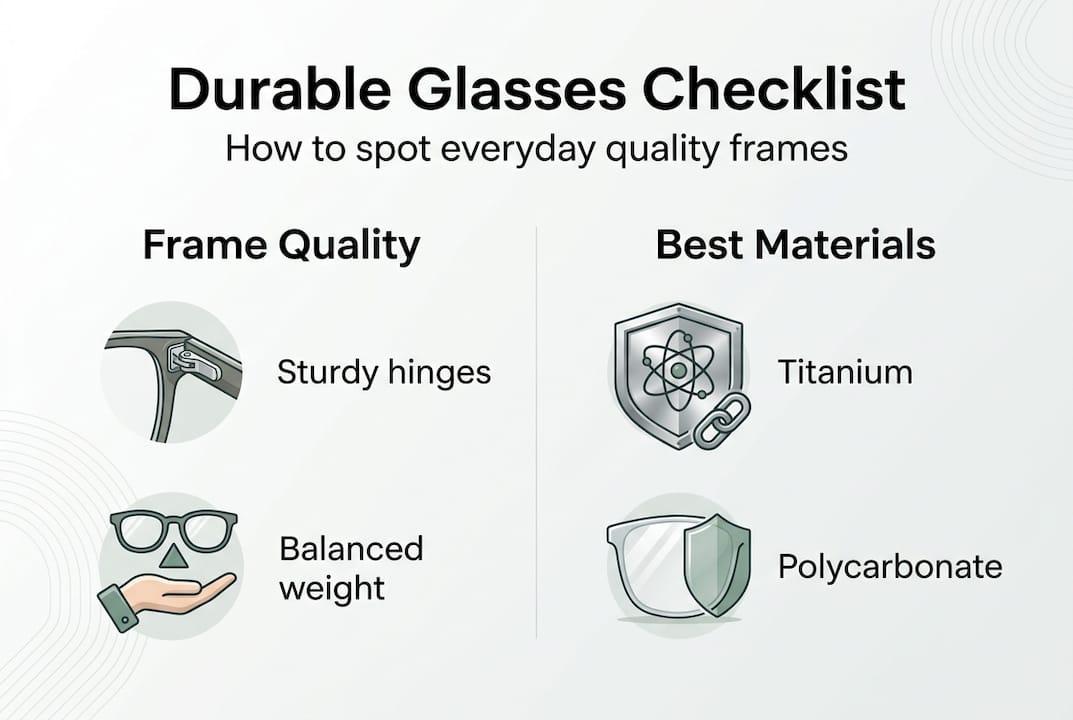
Materials matter enormously when it comes to durability. Titanium frames resist corrosion, bend without breaking, and maintain their shape through years of daily wear. Polycarbonate lenses offer exceptional impact resistance, making them ideal for active lifestyles or clumsy moments. When you see certification markings paired with these materials, you’ve found glasses engineered for longevity.
“Consumers should check for AS/NZS 1067 for sunglasses UV and AS/NZS 1337.6 markings on frames for certified durability, prioritising titanium and polycarbonate for everyday long-lasting use.”
These standards give you confidence beyond marketing claims. They represent measurable performance thresholds that protect both your vision and your investment. When you’re comparing options, certified glasses consistently outperform uncertified alternatives in real-world durability tests. Learning how to spot quality reading glasses starts with understanding these fundamental standards. The right reading glasses frame materials combined with proper certification create glasses that truly last.
Assess frame weight, materials and hinge quality to spot durability
Once you understand certifications, physical inspection reveals quality that certifications alone can’t capture. Frame weight serves as your first practical benchmark. Glasses weighing under 20 grams feel comfortable during extended wear and typically indicate thoughtful engineering. Heavy frames create pressure points that lead to discomfort and frame distortion over time. Pick up several pairs and compare. The difference becomes obvious quickly.

Material choice directly impacts durability and comfort. Titanium offers unmatched strength-to-weight ratios, resisting corrosion and maintaining flexibility without permanent deformation. Polycarbonate provides similar benefits for lenses and some frame components. Standard plastic frames might cost less initially, but they crack under stress and degrade faster when exposed to heat or sunlight. Heavy metal alloys add unnecessary weight without proportional durability gains.
Material comparison for everyday durability:
| Material | Durability rating | Weight | Flexibility | Corrosion resistance |
|---|---|---|---|---|
| Titanium | Excellent | Very light | High | Excellent |
| Polycarbonate | Excellent | Light | Moderate | Good |
| Stainless steel | Good | Moderate | Low | Good |
| Acetate plastic | Fair | Light | Low | Fair |
| Standard plastic | Poor | Very light | Very low | Poor |
Hinge quality separates glasses that last from those that fail within months. Spring hinges allow frames to flex outward without breaking, accommodating different head sizes and reducing stress on mounting points. Test hinges by gently opening and closing the temples. They should move smoothly without catching or feeling loose. Quality hinges complete 500 to 50,000 cycles in manufacturer testing, but you can assess basic function in-store.
Pro Tip: Gently press the temples outward whilst wearing the frames. Spring hinges should flex comfortably and return to position without resistance. Stiff hinges that don’t give at all often crack at stress points within the first year of regular use.
Adjustable features indicate thoughtful design. Nose pads that you can reposition accommodate different facial structures and reduce pressure points that cause frame warping. Adjustable temple tips allow you to customise fit, distributing weight evenly and preventing the frames from sliding down your nose. These features extend durability by reducing stress concentration on fixed points.
When you’re evaluating frames, hold them at eye level and inspect the joints where temples connect to the front. Quality construction shows smooth, even welds or seamless integration without visible gaps. Rough edges, uneven spacing, or loose screws signal manufacturing shortcuts that compromise longevity. Understanding finding durable glasses frames involves recognising these subtle quality indicators. Proper reading glasses maintenance and knowing how to store glasses properly extends the life of well-made frames even further.
Understand how frame tension and mounting affect impact resistance and durability
A common misconception suggests that tighter frame mounting protects lenses better. Research shows that frame tension minimally affects lens impact resistance compared to the inherent strength of lens and frame materials. What really matters is choosing certified materials that meet impact standards, not how tightly the frame grips the lens edges.
Lens material determines impact resistance far more than mounting style. Polycarbonate lenses withstand significant force without shattering, regardless of whether they’re mounted in tight or loose frames. Standard plastic lenses crack under similar impacts even when mounted securely. This distinction matters because many consumers assume a snug-fitting frame compensates for inferior lens material. It doesn’t.
Common misconceptions about frame tension:
- Tighter frames don’t significantly improve lens impact protection
- Mounting style matters less than certified material quality
- Overly tight frames can actually stress lens edges and cause premature cracking
- Flexible mounting with quality materials outperforms rigid mounting with inferior materials
Frame material quality affects overall durability more than any single design feature. A titanium frame with properly mounted polycarbonate lenses survives drops, impacts, and daily stress that would destroy plastic frames with identical mounting styles. The material absorbs and distributes force, preventing catastrophic failure. Mounting primarily keeps lenses secured during normal use, not during impact events.
Pro Tip: When comparing glasses, ask about lens material certification first, frame material second, and mounting style last. This priority order reflects actual durability factors rather than marketing emphasis.
“Expert nuance: Frame tension minimally affects lens impact resistance; real-world survival prioritises material over mounting, but certified testing ensures compliance.”
Certified testing remains essential because it validates manufacturer claims about material performance. Standards like AS/NZS 1337.6 include impact tests that simulate real-world accidents. Glasses that pass these tests demonstrate proven durability regardless of mounting tension. Without certification, you’re relying on assumptions about how materials and mounting interact under stress.
This understanding changes how you evaluate glasses. Instead of focusing on how tightly lenses fit in frames, examine certification markings and material specifications. Quality materials properly mounted outlast inferior materials tightly mounted every time. Learning how to check glasses quality and understanding what makes glasses durable helps you prioritise factors that genuinely affect longevity.
Explore durable glasses and accessories at ministry of sight
Now that you understand what makes glasses durable, finding quality options becomes straightforward. Ministry of Sight offers frames crafted from premium materials including titanium, designed to withstand daily Australian conditions. Their range includes lightweight options with spring hinges and adjustable features that extend frame life whilst maintaining comfort.

Protective accessories matter as much as frame quality. Chains prevent accidental drops, whilst proper storage cases shield your glasses from scratches and impact damage. Ministry of Sight’s reading glasses accessories collection includes storage solutions that complement durable frames. Their stylish glasses frames combine aesthetic appeal with structural integrity, and current offers make investing in quality eyewear more accessible. Choosing a trusted supplier ensures you’re getting genuinely durable products backed by proper quality standards.
Frequently asked questions about identifying durable glasses
What certifications should I look for on durable glasses?
Look for AS/NZS 1067 certification for UV protection and AS/NZS 1337.6 for durability standards on frames and lenses. These certifications confirm independent testing has verified the glasses meet Australian safety and quality benchmarks. You’ll typically find these codes printed on temple arms or etched into lens edges.
How can I test if glasses hinges are durable?
Gently open and close the temples several times to check for smooth movement without catching or excessive looseness. Quality hinges, especially spring hinges, should flex outward slightly when you press the temples and return to position smoothly. Hinges that feel stiff, loose, or make clicking sounds often indicate poor construction that won’t withstand daily use.
Does a heavier frame mean more durable?
No, heavier frames don’t necessarily indicate better durability. Lightweight titanium and polycarbonate frames under 20 grams typically outlast heavier alternatives because they distribute stress better and resist corrosion. Heavy frames often create pressure points that lead to warping and discomfort, whilst quality lightweight materials maintain their shape through years of wear.
Are plastic frames less durable than metal?
Standard plastic frames generally offer less durability than quality metal frames like titanium or stainless steel. However, high-quality acetate and polycarbonate plastics can rival metal durability when properly constructed. Material quality and manufacturing standards matter more than simply choosing metal over plastic.
How important is lens material for durability?
Lens material is critically important for overall glasses durability. Polycarbonate lenses resist impact significantly better than standard plastic lenses, regardless of frame quality. The lens material determines how well your glasses survive drops, impacts, and daily stress, making it one of your most important selection criteria alongside frame material and certification.
Recommended
- Understanding What Makes Glasses Durable for Everyday Use – MINISTRY OF SIGHT
- Finding Durable Glasses Frames: A Practical How-To Guide – MINISTRY OF SIGHT
- 8 Durable Reading Glasses for Women – Expert Comparison 2025 – MINISTRY OF SIGHT
- How to Store Glasses Properly for Long-Lasting Use – MINISTRY OF SIGHT
- Premium eyewear features: style meets durability in 2026 – 4 VISION


