

Finding the right high-strength reading glasses can feel like a challenge for many Australian adults over 40. As vision changes with age, reading small print or handling detailed tasks becomes harder. In fact, over half of Australian adults experience some form of presbyopia by their mid-forties. This guide highlights practical solutions for age-related vision issues and reveals what matters when shopping online for eyewear designed to deliver strong magnification and lasting comfort.
Table of Contents
- What Are High-Strength Reading Glasses?
- Maximum Dioptre Values And Their Uses
- Who Needs Higher Strength Lenses?
- Safety Risks With Strong Reading Glasses
- Alternatives For Extreme Vision Correction
Key Takeaways
| Point | Details |
|---|---|
| High-Strength Reading Glasses | Designed for advanced vision challenges, offering stronger magnification than standard glasses, aiding tasks requiring detailed viewing. |
| Dioptre Values | Understanding dioptre ranges helps individuals select proper lenses for their specific vision needs, with higher values addressing severe near-vision loss. |
| Target Users | Key users include older adults and professionals needing precision, as higher strength lenses improve daily visual activities significantly. |
| Safety Risks | Improper use of high-strength lenses may lead to visual fatigue and balance issues; professional assessment is essential to mitigate risks. |
What Are High-Strength Reading Glasses?
High-strength reading glasses are specialised optical devices designed to provide substantial magnification for individuals experiencing advanced vision challenges. These glasses offer significantly stronger lens powers compared to standard reading glasses, typically ranging from +2.50 to +4.00 diopters or even higher. Magnification strength becomes crucial for people dealing with significant near-vision difficulties, particularly those managing advanced presbyopia or other age-related vision impairments.
Unlike standard reading glasses that provide modest visual assistance, high-strength readers enable detailed viewing for precision activities. Whether you’re reading microscopic instruction manuals, working on intricate craft projects, or managing documents with tiny print, these advanced glasses offer enhanced visual clarity. The increased optical power allows users to see fine details that would otherwise remain indecipherable with lower-strength lenses.
The primary purpose of high-strength reading glasses extends beyond simple text magnification. They provide a comprehensive solution for individuals whose vision has progressively diminished, helping them maintain independence and continue engaging in close-up tasks. Typical users include older adults, professionals working with detailed documents, craftspeople, and anyone experiencing significant near-vision challenges that standard reading glasses cannot adequately address.
Pro tip: Always consult an optometrist before selecting high-strength reading glasses to ensure you get the precise magnification that matches your specific vision requirements.
Maximum Dioptre Values And Their Uses
Dioptre values represent the precise optical measurement determining the magnification power of reading glasses, ranging from low-strength +1.00 to maximum strengths of +6.00 or higher. These numerical values indicate how effectively lenses can focus light and correct near-vision challenges, with each increment representing significant changes in visual clarity. Lens strength measurements help individuals understand their specific visual correction requirements.
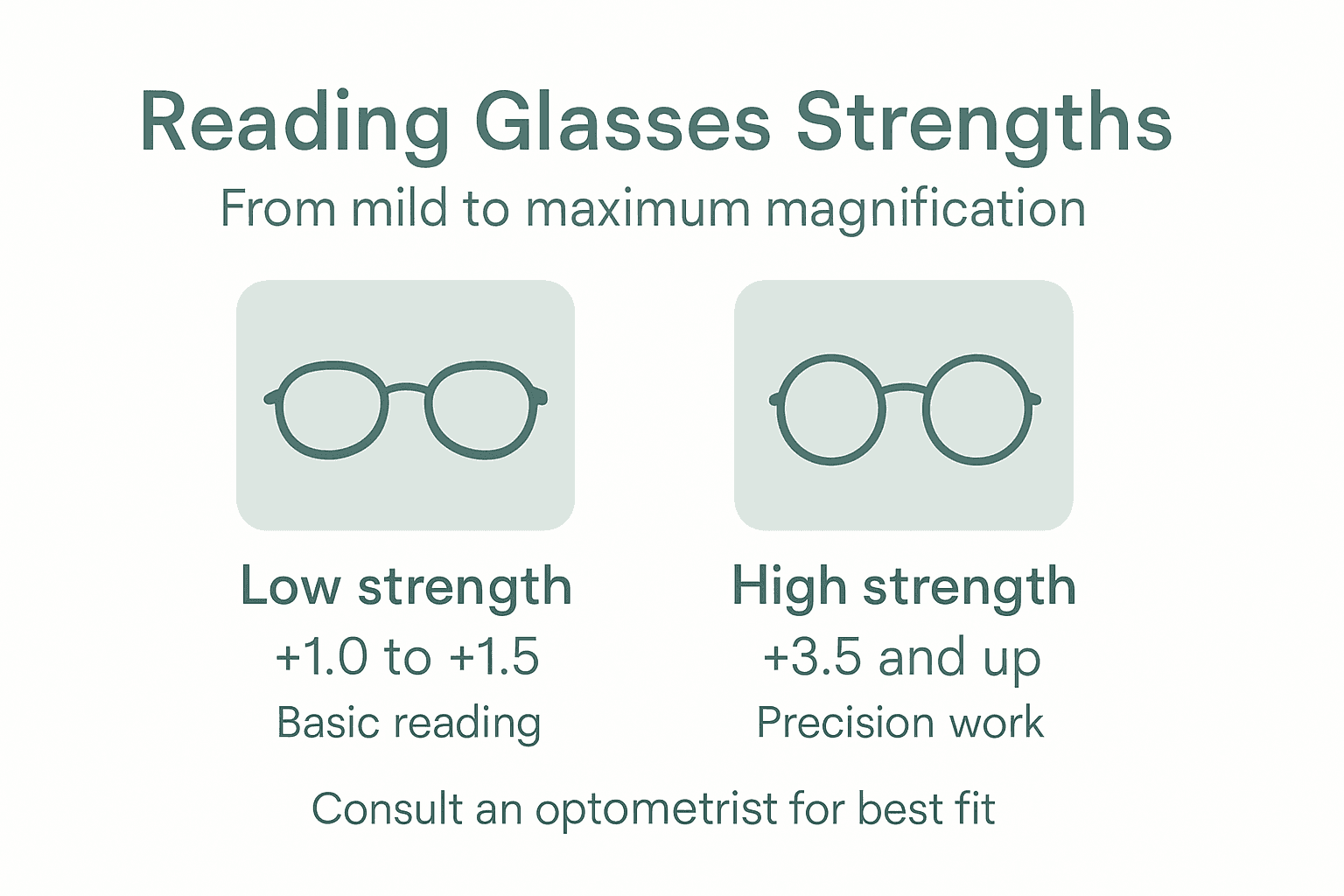
Reading glasses typically fall into distinct dioptre categories that address varying levels of vision impairment. Low-strength ranges include +1.00 to +1.50, suitable for mild presbyopia, while moderate strengths span +2.00 to +2.50. High-strength readers occupy the +3.00 to +4.00 range, catering to more advanced vision challenges. Maximum dioptre values exceeding +4.50 are specialised solutions for individuals experiencing significant near-vision difficulties, often recommended after comprehensive optometric assessments.
Here’s a quick reference comparing dioptre categories and their typical users:
| Dioptre Range | Best For | Typical Activities |
|---|---|---|
| +1.00 to +1.50 | Mild presbyopia | Reading books, casual tasks |
| +2.00 to +2.50 | Moderate vision decline | Computer work, office tasks |
| +3.00 to +4.00 | Advanced vision impairment | Detailed crafts, technical work |
| +4.50 and above | Severe near-vision loss | Microscopy, specialist professions |
The practical application of maximum dioptre values extends beyond simple text magnification. Professionals like jewellers, watchmakers, and technical illustrators frequently require extremely high-strength reading glasses to perform intricate tasks. These powerful lenses enable precise visual work by dramatically enhancing fine detail perception, allowing users to maintain professional competence despite progressive vision changes.
Pro tip: Always have your vision professionally assessed before selecting maximum strength reading glasses to ensure you receive the most appropriate optical correction for your specific needs.
Who Needs Higher Strength Lenses?
Higher strength reading glasses are specifically designed for individuals experiencing significant vision challenges that standard reading glasses cannot adequately address. Reading glasses for mature individuals demonstrate how targeted optical solutions can dramatically improve daily visual functioning for those with advanced presbyopia or progressive vision deterioration.
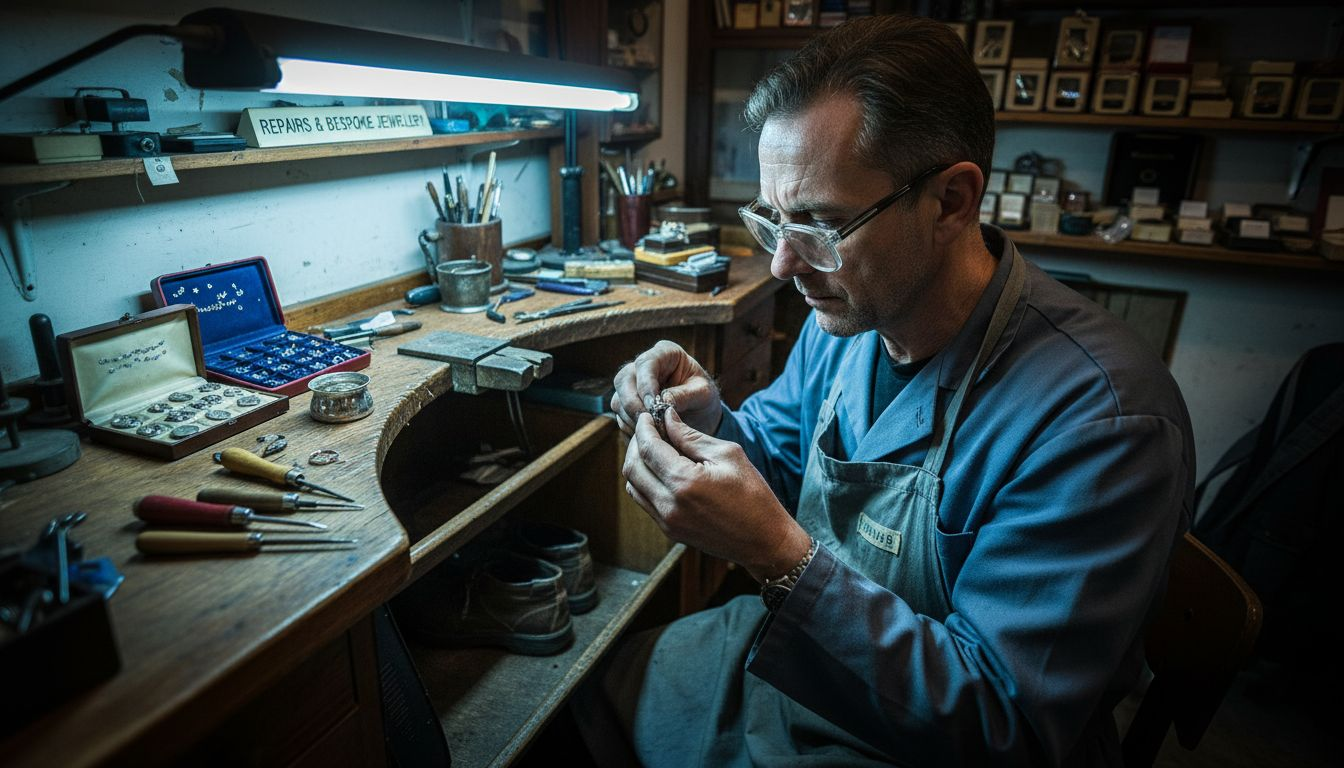
Multiple groups benefit substantially from higher strength lenses, including professionals requiring precise visual acuity and older adults managing age-related vision changes. Craftspeople like jewellers, electronic technicians, and microscopists often require +3.50 to +4.50 strength glasses to perform intricate tasks with exceptional detail resolution. Similarly, individuals over 50 experiencing rapid vision decline might find that standard +1.00 or +2.00 readers no longer provide sufficient visual clarity for reading, writing, or computer work.
Medical conditions can also necessitate higher strength reading glasses. Individuals managing conditions like diabetic retinopathy, macular degeneration, or those recovering from eye surgeries frequently require customised lens strengths beyond standard ranges. These specialised glasses help maintain independence by enabling continued engagement in reading, crafting, and other close-up visual activities that contribute to quality of life and personal autonomy.
Pro tip: Schedule regular eye examinations to track vision changes and ensure your reading glasses continue to provide optimal visual support.
Safety Risks With Strong Reading Glasses
Strong reading glasses can introduce unexpected visual challenges that compromise personal safety and comfort. Lens strength for computer use highlights the critical importance of precise optical correction, as inappropriate magnification can create significant perceptual distortions that impact daily functioning. Incorrectly prescribed high-strength lenses may cause depth perception issues, visual disorientation, and increased risk of accidents in various environments.
The primary safety risks associated with overly strong reading glasses include visual fatigue, reduced peripheral awareness, and potential balance disruptions. Individuals wearing lenses with excessive magnification might experience challenges navigating stairs, judging distance while walking, or performing tasks requiring spatial awareness. Professionals working in technical or precision environments are particularly vulnerable, as even slight visual miscalculations can lead to potential workplace incidents or errors.
Medical professionals emphasise that high-strength reading glasses should only be selected after comprehensive optometric assessments. Factors such as individual eye muscle coordination, existing vision conditions, and specific usage requirements must be carefully evaluated. Potential complications can range from temporary eye strain to more serious long-term visual adaptation problems, making professional guidance crucial in selecting appropriate lens strengths.
Pro tip: Always consult an optometrist and undergo a comprehensive eye examination before transitioning to higher strength reading glasses to mitigate potential safety risks.
Alternatives For Extreme Vision Correction
Individuals with extreme vision correction needs have multiple sophisticated options beyond traditional reading glasses. Presbyopic glasses provide innovative solutions for managing complex visual challenges, offering alternatives that extend well beyond standard optical interventions. These advanced approaches address significant vision limitations through non-surgical and surgical methods tailored to individual requirements.
Non-surgical alternatives include specialised contact lens technologies such as Orthokeratology (Ortho-K), which temporarily reshapes the cornea using overnight contact lenses. This technique allows users to experience improved vision during daytime without permanent surgical intervention. Additionally, multifocal and hybrid contact lenses provide customised correction for individuals with complex vision profiles, enabling precise visual adjustment without invasive procedures.
Surgical alternatives offer more permanent vision correction strategies for those with extreme prescription requirements. Procedures like Photorefractive Keratectomy (PRK), Implantable Collamer Lenses (ICL), and Refractive Lens Exchange (RLE) provide comprehensive solutions for patients with high prescriptions, thin corneas, or unique vision challenges. These interventions are particularly beneficial for individuals whose vision cannot be adequately corrected through traditional glasses or standard laser eye surgeries.
To better understand alternatives for extreme vision correction, here is a comparison of non-surgical and surgical options:
| Approach | Example Solution | Benefits |
|---|---|---|
| Non-surgical | Orthokeratology | Temporary daytime clarity |
| Non-surgical | Multifocal contacts | Customised visual correction |
| Surgical | PRK/ICL/RLE | Permanent vision improvement |
Pro tip: Consult an eye care professional to comprehensively evaluate your specific vision needs and determine the most appropriate correction strategy.
Discover High-Strength Reading Glasses That Truly Meet Your Needs
If you are struggling with advanced presbyopia or significant near-vision loss, finding the right glasses can feel overwhelming. High-strength reading glasses provide the powerful magnification needed to restore clarity and confidence in your daily tasks. At Ministry of Sight, we offer a great selection of Bold Reading Glasses designed for those who require stronger lenses without sacrificing style or comfort.
Explore our collection today and take advantage of free shipping across Australia plus buy-one-get-one deals. Don’t let inadequate eyewear limit your independence or professional precision. Visit Ministry of Sight now to find the perfect pair and see the fine details in your world once more. Need a sleek shape that fits your style and enhances your vision? Check out our Rectangular Reading Glasses for options that combine form and function beautifully.
Frequently Asked Questions
What are high-strength reading glasses?
High-strength reading glasses are specialised optical devices designed for individuals with advanced vision challenges, offering stronger lens powers than standard readers, typically ranging from +2.50 to +4.00 diopters or higher.
Who should consider using higher strength lenses?
Higher strength lenses are ideal for individuals experiencing significant near-vision difficulties that standard reading glasses cannot address, including older adults and professionals requiring precise visual acuity for detailed tasks.
What are the safety risks associated with using strong reading glasses?
Using overly strong reading glasses can lead to visual fatigue, reduced peripheral awareness, balance disruptions, and depth perception issues, which may increase the risk of accidents in various settings.
What alternatives exist for extreme vision correction if reading glasses are insufficient?
Non-surgical alternatives include specialised contact lenses like Orthokeratology and multifocal lenses, while surgical options encompass procedures such as PRK, Implantable Collamer Lenses (ICL), and Refractive Lens Exchange (RLE) for more permanent correction.


