

Nearly one in three Australian adults wear prescription glasses, but confusion around lens strength myths still leads to costly mistakes. For australian shoppers who want stylish frames with the right correction, understanding lens strength is essential for comfort and eye health. This guide explains practical facts about prescription strength, debunks common myths, and shares how to make confident eyewear choices, plus highlights current promotions on accessories for savvy australian shoppers.
Table of Contents
- Glasses Lens Strength Basics And Myths
- Types Of Lens Strengths In Eyewear
- How Prescriptions Translate To Lens Power
- Choosing The Right Lens Material And Coatings
- Risks, Costs, And Errors With Lens Strength
Key Takeaways
| Point | Details |
|---|---|
| Understanding Lens Strength | Glasses correct vision by bending light to focus on the retina, rather than weakening eyesight. |
| Types of Lenses | Selecting the right lens type is crucial; options include single vision, bifocal, trifocal, and progressive lenses to address various visual needs. |
| Prescription Accuracy | Precise eye prescriptions are essential; errors can lead to discomfort and vision problems, emphasising the need for regular eye exams. |
| Lens Materials and Coatings | Choosing appropriate lens materials and coatings enhances visual clarity and protection, tailored to individual lifestyles and needs. |
Glasses lens strength basics and myths
Understanding lens strength is more than just reading a prescription number - it’s about comprehending how glasses actually correct vision. Contrary to popular misconceptions, glasses are precision optical instruments designed to bend light precisely so it focuses correctly on your retina. Lens strength for reading glasses varies based on individual eye characteristics, helping people see clearly without straining their vision.
Many Australians believe wearing glasses weakens eyesight or creates dependency, but scientific research thoroughly debunks these myths. Eye professionals confirm that glasses are external visual aids that compensate for natural refractive errors - they do not fundamentally alter your eye’s structure or deteriorate vision. Your eyes naturally change over time due to aging, genetics, and environmental factors, not because of corrective lenses. The lens strength prescribed by optometrists precisely matches your specific visual requirements, ensuring optimal clarity and comfort.
Refractive errors like myopia, hyperopia, and astigmatism determine lens strength, which is measured in diopters. These measurements represent the optical power needed to focus light accurately onto your retina. Mild prescriptions might range from +0.25 to +2.50 for reading glasses, while more complex vision corrections could require stronger lens strengths. The key is working with eye care professionals who can conduct comprehensive assessments and recommend personalised lens solutions that match your unique visual needs.
Pro tip: Always have your eyes professionally examined annually, as lens strength requirements can subtly change over time, ensuring you maintain optimal visual clarity.
Types of lens strengths in eyewear
Eyewear lens strengths are not a one-size-fits-all solution but a nuanced system of optical corrections tailored to individual vision requirements. Understanding the Complete Guide to Choosing Lens Strengths helps Australians navigate the complex world of prescription eyewear with confidence. The primary lens strength categories are defined by specific refractive errors, each addressing unique visual challenges.
The most common lens strength types include single vision lenses, which correct one specific vision problem like nearsightedness or farsightedness. These lenses have a consistent optical power across the entire lens surface. In contrast, bifocal and trifocal lenses offer multiple focusing zones, allowing wearers to see clearly at different distances. Bifocals typically feature two distinct optical zones - one for close-up tasks and another for distance viewing - while trifocals add a middle-distance zone for intermediate vision needs.
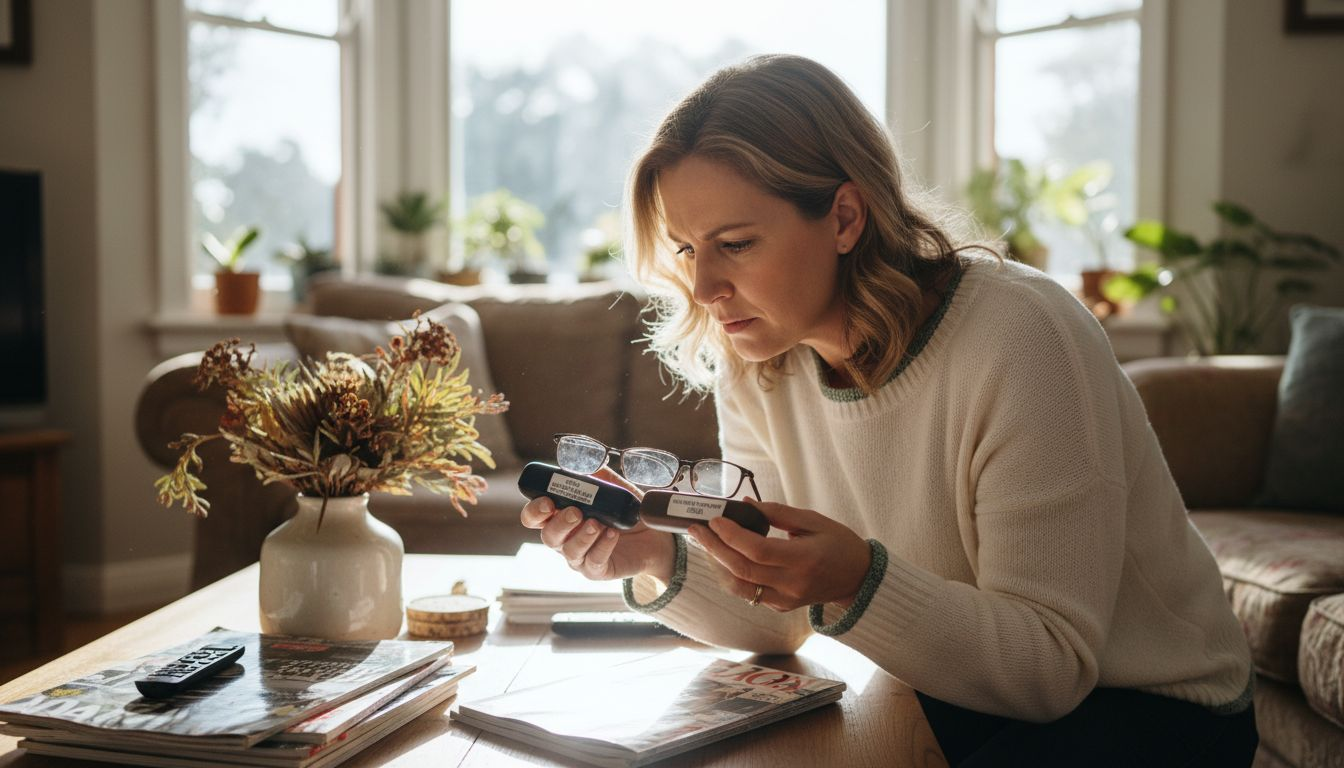
Modern lens technologies have evolved to include progressive lenses, which provide a seamless transition between near, intermediate, and distant vision without the visible line segments found in traditional bifocals. These advanced lenses offer a more natural visual experience, with lens strengths gradually changing across the lens surface. Prescription strengths range from mild corrections around +0.25 to +2.50 for reading glasses to more complex configurations addressing astigmatism, myopia, and presbyopia. Optometrists carefully measure and prescribe these personalised lens strengths to ensure optimal visual clarity and comfort.
Here’s a summary of common lens types and how they address vision needs:
| Lens Type | Visual Problem Addressed | Transition Between Zones |
|---|---|---|
| Single vision | Myopia or hyperopia | No transition, one optical power |
| Bifocal | Near and distance vision | Clear line separating two strengths |
| Trifocal | Near, intermediate, distance | Two lines, three distinct strengths |
| Progressive | Multiple vision distances | Smooth, invisible strength gradient |
Pro tip: When selecting eyewear, always request a comprehensive vision assessment that evaluates your unique lens strength requirements across different visual distances and activities.
How prescriptions translate to lens power
Translating an eye prescription into actual lens power is a precise science that requires understanding several key optical parameters. When you receive a prescription from your optometrist, it contains specific numerical values that directly correspond to the lens power needed to correct your vision. How to Choose the Right Lens Power for Your Reading Glasses provides insight into decoding these complex numerical codes that determine your visual correction.
The primary components of a prescription include the sphere (SPH) value, which indicates the lens power required to correct nearsightedness or farsightedness, measured in diopters. Negative values (with a minus sign) correct myopia, while positive values address hyperopia. The cylinder (CYL) and axis measurements address astigmatism, providing additional precision in lens design. These numerical values represent the exact optical correction needed, with each diopter representing the lens’s ability to focus light precisely on your retina.
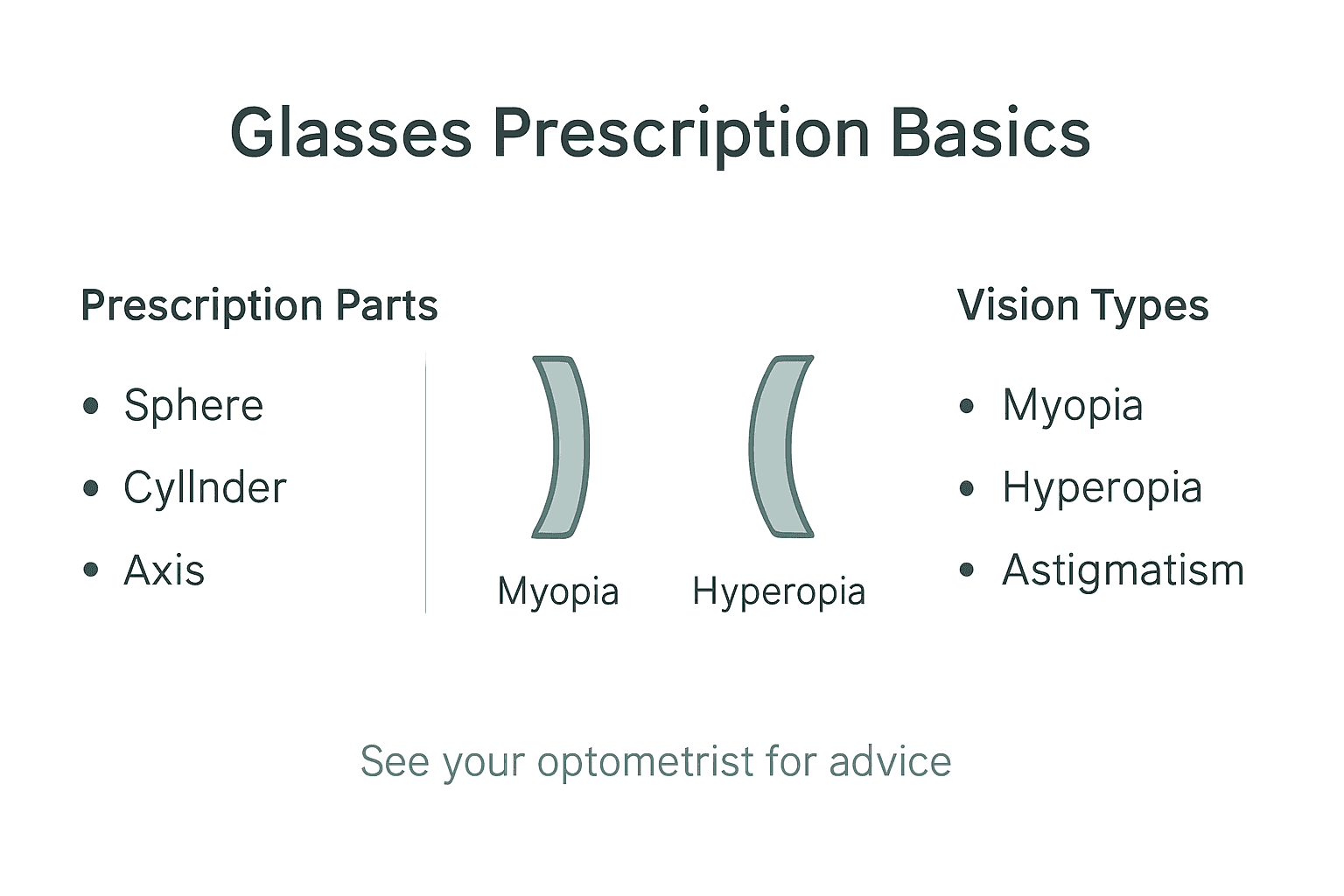
Modern lens manufacturing uses advanced technologies to transform these prescription values into precisely crafted corrective lenses. The process involves converting mathematical measurements into curved lens surfaces that bend light at exact angles. For instance, a prescription of -2.00 diopters means the lens will diverge light rays to compensate for nearsightedness, while +1.50 diopters will converge light rays to correct farsightedness. Optometrists use highly sophisticated equipment to measure these values with incredible accuracy, ensuring that your glasses provide the most precise vision correction possible.
Pro tip: Always keep a copy of your most recent prescription and have your eyes professionally tested every two years to ensure your lens power remains accurately matched to your current vision needs.
Choosing the right lens material and coatings
Selecting the optimal lens material and coatings is crucial for achieving both visual clarity and long-lasting comfort. The world of eyewear has evolved far beyond simple glass lenses, offering multiple advanced materials designed to enhance your visual experience. Reading Glasses Lens Coatings – Clarity, Comfort, Protection provides valuable insights into the sophisticated options available for modern eyewear.
Modern lens materials range from traditional glass to lightweight polycarbonate and high-index plastics, each offering unique advantages. Polycarbonate lenses are incredibly impact-resistant and lightweight, making them ideal for active lifestyles or prescription glasses for children. High-index materials provide exceptional thinness for stronger prescriptions, reducing lens weight and improving aesthetic appeal. The refractive index of these materials determines how effectively they bend light, with higher indices allowing for thinner, more comfortable lenses.
Coatings transform standard lenses into high-performance visual tools. Anti-reflective coatings reduce glare and eye strain, particularly beneficial for computer users and night driving. Scratch-resistant layers protect your investment by preventing surface damage, while UV-blocking coatings shield your eyes from harmful solar radiation. Some advanced coatings even offer hydrophobic properties that repel water and dust, ensuring your lenses remain clean and clear in various environmental conditions. Optometrists recommend selecting coatings based on your specific lifestyle, work environment, and visual requirements.
Below is a quick guide to lens material and coating choices:
| Material/Coating | Key Benefit | Suitable For |
|---|---|---|
| Polycarbonate | Highly impact-resistant | Active lifestyles, children |
| High-index plastic | Thin and light for strong Rx | High prescriptions |
| Anti-reflective coat | Reduces glare and eye strain | Computer users, drivers |
| UV-blocking coat | Shields from solar radiation | Outdoor use |
Pro tip: Invest in multiple lens coatings that match your daily activities, such as anti-reflective protection for digital work and UV blocking for outdoor pursuits.
Risks, costs, and errors with lens strength
Navigating the complex world of lens strength requires understanding potential risks and avoiding costly mistakes. Strongest Reading Glasses – What They Mean for You highlights the critical importance of precision in eyewear prescriptions. Incorrect lens strength can lead to significant visual discomfort, ranging from mild eye strain to persistent headaches and potential long-term vision adaptation problems.
The financial implications of lens strength errors extend beyond immediate discomfort. Prescription inaccuracies can result in multiple costly lens replacements, with professional optical standards allowing only minimal tolerance ranges for sphere, cylinder, and axis measurements. Even small deviations of 0.25 diopters can cause noticeable visual disturbances, potentially requiring additional eye examinations and lens remakes. These errors not only impact your wallet but can also cause temporary visual stress, leading to reduced productivity and increased eye fatigue.
Professional optometrists emphasise that lens strength errors are not just technical issues but potential health risks. Consistently wearing incorrectly powered lenses can trigger adaptive vision problems, where your eyes strain to compensate for improper optical correction. This continuous strain may lead to increased eye muscle tension, reduced visual comfort, and potentially accelerated vision deterioration. Factors like digital screen time, workplace environment, and individual eye physiology further complicate the precision required in lens strength selection.
Pro tip: Schedule comprehensive eye examinations annually and always request a detailed explanation of your lens prescription to understand potential risks and optimal correction strategies.
Discover the Perfect Lens Strength for Your Visual Needs with Ministry of Sight
Choosing the right glasses lens strength is essential to enjoy clear vision and avoid eye strain or discomfort. If you have questions about your prescription or want stylish frames that complement your personal style while matching your precise lens requirements, explore our Bold Reading Glasses. Our collection offers carefully crafted eyewear that balances optical precision with modern aesthetics.

Act now to ensure your eyewear fits your vision perfectly. Visit Ministry of Sight today to browse our full range, including Limited Edition Reading Glasses and Geometric Reading Glasses. Take the next step toward clearer, more comfortable vision with free shipping across Australia and our satisfaction guarantee. Your eyes deserve the best care and style tailored just for you.
Frequently Asked Questions
What do the numbers on my glasses prescription mean?
The numbers on your glasses prescription indicate the lens power needed to correct your vision, typically expressed in diopters. The sphere (SPH) value corrects myopia or hyperopia, while the cylinder (CYL) and axis measurements address astigmatism.
How is lens strength determined for different visual needs?
Lens strength is determined by specific refractive errors like myopia, hyperopia, and astigmatism. Optometrists conduct comprehensive assessments to prescribe the appropriate lens power that suits your individual vision requirements, ensuring clarity and comfort.
Do glasses weaken eyesight or create dependency?
No, wearing glasses does not weaken eyesight or create dependency. Glasses are external aids that help correct natural refractive errors, and they do not alter your eye’s structure. Natural changes in eyesight over time are due to aging, genetics, and environmental factors, not because of corrective lenses.
What types of lenses are available for different vision problems?
The main types of lenses include single vision for one specific vision issue, bifocal and trifocal for multiple zones of focus, and progressive lenses that provide a seamless transition between different visual distances, addressing various user needs.


