

Your reading glasses deserve more than a quick wipe on your shirt. Many Australians struggle with scratched lenses, loose frames, and foggy vision simply because they’re unsure how to properly maintain their eyewear. This comprehensive checklist provides practical, easy-to-follow steps that prevent damage and preserve clarity. By implementing these straightforward maintenance habits, you’ll extend your glasses’ lifespan significantly whilst ensuring optimal performance every time you reach for them.
Table of Contents
- Key takeaways
- Start with evaluating your maintenance needs
- Cleaning and handling basics
- Storage solutions to protect your glasses
- Routine checks and simple repairs
- Discover the best accessories and care products
- Frequently asked questions
Key Takeaways
| Point | Details |
|---|---|
| Regular cleaning and handling | Gentle cleaning with the right microfibre cloths and using both hands when putting on and taking off glasses helps prevent scratches and frame misalignment. |
| Protective storage | Storing glasses in a dedicated case and in a stable spot away from moisture shields lenses and frames from damage. |
| Regular inspections | Regular checks for loose screws, scratches or bent frames allow timely repairs before problems worsen. |
| Use recommended accessories | Using recommended accessories such as authorised lens cleaners and microfibre cloths supports maintenance efforts. |
Start with evaluating your maintenance needs
Before diving into specific maintenance tasks, you need to understand your unique circumstances. Proper care depends on factors like usage frequency, frame material, and environment, so assessing these elements helps you prioritise the right checklist items.
Consider how many hours daily you wear your reading glasses. Heavy users who keep them on for extended periods face different challenges than occasional readers who only use glasses briefly. Your carrying habits matter too. Do you constantly move between rooms, or do your glasses stay on your desk? Frame material plays a crucial role in determining care requirements. Metal frames resist some impacts better but may corrode in humid conditions, whilst plastic frames can become brittle with temperature extremes.
Your environment significantly influences maintenance frequency. Dusty workshops demand more frequent cleaning than air-conditioned offices. Coastal areas with salt air require extra attention to prevent corrosion. Evaluate your personal cleaning habits honestly. Some people instinctively reach for their shirt to wipe lenses, whilst others methodically clean with proper materials.
Key factors to assess include:
- Daily usage duration and frequency of putting on and removing glasses
- Whether you carry glasses in pockets, bags, or keep them stationary
- Frame material sensitivity to moisture, heat, or physical stress
- Environmental exposure to dust, humidity, or temperature fluctuations
- Current cleaning habits and available maintenance tools
Understanding these factors helps you customise the reading glasses maintenance guide longevity principles to your specific situation. This personalised approach ensures you focus energy on the maintenance steps that deliver the greatest impact for your circumstances.
Cleaning and handling basics
Proper cleaning technique forms the foundation of effective maintenance. Most lens damage occurs during cleaning, not from regular wear. Using gentle cleaning methods with appropriate cloths extends lens life and prevents scratching, making this your most important daily habit.
Start by rinsing your lenses under lukewarm water. This simple step removes dust particles and debris that would otherwise scratch the surface when you wipe. Never use hot water, as it can damage lens coatings. After rinsing, apply a small drop of mild dish soap if needed, then rinse again thoroughly.
Your cleaning cloth matters enormously. Microfibre cloths specifically designed for eyewear are essential. Paper towels, tissues, and clothing fibres act like sandpaper on delicate lens coatings. Keep multiple microfibre cloths available so you always have a clean one ready. Wash these cloths regularly with mild detergent to remove accumulated oils and particles.
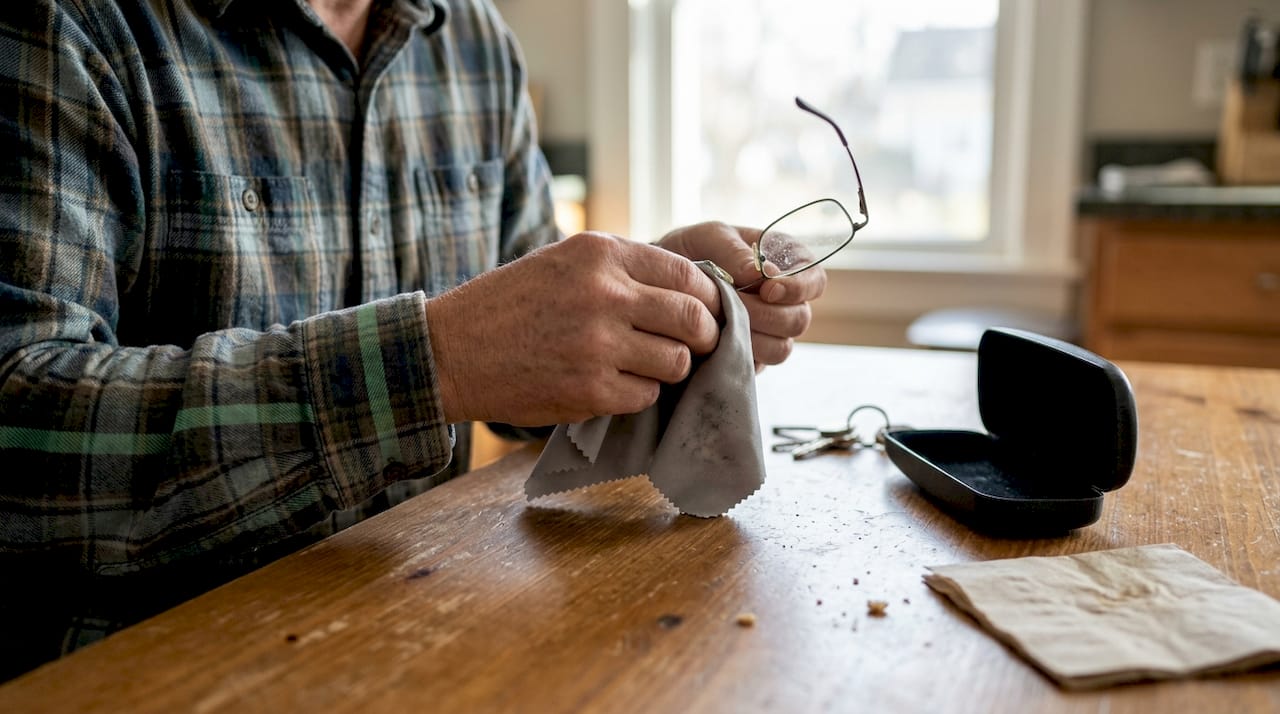
Avoid household cleaners, window sprays, or anything containing ammonia or bleach. These chemicals strip protective coatings from lenses. Specialised lens cleaning solutions are safe alternatives when water alone isn’t sufficient.
Handling technique prevents frame damage. Always use both hands when putting on or removing your glasses. Single-handed removal twists frames out of alignment over time. Hold frames by the temples near the hinges, not by gripping a single arm. This distributes pressure evenly and prevents warping.
Essential handling practices:
- Rinse lenses before wiping to remove abrasive particles
- Use only microfibre cloths designed for eyewear
- Remove glasses with both hands to maintain frame alignment
- Avoid placing glasses lens-down on any surface
- Never clean lenses with clothing, paper products, or tissues
- Keep cleaning cloths in protective cases when not in use
Pro tip: Keep a microfibre cloth in every location where you regularly use your glasses. Having one at your desk, in your car, and beside your favourite reading chair ensures you’ll always clean properly rather than reaching for whatever’s handy.
The reading glasses cleaning checklist provides additional detailed guidance on maintaining spotless lenses through proper technique.
Storage solutions to protect your glasses
Where and how you store your reading glasses dramatically affects their longevity. Proper storage prevents the majority of accidental damage, scratches, and frame distortion that shortens eyewear life.
Hard cases provide superior protection compared to soft pouches. The rigid exterior shields your glasses from crushing pressure in bags or being knocked off surfaces. Using suitable storage options reduces risk of scratches, bending, or breakage, making the investment in quality cases worthwhile.
Choose storage based on your lifestyle. Desktop users benefit from open stands that keep glasses accessible whilst protecting lenses. Active individuals need portable hard cases that withstand jostling in bags and pockets. Frequent travellers should invest in specialised travel cases with extra padding.
Environmental factors matter when selecting storage locations. Never leave glasses in hot cars, as extreme temperatures warp frames and damage lens coatings. Avoid bathrooms where humidity and temperature fluctuations stress materials. Keep glasses away from direct sunlight, which degrades frame materials and coatings over time.
Glasses chains and cords offer an alternative storage method for active users. These accessories keep glasses around your neck when not in use, eliminating the need to constantly find safe surfaces. They’re particularly valuable for people who frequently switch between reading and other activities.
Storage option comparison:
| Storage type | Protection level | Portability | Best for |
|---|---|---|---|
| Hard case | Excellent | Moderate | Travel and bag storage |
| Soft pouch | Good | High | Light protection and convenience |
| Desktop stand | Moderate | Low | Home and office use |
| Glasses chain | Good | Excellent | Active users and multitaskers |
Key storage practices:
- Always place glasses in cases when not worn for extended periods
- Clean storage cases monthly to prevent dirt transfer
- Store glasses in consistent locations to reduce searching and dropping
- Avoid extreme temperatures and high humidity areas
- Use chains or lanyards to keep glasses secure during activities
Pro tip: Designate specific storage spots in each room where you regularly read. Consistency reduces the chances of misplacing glasses or leaving them in unsafe locations where they might get sat on or knocked over.
The storing reading glasses properly guide explores additional storage strategies, whilst the reading glasses travel case guide helps you select the right protection for trips.
Routine checks and simple repairs
Regular inspections catch small problems before they become major issues. Routine maintenance like tightening screws prevents bigger damage and improves comfort, making weekly checks a valuable habit.
Frame alignment affects both comfort and vision quality. Hold your glasses at arm’s length and check that both temples sit level. Look straight on to verify the frame front isn’t twisted. Misalignment causes uneven pressure on your nose and ears, leading to discomfort during extended wear. It also positions lenses incorrectly relative to your eyes, reducing optical effectiveness.
Screw tightness requires regular attention. The tiny screws at hinges and nose pads gradually loosen through normal use. Check these weekly by gently attempting to wiggle components. If you detect movement, tighten carefully with a proper eyeglass screwdriver. Never use regular screwdrivers, as they’re too large and will strip the delicate screw heads.
Inspect lenses under good lighting for chips, scratches, or coating damage. Minor surface scratches often can’t be repaired, but identifying them helps you adjust cleaning technique to prevent worsening. Deep scratches or chips warrant professional assessment, as they compromise vision and may weaken the lens structurally.
Nose pads on metal frames need particular attention. These small components accumulate oils and dirt, becoming discoloured and less comfortable. Clean them during your regular lens cleaning routine. If they become hard or cracked, replacement is inexpensive and dramatically improves comfort.
Weekly inspection routine:
- Hold glasses at eye level and check frame alignment from multiple angles
- Gently test hinge tightness and tighten screws if needed
- Inspect lenses under bright light for new scratches or damage
- Clean and examine nose pads for wear or discolouration
- Check temple tips for cracks or looseness
- Verify lens security in frame by gentle pressing (not forcing)
Pro tip: Keep a small eyeglass repair kit in your regular storage case. These inexpensive kits include tiny screwdrivers, spare screws, and nose pads, allowing immediate fixes before small issues become urgent problems.
Know your limits with DIY repairs. Tightening screws and replacing nose pads are safe home tasks. However, bent frames, loose lenses, or broken hinges require professional attention. Attempting complex repairs often causes additional damage. The how to care for your reading glasses a guide provides comprehensive maintenance guidance for various scenarios.
Discover the best accessories and care products
Maintaining your reading glasses becomes significantly easier with the right accessories and care products. Quality cases protect your investment during storage and transport, whilst specialised chains keep glasses secure during active use. Ministry of Sight offers a comprehensive range of reading glasses accessories and storage solutions designed specifically for Australian conditions and lifestyles.

Consider adding a stylish links chains reading glasses chain to your daily routine. These practical accessories eliminate the constant cycle of putting glasses down and searching for them later. They’re particularly valuable for people who move between tasks throughout the day. Premium microfibre cleaning cloths, protective hard cases, and repair kits complement your maintenance routine perfectly. If you’re unsure which products best suit your specific needs, the team at Ministry of Sight provides personalised recommendations. Contact reading glasses experts who understand the unique challenges Australian eyewear owners face and can guide you towards the most effective maintenance solutions.
Frequently asked questions
How often should I clean my reading glasses?
Clean your lenses daily or whenever they appear smudged or dirty using a microfibre cloth and lukewarm water rinse. This frequency prevents buildup of oils and particles that become harder to remove over time. Avoid harsh chemicals or abrasive materials that damage protective coatings. For heavy users in dusty environments, twice-daily cleaning may be necessary.
What is the best way to store reading glasses when not in use?
Use a hard case for daily protection, especially when carrying glasses in bags or pockets. Hard cases prevent crushing and scratching far better than soft pouches. Avoid leaving glasses exposed to direct sunlight, extreme temperatures, or high humidity, as these conditions degrade frame materials and lens coatings. Designate consistent storage spots at home to reduce the risk of misplacing or accidentally damaging your glasses.
Can I fix loose screws on my reading glasses myself?
Yes, tightening loose screws is a safe DIY task when you use a proper eyeglass screwdriver from a repair kit. Turn screws gently and avoid overtightening, which can strip threads or crack frames. However, bent frames, broken hinges, or loose lenses require professional repair to prevent further damage. Regular weekly checks help you catch loose screws before they fall out completely.
How can I prevent scratches on my reading glasses lenses?
Always use a clean microfibre cloth specifically designed for eyewear and rinse lenses under lukewarm water before wiping. This removes abrasive dust particles that cause scratches during cleaning. Store glasses in a hard case whenever you’re not wearing them, and never place them lens-down on any surface. Avoid cleaning with paper products, clothing, or household cleaners that damage lens coatings.


