

TL;DR:
- Childproof reading glasses feature impact-resistant lenses and flexible frames for safety and durability.
- Proper fit and regular adjustments are essential for safety, comfort, and ongoing wear.
- Stylish, colourful designs help children feel confident and willing to wear their glasses daily.
Most parents assume that any pair of reading glasses will do the job for their child. That assumption can lead to real problems. Standard reading glasses are designed for adults, and they often lack the impact resistance, flexible fit, and safe materials that children genuinely need. Kids are active, unpredictable, and hard on everything they own, including their eyewear. Childproof reading glasses are purpose-built to handle that reality, offering protection against breakage and injury while keeping children comfortable during reading and screen time. This article covers what makes these glasses different, which features to prioritise, how to find stylish options your child will actually want to wear, and how to shop smart in Australia.
Table of Contents
- What makes reading glasses childproof?
- Safety, comfort, and fit: Features that matter
- Style, self-expression, and peer confidence
- How to get the right childproof glasses: Practical shopping tips
- Our perspective: What most parents overlook about childproof glasses
- Find trusted childproof reading glasses and accessories
- Frequently asked questions
Key Takeaways
| Point | Details |
|---|---|
| Choose impact-resistant lenses | Polycarbonate is vastly more durable than regular plastic and helps prevent injury. |
| Fit and comfort are vital | Proper fitting ensures glasses don’t slip or cause discomfort, keeping kids safe and happy. |
| Safety and style can align | Modern childproof glasses offer both protection and fashionable designs for confident wear. |
| Regular checks prevent issues | Review fit and condition frequently to keep glasses functioning and comfortable. |
What makes reading glasses childproof?
Childproof reading glasses are not simply smaller versions of adult frames. They are engineered with specific materials and construction methods that reduce the risk of injury if the glasses are dropped, sat on, or struck during everyday activity.
The most important material difference is in the lenses. Polycarbonate lenses are 10x more impact-resistant than regular plastic, which means they are far less likely to shatter and send sharp fragments toward your child’s eyes. This single feature alone makes polycarbonate the gold standard for children’s eyewear. Trivex is another high-performance lens material worth knowing about, offering similar impact resistance with slightly better optical clarity.
Frames matter just as much as lenses. Childproof frames are typically made from:
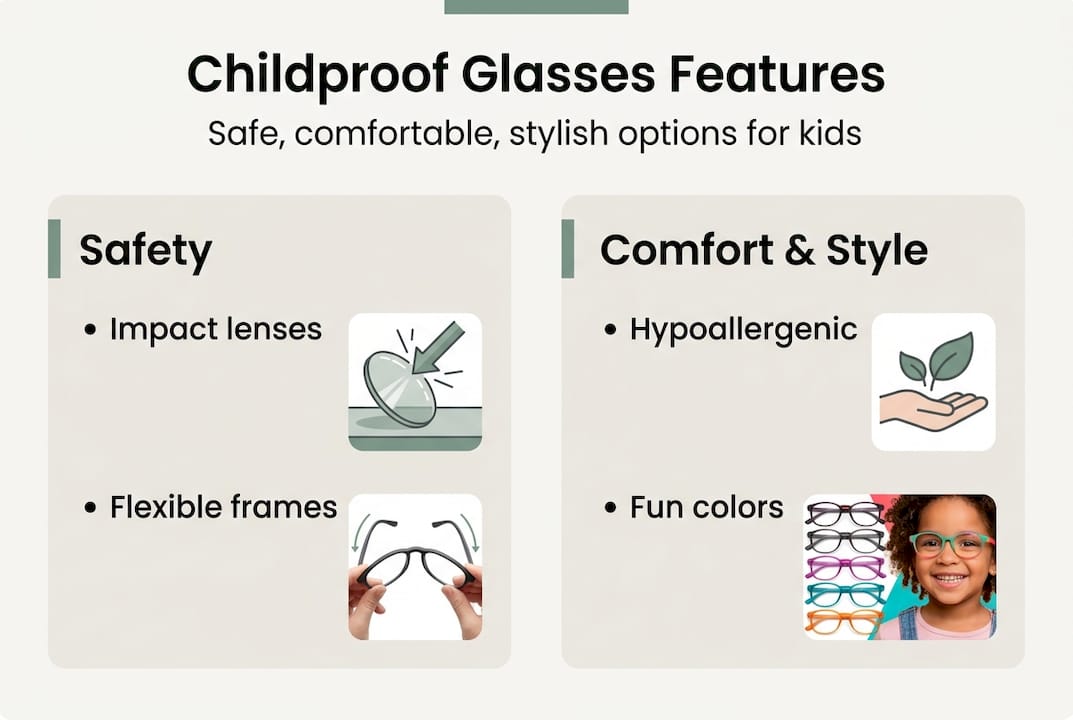
- Rubberised or silicone-coated materials that grip the face and resist slipping
- TR-90 thermoplastic which is extremely lightweight and flexible without snapping
- Memory metal alloys that bend under pressure and return to their original shape
- Hypoallergenic coatings that prevent skin reactions around the nose and ears
Regular adult glasses often use acetate or standard metal frames, which can crack under pressure or cause discomfort when worn for extended periods by a child. The nose bridge on adult frames is also typically too wide, causing glasses to slide forward constantly.
It is worth noting that childproof reading glasses are designed for everyday reading and close-up tasks. They are not certified for sport. If your child plays contact sport or cricket, reading glasses safety tips can help you understand when a separate pair of sport-certified eyewear is needed.
Pro Tip: When shopping, look for lenses labelled as polycarbonate or Trivex. If the product listing does not specify lens material, ask before you buy. Unlabelled lenses are almost always standard plastic.
Safety, comfort, and fit: Features that matter
A childproof lens inside an ill-fitting frame still creates problems. Fit is critical to prevent slipping or injury, and a frame that constantly slides down a child’s nose is not just annoying, it is a safety hazard. Children instinctively push glasses back up with one finger, which can knock the frame into their eye or cause the glasses to fall and break.
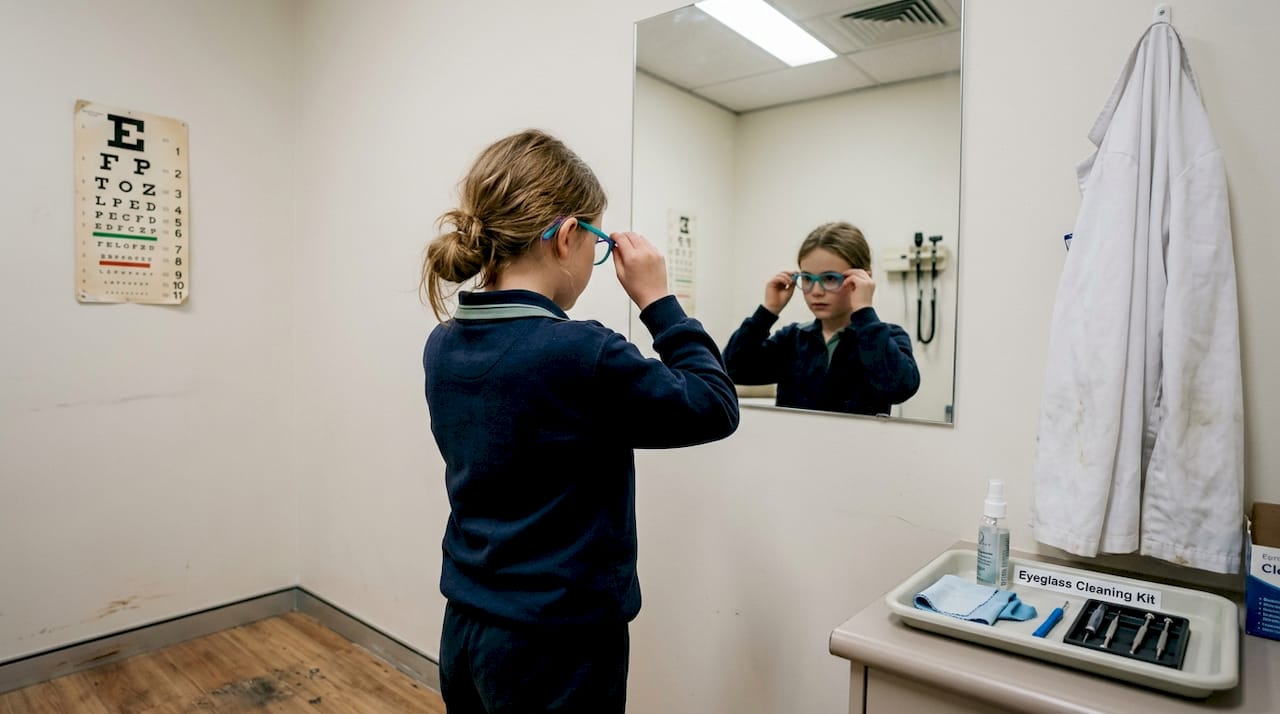
Here is how childproof glasses compare to regular reading glasses across key features:
| Feature | Childproof glasses | Regular reading glasses |
|---|---|---|
| Lens material | Polycarbonate or Trivex | Standard plastic or glass |
| Frame flexibility | High (TR-90, memory metal) | Low (acetate, standard metal) |
| Nose bridge | Adjustable or child-sized | Adult-sized, often too wide |
| Temple arms | Wraparound or spring-hinged | Standard rigid arms |
| Hypoallergenic | Usually yes | Not always |
| Weight | Very light | Moderate to heavy |
To make sure your child’s glasses fit properly, follow these steps:
- Measure the pupillary distance (PD). This is the distance between the centre of each pupil. Most optometrists measure this during an eye exam, and it ensures the optical centre of each lens aligns with your child’s eyes.
- Check the temple length. The arms should reach just past the ear without pressing or gapping. Too short causes pinching; too long causes slipping.
- Assess the nose bridge. The glasses should sit comfortably without digging in or sliding. Adjustable nose pads are ideal for younger children.
- Watch for red marks. After 30 minutes of wear, check for any red indentations on the nose or behind the ears. These signal a poor fit.
- Recheck every three months. Children’s faces change quickly, and a frame that fitted well in January may be too tight by April.
For a more detailed guide, the perfect fit checklist covers every measurement you need. If your child’s current glasses are causing discomfort, tips to fix reading glasses problems can help you troubleshoot before buying a replacement pair.
Pro Tip: Have your child wear their glasses for at least 20 minutes before leaving the optometrist or completing an online order return window. Short-term comfort does not always predict all-day wearability.
Style, self-expression, and peer confidence
Safety and comfort set the foundation, but style can make a remarkable difference in how children feel about their glasses. A child who feels embarrassed by their eyewear will find reasons not to wear it. A child who loves how their glasses look will reach for them willingly every morning.
Modern childproof reading glasses have come a long way from the bulky, clinical-looking frames of previous decades. Australian parents now have access to a wide range of colours, shapes, and customisable options that genuinely appeal to kids. Popular styles currently available include:
- Bold, bright frames in reds, blues, and greens that children can match to their school bag or favourite outfit
- Transparent or pastel acetate-look frames made from safe flexible materials for children who prefer a subtler look
- Round and oval shapes that suit a wide range of face shapes and feel less formal than rectangular adult styles
- Patterned temples featuring geometric prints or gradient colours for children who want something unique
- Adjustable strap options that keep glasses secure during active reading or homework sessions
As the evidence on childproof glasses advice makes clear, childproof glasses should not compromise style for safety. The two are not in competition. The best children’s eyewear delivers both, and Australian brands and retailers are increasingly meeting that standard.
“When a child feels proud of how they look in their glasses, compliance goes up and eye strain goes down. Style is not vanity in children’s eyewear. It is a clinical advantage.”
For inspiration on pairing function with personality, the guide to stylish functional glasses is a great starting point. You will also find practical comfort and lifestyle tips that apply directly to children’s daily routines.
How to get the right childproof glasses: Practical shopping tips
With style and comfort covered, parents need actionable guidance for buying and maintaining childproof glasses. The Australian market offers both high street and online options, but not every retailer stocks genuinely childproof eyewear. Knowing what to look for saves time and protects your child.
Use this checklist when evaluating any pair of children’s reading glasses:
- Confirm lenses are polycarbonate or Trivex (not standard CR-39 plastic)
- Check that frames are labelled flexible, TR-90, or memory metal
- Verify the nose bridge width suits your child’s face (not an adult-sized bridge)
- Look for spring hinges that allow the temples to flex outward without breaking
- Confirm hypoallergenic materials if your child has sensitive skin
- Ask about UV protection, especially for outdoor reading
As the childproof glasses evidence confirms, regular glasses are inadequate for high-impact activities, and childproof glasses are specifically designed for everyday reading safety. This distinction matters when you are comparing prices. A cheaper pair of standard glasses is not a bargain if it breaks on the first drop or causes an eye injury.
Here is a quick comparison of what to expect from different retail channels in Australia:
| Retail channel | Pros | Cons |
|---|---|---|
| Optical chain stores | Professional fitting, wide range | Higher price point |
| Online specialist retailers | Competitive pricing, broad selection | No in-person fitting |
| Pharmacy chains | Convenient, affordable | Limited childproof options |
| Eyewear boutiques | Unique styles, expert advice | Smaller stock, premium prices |
For aftercare, clean lenses with a microfibre cloth and lens-safe solution only. Avoid paper towels, which scratch polycarbonate. Store glasses in a hard case when not in use, and check screws and hinges monthly. Understanding how reading glasses work helps parents recognise when a prescription or lens type needs updating. If your child uses a tablet or laptop for schoolwork, the guide to reading glasses screen use explains which lens coatings offer the best protection.
Our perspective: What most parents overlook about childproof glasses
Most conversations about childproof glasses focus on the initial purchase. Find the right frame, confirm the material, check the fit, done. But the ongoing relationship between a child and their glasses is where most problems actually develop.
Children grow fast. A frame that fits perfectly at the start of the school year may be pinching by Term 3. Childproof glasses must be checked regularly for fit and wear, yet most parents only revisit the fit when a child complains. Children often do not complain. They simply stop wearing their glasses, or develop headaches they cannot explain.
We believe the most important thing parents can do is treat glasses as ongoing self-care, not a one-time purchase. Schedule a fit check every three months. Ask your child how their glasses feel at the end of a school day, not just in the morning. Notice whether they are reaching for their glasses willingly or leaving them on the desk. These small observations reveal a lot. The connection between glasses comfort and productivity is well established for adults, and it applies equally to children managing a full day of reading and learning.
Find trusted childproof reading glasses and accessories
You now have a clear picture of what childproof reading glasses should offer and how to find the right pair for your child. The next step is shopping with confidence from a retailer that understands both safety and style.
At Ministry of Sight, we stock a curated range of eyewear designed for comfort and durability, along with a full selection of glasses accessories and storage to keep your child’s glasses protected when not in use. Our eyewear leash chains are a practical addition for active kids who tend to set their glasses down and forget where they left them. If you have questions about which frame or lens type suits your child best, our team is ready to help. Reach out through our contact for reading glasses advice page for personalised guidance.
Frequently asked questions
What materials make childproof reading glasses safer?
Polycarbonate lenses and flexible frames are the most impact-resistant options available, significantly reducing the risk of lens shattering or frame breakage during everyday use. Polycarbonate is 10x more impact-resistant than standard plastic, making it the preferred choice for children’s eyewear.
Can children use regular reading glasses safely?
Regular reading glasses are not designed with children’s safety in mind. They typically lack impact-resistant lenses and proper fit for smaller faces, which increases the risk of slipping and potential eye injury. Fit is critical and regular glasses are generally inadequate for children’s daily needs.
What should parents look for in childproof glasses?
Prioritise impact-resistant polycarbonate or Trivex lenses, flexible TR-90 or memory metal frames, hypoallergenic materials, and a frame size that suits your child’s face. Flexible frames and proper fit are the two features most directly linked to injury prevention.
Are childproof reading glasses suitable for sports?
No. Childproof reading glasses are engineered for everyday reading and close-up tasks, not contact sport or high-impact activity. Sport requires separately certified eyewear meeting ASTM F803 standards for eye protection.
How often should childproof glasses be checked for fit?
Fit should be assessed at least every three months, as children’s faces change quickly and a previously comfortable frame can become too tight or too loose. Regular fit checks are essential to maintain both safety and comfort throughout the year.
Recommended
- Reading glasses safety tips for clear, comfortable vision – MINISTRY OF SIGHT
- Stylish, functional reading glasses for your lifestyle – MINISTRY OF SIGHT
- Stylish reading glasses checklist for perfect fit – MINISTRY OF SIGHT
- Understanding Fashionable Reading Glasses Guide for Style – MINISTRY OF SIGHT
- 6 Most Effective Child Friendly Window Treatments


