

Choosing the right eyewear often feels like a balancing act between style, comfort, and sharp vision. For Australians juggling busy lifestyles and long days in the sun, investing in high-quality eyeglass lenses can make daily life clearer and safer. Optical lenses work by bending light to correct common issues like nearsightedness or astigmatism, offering options for every unique prescription. Discover how contemporary lens designs and materials help you enjoy crisp vision while taking advantage of exclusive promotions and discounts.
Table of Contents
- Eye Glass Lenses Explained For Australians
- Types Of Lenses: Single, Bifocal, Progressive
- Materials And Coatings: What To Choose
- Prescription And Non-Prescription Lens Uses
- Cost, Risks And Choosing The Right Lens
- Common Mistakes Buying Eyeglass Lenses
Key Takeaways
| Point | Details |
|---|---|
| Understanding Lens Types | Different lens types, including single vision, bifocal, trifocal, and progressive, cater to varied vision needs, making it essential to choose the right one for optimal correction. |
| Material and Coating Selection | Lens materials and coatings can enhance visual performance and comfort; consider lightweight options with protective coatings suited to your lifestyle and environment. |
| Importance of Professional Consultation | Always consult with an optometrist to ensure accurate prescription and appropriate lens selection based on your unique vision requirements and daily activities. |
| Awareness of Potential Mistakes | Avoid common mistakes such as neglecting eye exams and prioritising price over quality, which can compromise your visual health and comfort. |
Eye glass lenses explained for Australians
Understanding eyeglasses is crucial for anyone seeking clear, comfortable vision. Optical lenses are precision instruments designed to correct vision by manipulating how light enters your eyes, helping Australians overcome common vision challenges in our sunny, outdoor-loving environment.
At their core, eyeglass lenses work through a fascinating process of light refraction. When light passes through a lens, it changes speed and direction, allowing the lens to adjust how images are focused on your retina. This scientific principle enables vision correction for several common conditions:
- Nearsightedness (difficulty seeing distant objects)
- Farsightedness (challenges focusing on close-up tasks)
- Astigmatism (blurred vision caused by irregular eye shape)
- Presbyopia (age-related difficulty focusing on near objects)
The type of lens you need depends entirely on your specific vision requirements, which can only be determined through a comprehensive eye health assessment with a professional. Different lens materials and designs offer unique benefits for different vision needs and lifestyle demands.
Not all lenses are created equal - your prescription is as unique as your fingerprint.
Modern lens technology provides multiple options to suit various preferences. Lens materials range from lightweight polycarbonate perfect for active Aussies to high-index plastics that offer thinner, more aesthetically pleasing options for stronger prescriptions. Some lenses even come with special coatings to reduce glare, protect against UV rays, or resist scratches - essential features for the Australian climate.
Pro tip: Always discuss your specific lifestyle and vision needs with an optometrist to select the most appropriate lens type for your individual requirements.
Types of lenses: single, bifocal, progressive
Choosing the right type of eyeglass lens is crucial for optimal vision correction, and Australian wearers have several options to suit their unique needs. Single vision lenses represent the most straightforward lens type, designed to correct vision at one specific distance - either for close-up tasks or distance viewing.
For those experiencing more complex vision challenges, multifocal lenses offer more comprehensive solutions. These include:
- Bifocal lenses: Feature two distinct optical powers separated by a visible horizontal line
- Trifocal lenses: Provide three distinct vision zones for near, intermediate, and distance viewing
- Progressive lenses: Offer a smooth, gradual transition between prescription strengths without visible lines
Each lens type comes with specific advantages depending on your vision requirements. Understanding lens types can help you make an informed choice about which will best suit your lifestyle and visual needs.
Selecting the right lens is like choosing the perfect pair of shoes - it needs to fit your specific requirements and daily activities.
Progressive lenses have become increasingly popular among Australians seeking a more seamless vision correction experience. These modern lenses provide a gradual change in lens strength, allowing wearers to see clearly at multiple distances without the visible lines associated with traditional bifocals. They’re particularly beneficial for professionals and active individuals who require versatile vision correction.

Single vision lenses remain an excellent choice for younger wearers or those with straightforward vision correction needs. They’re typically lighter, more affordable, and provide clear vision at a specific distance - whether you’re reading, working on a computer, or enjoying outdoor activities.
Here’s a quick guide to the main lens types and their ideal uses for Australians:
| Lens Type | Best for | Main Advantage |
|---|---|---|
| Single vision | Reading or distance only | Light, affordable, simple correction |
| Bifocal | Near + distance vision | Two set powers, easy switching |
| Trifocal | Near, mid, far tasks | Covers all common viewing distances |
| Progressive | All-around daily use | No lines, smooth vision transitions |
Pro tip: Ask your optometrist to demonstrate how different lens types perform during your daily activities to find the most comfortable and practical option for your lifestyle.
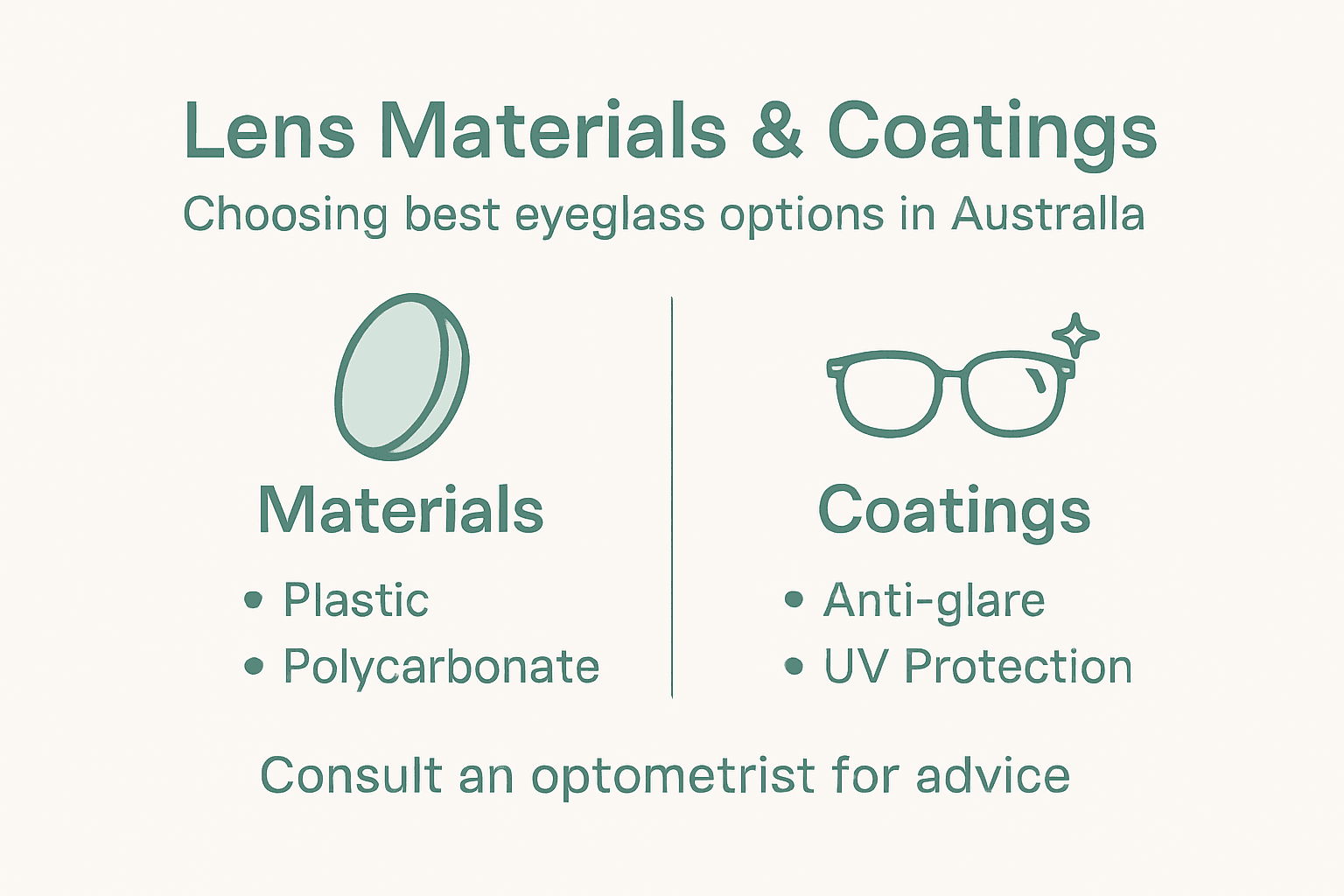
Materials and coatings: what to choose
Choosing the right lens materials and coatings can dramatically improve your visual experience, especially in Australia’s diverse and challenging environmental conditions. Lens materials vary significantly, each offering unique advantages for different vision needs and lifestyle requirements.
The primary lens materials Australians can choose from include:
- Standard plastic (CR-39): Lightweight and affordable, ideal for mild prescriptions
- Polycarbonate: Highly impact-resistant, perfect for sports and active lifestyles
- High-index plastics: Thinner and lighter for stronger prescriptions
- Trivex: Lightweight with excellent optical clarity and impact resistance
Understanding lens material properties helps you make an informed decision that balances performance, comfort, and budget.
Not all lens materials are created equal - your environment and daily activities matter.
Lens coatings provide an additional layer of protection and performance enhancement. Modern coatings can transform your eyewear from a simple vision correction tool to a sophisticated accessory. Key coating options include:
- Anti-reflective coating: Reduces glare and improves night vision
- Scratch-resistant coating: Protects lenses from daily wear and tear
- UV protection: Guards against harmful solar radiation
- Photochromic coating: Automatically adjusts tint based on light conditions
For Australians dealing with intense sunlight and harsh UV conditions, selecting the right combination of materials and coatings is crucial. High-index plastics with UV and anti-reflective coatings offer an excellent solution for those needing strong prescriptions while protecting their eyes from our intense sunlight.
Pro tip: Consult with your optometrist about combining lens materials and coatings that best match your specific lifestyle and vision correction needs.
Consider these factors when choosing lens materials and coatings in Australia:
| Decision Factor | Lens Material Example | Coating Benefit |
|---|---|---|
| Sports and outdoors | Polycarbonate | UV and impact protection |
| Strong prescriptions | High-index plastic | Thinner, lighter finish |
| Fashion and comfort | CR-39 standard plastic | Anti-reflective for eye comfort |
| Computer use | Trivex or polycarbonate | Blue light filtering |
Prescription and non-prescription lens uses
Understanding the difference between prescription and non-prescription lenses is crucial for Australians looking to protect and enhance their vision. Prescription lenses are specifically tailored to correct individual vision problems, addressing unique refractive errors that impact daily visual clarity and comfort.
Non-prescription glasses serve a variety of practical purposes:
- Fashion accessories: Stylish frames without vision correction
- Blue light blocking: Reducing digital eye strain from screens
- Sunglasses: Protecting eyes from harmful UV radiation
- Reading glasses: Providing basic magnification for near-vision tasks
- Safety glasses: Offering eye protection during sports or work activities
Distinguishing between prescription and non-prescription options helps you make informed eyewear choices that match your specific needs.
Not all glasses are created equal - your vision requirements are as unique as your fingerprint.
Prescription lenses are scientifically calibrated to address specific vision challenges like myopia, hyperopia, astigmatism, and presbyopia. An optometrist conducts precise measurements to create lenses that compensate for individual eye irregularities, ensuring optimal visual correction.
Non-prescription glasses, by contrast, provide general protection or mild visual assistance without the personalised correction of prescription lenses. They’re ideal for temporary use, specific activities, or aesthetic purposes where comprehensive vision correction isn’t necessary.
Pro tip: Always consult an eye care professional to determine whether you need prescription or non-prescription lenses based on your specific vision requirements and lifestyle.
Cost, risks and choosing the right lens
Selecting the right eyeglass lenses involves a delicate balance between budget, vision needs, and potential long-term health implications. Lens costs in Australia can vary dramatically, ranging from budget-friendly options under $100 to premium solutions costing several hundred dollars depending on complexity and additional features.
Key factors influencing lens pricing include:
- Prescription complexity: More advanced vision corrections increase cost
- Lens material: High-index or specialised materials are more expensive
- Additional coatings: UV protection, anti-reflective, and scratch-resistant layers add to the price
- Frame selection: Frame quality significantly impacts overall eyewear expense
Understanding lens strength and pricing can help you make more informed financial decisions about your eye health.
Cheaper isn’t always better - investing in quality lenses protects your most valuable sensory asset.
Potential risks associated with incorrect lens selection include eye strain, headaches, and potentially worsening vision over time. Australian optometrists recommend comprehensive eye examinations to ensure precise prescription measurements and appropriate lens recommendations.
Budget-conscious consumers should consider health insurance options and potential Medicare rebates that might offset eyewear expenses. Some providers offer flexible payment plans or bulk-billing services to make quality vision correction more accessible.
Pro tip: Request a detailed breakdown of lens costs and potential health fund rebates before making your final purchase to understand the full financial picture.
Common mistakes buying eyeglass lenses
Choosing the right eyeglass lenses can be a complex process fraught with potential pitfalls that many Australians unknowingly encounter. Prescription accuracy is the cornerstone of effective vision correction, and making uninformed decisions can lead to significant visual discomfort and long-term eye health challenges.
The most common mistakes when purchasing eyeglass lenses include:
- Neglecting regular eye examinations: Relying on outdated prescriptions
- Prioritising price over quality: Choosing the cheapest option without considering lens performance
- Ignoring lens coatings: Skipping protective treatments like anti-reflective or UV protection
- Buying without professional fitting: Selecting frames and lenses without expert guidance
- Misunderstanding lens materials: Not matching lens type to specific vision needs
Smart choices for online eyewear shopping can help you avoid these common purchasing errors and ensure optimal vision correction.
Your eyes are precision instruments - treat them with the care and expertise they deserve.
Many Australians mistakenly believe that wearing glasses will weaken their eyesight. This misconception can lead to hesitation in getting proper vision correction. In reality, wearing the correct prescription helps reduce eye strain and prevents potential vision deterioration caused by overcompensating for uncorrected vision problems.
Technology and lens manufacturing have advanced significantly, offering sophisticated solutions for various vision challenges. However, these advanced options require professional guidance to select the most appropriate lenses for individual needs.
Pro tip: Invest in a comprehensive eye examination with a qualified optometrist before purchasing new glasses to ensure you receive the most accurate and personalised vision correction.
Discover Eyewear Solutions That Match Your Vision Needs and Lifestyle
Choosing the best eyeglass lenses is a challenge every modern Australian faces. The article highlights key concerns such as selecting the right lens type, understanding materials and coatings, and avoiding common mistakes that impact your vision and comfort. Whether you need sleek single vision lenses or advanced progressive options, finding frames that complement your style and prescription is vital for everyday clarity and confidence.
Explore our curated collections where form meets function. For those seeking structured style with perfect reading support, browse our Geometric Reading Glasses. If bold statement eyewear fits your personality and vision needs, check out our Bold Reading Glasses. Combine exceptional lens quality with the style you want to face each day with confidence.
Don’t wait until eye strain or discomfort take their toll. Visit Ministry of Sight now and take advantage of Australia-wide free shipping and exclusive offers tailored for you. Find the perfect lenses and frames that suit your prescription and lifestyle today.
Frequently Asked Questions
What are the main types of eyeglass lenses available?
The main types of eyeglass lenses include single vision lenses, bifocal lenses, trifocal lenses, and progressive lenses. Each type serves unique vision correction needs based on distance viewing requirements.
How do lens materials affect my eyeglasses?
Lens materials vary in weight, durability, and thickness. Common materials include standard plastic for mild prescriptions, polycarbonate for impact resistance, high-index plastics for thinner profiles in stronger prescriptions, and Trivex for clarity and impact resistance. Choosing the right material enhances comfort and visual performance.
What should I consider when selecting lens coatings?
When selecting lens coatings, consider options like anti-reflective to reduce glare, scratch-resistant for lens longevity, UV protection to guard against harmful rays, and photochromic coatings that adjust tint based on light conditions. These coatings can significantly improve your overall visual experience.
Why is a comprehensive eye examination important before purchasing lenses?
A comprehensive eye examination is crucial as it provides an accurate prescription tailored to your specific vision needs. Regular check-ups also help detect any underlying eye health issues, ensuring you select the most appropriate lenses for optimal vision correction.


