

Over 60 percent of australian adults experience difficulties with reading as they age, leading many to seek their first pair of reading glasses. Taking the right steps early eases the anxiety and confusion that often surround this life change. With practical information about preparation, adjustment, and ongoing care, you can approach your first fitting and the days that follow with confidence and clarity.
Table of Contents
- Step 1: Prepare For Your First Fitting
- Step 2: Adjust To Initial Visual Changes
- Step 3: Incorporate Glasses Into Daily Routines
- Step 4: Manage Common Discomforts And Issues
- Step 5: Verify Fit And Visual Clarity
Quick Summary
| Key Insight | Explanation |
|---|---|
| 1. Prepare with key information | List reading challenges and vision needs before your fitting to help your optometrist recommend suitable glasses. |
| 2. Adjust gradually to new glasses | Wear your glasses consistently, starting with short periods, to help your eyes and brain adapt comfortably over time. |
| 3. Create a routine for wearing glasses | Keep glasses in predictable locations and wear them regularly to develop a habit that integrates them into daily activities. |
| 4. Monitor discomfort and seek help if needed | Track any persistent discomfort and consult your optometrist if issues continue beyond a couple of weeks to ensure proper fit and prescription. |
| 5. Verify fit and visual clarity regularly | Conduct fit checks and test various reading positions with your glasses to ensure optimal comfort and functionality. |
Step 1: Prepare for your first fitting
Preparing for your first reading glasses fitting can feel a bit nerve-wracking, but understanding what to expect will help you feel more confident. Your goal during this initial appointment is to find glasses that not only correct your vision but also feel comfortable and suit your personal style.
Start by gathering some key information about your current vision and lifestyle needs. Before your appointment, make a list of activities where you struggle with reading or close work. Are you experiencing eye strain while working on your computer? Do you find reading books or magazines challenging? These details will help your optometrist recommend the most suitable reading glasses for you. The fitting process involves carefully measuring your eyes and face to ensure the glasses sit perfectly across your nose and ears without causing discomfort.
A pro tip is to wear comfortable clothing and bring along a few different reading materials during your fitting. This allows you to test how the glasses perform in real world scenarios. Newspapers, books with varying font sizes, and even your smartphone can help you assess the clarity and comfort of your new reading glasses. Your optometrist will help you try different frames, adjusting nose pads and temple arms to create a personalised fit that feels just right.
What comes next is selecting frames that not only provide optimal vision correction but also reflect your personal style and comfort preferences.
Step 2: Adjust to initial visual changes
Adapting to new reading glasses is a journey that requires patience and understanding. Your primary goal in this stage is to help your brain and eyes synchronise with the new visual correction, which might feel slightly uncomfortable at first but is completely normal.
During the first few days, you might experience some temporary symptoms like mild headaches, slight dizziness, or blurry vision. These sensations are your visual system recalibrating to the new prescription. The Cleveland Clinic suggests this adjustment period typically lasts between a few days to a couple of weeks. Start by wearing your glasses consistently during reading and close work tasks. Begin with shorter periods and gradually increase wearing time. If you experience eye strain, take short breaks and focus on distant objects to help your eyes relax and adapt.

A helpful strategy is to wear your new reading glasses first thing in the morning when your eyes are fresh and most receptive. Avoid switching between your old and new glasses, as this can prolong the adjustment period and cause additional visual confusion. If discomfort persists beyond two weeks or becomes significantly intense, consult your optometrist to ensure the prescription is correct and the frames are properly fitted. Remember that everyone’s adaptation process is unique, and what feels challenging now will soon become second nature.
The next phase involves building confidence with your new reading glasses and integrating them seamlessly into your daily routine.
Step 3: Incorporate glasses into daily routines
Transitioning your reading glasses from occasional accessory to essential tool requires thoughtful integration into your everyday activities. Your goal is to make wearing these glasses feel as natural as picking up your mobile phone or putting on your favourite pair of shoes.
Start by establishing consistent wearing patterns across different tasks. Keep your glasses in a predictable location like your bedside table, work desk, or a dedicated spot in your living room. When reading books, magazines, or working on digital devices, put your glasses on immediately and avoid frequent removal. The key is creating muscle memory and reducing the mental effort of deciding when to wear them. Pay special attention to activities like reading, computer work, crafting, or any close detailed tasks where visual clarity matters most.
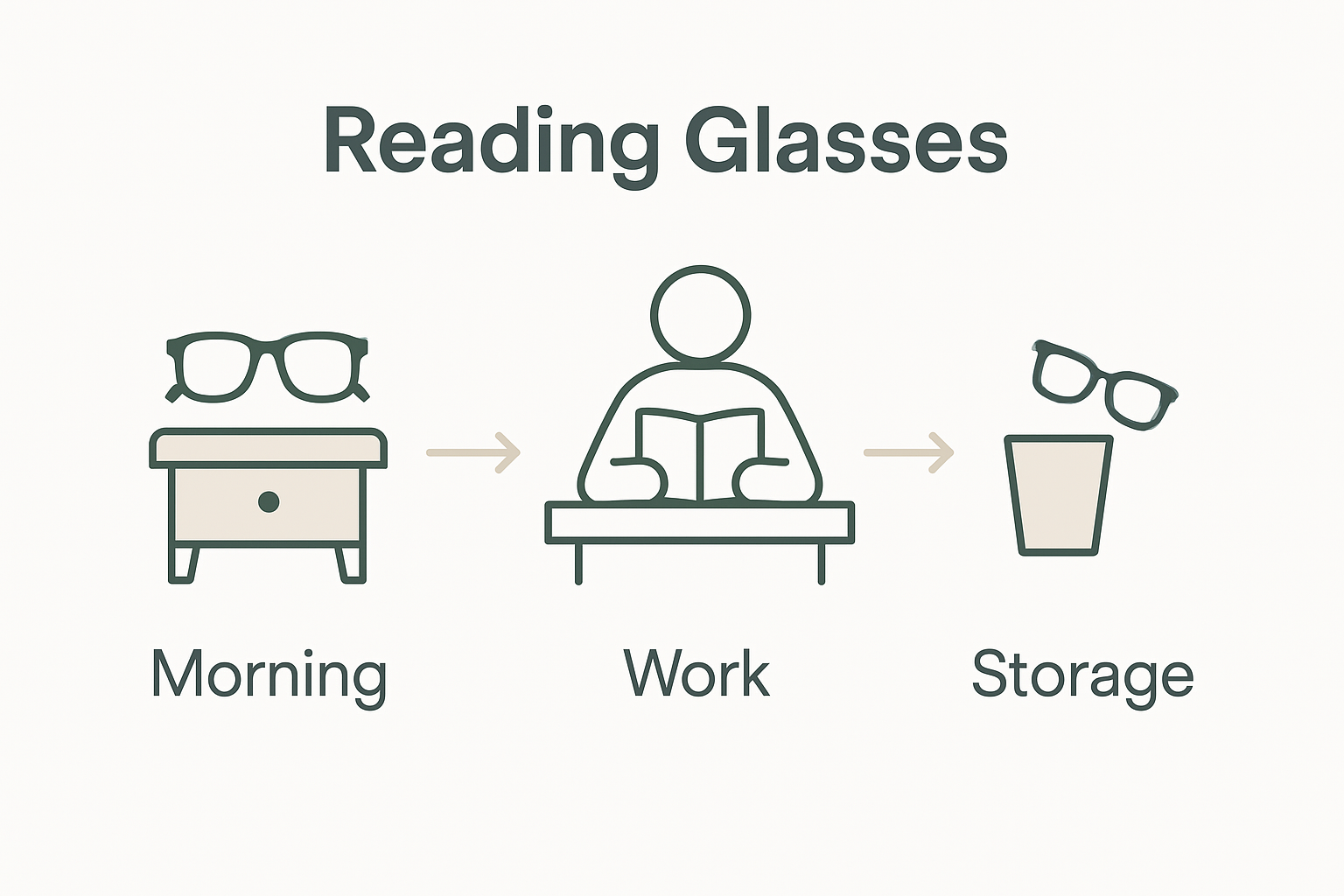
A strategic approach is to create multiple convenient storage points around spaces you frequently use. Consider reading glasses accessories that can help keep your glasses protected and easily accessible. Develop a routine of checking your glasses before starting detailed work ensuring they are clean and ready for use. Remember that consistency is more important than perfection your brain and eyes will gradually adapt to this new visual support system.
The next phase involves understanding how to maintain and care for your new visual companion.
Step 4: Manage common discomforts and issues
Learning to manage potential discomforts with your new reading glasses is an important part of the adaptation process. Your primary objective is to recognise normal adjustment symptoms and know when to seek professional advice if something feels persistently unusual.
Initial discomforts like mild headaches, temporary eye strain, and slight dizziness are typically part of your visual system recalibrating to the new prescription. These symptoms usually resolve within a few days to a week. If you experience persistent headaches or significant visual disturbances, it might indicate that your glasses maintenance and fitting needs professional review. Pay attention to how your glasses sit on your face position them gently, ensuring they are not too tight or loose, which can contribute to additional discomfort.
A strategic approach is to track your symptoms and their duration. Keep a brief journal noting when discomfort occurs, its intensity, and potential triggers. This information can be valuable if you need to consult your optometrist. Ensure you are wearing your glasses consistently but take short breaks if eye strain becomes noticeable. Gentle eye exercises, adequate lighting, and maintaining proper reading distance can also help minimise adjustment challenges.
The next phase involves fine tuning your glasses and developing long term comfort strategies.
Step 5: Verify fit and visual clarity
Checking the precise fit and visual performance of your new reading glasses is crucial for ensuring optimal comfort and vision correction. Your goal is to systematically assess how well the glasses work across different reading and viewing scenarios, making sure they provide the clarity and comfort you need.
Start by performing a comprehensive fit check in front of a mirror. Ensure the frames sit evenly on your face without touching your cheeks or eyelashes, with your eyes centred perfectly in the lenses. Test different reading positions reading a book, looking at your computer screen, and examining fine print. Pay close attention to how clearly you can see text at various distances and angles. If you notice any persistent blurriness or discomfort, minor frame adjustments might be necessary. Understanding your reading glasses checklist can provide additional guidance on what to look for during your assessment.
A strategic approach involves creating a simple testing routine. Try reading materials with varying font sizes and switch between close up and mid range tasks to evaluate your glasses comprehensive performance. Ask a friend or family member to check that the glasses look balanced on your face and that they are not slipping or sitting awkwardly. Remember that some initial adjustment is normal, but persistent issues warrant a professional consultation with your optometrist.
The next phase involves developing long term strategies for maintaining your new visual companion.
Make Your Adaptation to New Reading Glasses Effortless and Stylish
Adjusting to new reading glasses can feel challenging with common issues like eye strain and discomfort. This guide highlights the importance of proper fit, consistent wear, and visual clarity as you evolve your everyday routine. If you want reading glasses that truly support your vision and lifestyle while matching your personal style explore our range of Rectangular Reading Glasses and Round Reading Glasses designed for comfort and clarity.
Take the stress out of adaptation now by choosing glasses that are crafted to fit perfectly and equipped for daily use. With Ministry of Sight enjoy free shipping across Australia and find frames that help you embrace reading with confidence. Visit our Spring Sale for great deals that combine style and function. Start your journey to clear vision today and turn your new glasses into an essential part of your life.
Frequently Asked Questions
How can I prepare for my first reading glasses fitting?
To prepare for your first reading glasses fitting, gather information about your current vision and lifestyle needs. Make a list of activities where you experience difficulty, such as reading or using a computer, and bring a few reading materials to test during your appointment.
What should I expect during the adjustment period with new reading glasses?
During the adjustment period, it’s normal to experience mild headaches, slight dizziness, or blurry vision as your eyes adapt to the new prescription. Aim to wear your glasses consistently for reading and other close work to help your eyes synchronise with the new lenses over one to two weeks.
How can I make wearing reading glasses a part of my daily routine?
To incorporate your reading glasses into your daily routine, keep them in accessible spots and establish a habit of wearing them whenever you engage in close tasks. For example, place them on your bedside table or work desk to ensure you use them consistently whenever needed.
What should I do if my new reading glasses cause persistent discomfort?
If you experience persistent discomfort that lasts beyond a week, consult your optometrist to review your prescription and frame fit. Track your symptoms in a journal to identify triggers and share this information during your appointment to assist in resolving the issue.
How can I verify that my reading glasses fit properly and provide clear vision?
Check that your glasses sit evenly on your face without touching your cheeks or eyelashes, and test them while reading at various distances. If you notice blurriness or discomfort, make minor adjustments to the frames or consult with your optometrist for a professional fitting.
Recommended
- Complete Guide to How Reading Glasses Work – ministry of sight
- Understanding Your Reading Glasses Checklist for Better Vision – ministry of sight
- Complete Guide to Beginner’s Reading Glasses – ministry of sight
- Understanding the Types of Reading Glasses for Better Vision – ministry of sight
- Top 6 Best Blue Light Glasses for Moms – Expert Comparison 2025 - Mom on Quack


