

Struggling to read fine print or scan your favourite Australian newspaper at home can feel like a sudden hurdle in your 40s. For many, this is a natural sign of presbyopia, where the eye’s lens loses its ability to focus up close. That’s where 3.5 reading glasses come in, offering reliable clarity right when you need it most. Search online and you’ll find frames that combine fashion, quality materials, and clever features—helping you choose glasses that look sharp, feel comfortable, and fit your everyday routine.
Table of Contents
- What Are 3.5 Reading Glasses?
- Frame Shapes And Style Options
- Choosing Quality Lenses And Features
- Risks Of High Magnification Readers
- Alternatives To 3.5 Readers Compared
Key Takeaways
| Point | Details |
|---|---|
| Understanding 3.5 Reading Glasses | These glasses cater specifically to moderate presbyopia, helping individuals focus on objects 25 to 40 centimetres away without strain. |
| Versatile Daily Use | 3.5 reading glasses are suitable for a variety of activities, including reading, crafting, and screen time, reducing eye strain significantly. |
| Importance of Frame Choice | Selecting the right frame shape and construction style enhances comfort and complements facial features, ensuring regular use. |
| Quality Lens Features | Opt for lenses with anti-reflective coatings, blue light filters, and scratch resistance for improved clarity and durability. |
What Are 3.5 Reading Glasses?
When you reach your 40s, you might notice that reading menus, books, or fine print becomes increasingly frustrating. You hold the newspaper at arm’s length, squint at your phone, or simply give up on threads without good lighting. This happens because your eye’s lens gradually stiffens with age—a condition called presbyopia. A 3.5 reading glass prescription sits right in the middle of the correction spectrum, designed specifically for people experiencing moderate presbyopia. The “3.5” refers to the diopter power, which is the measurement unit for how strongly the lenses magnify and bend light. This particular strength helps your eyes focus on objects between 25 and 40 centimetres away, making everyday near-vision tasks manageable again without the strain.
Think of diopter power like volume control on a speaker. A lower number (say, 1.0 or 1.5) provides gentle amplification for mild vision loss, whilst a higher number (2.5, 3.0, or beyond) delivers stronger magnification for more significant presbyopia. The 3.5 strength lands in that sweet spot where many Australian adults aged 50 and above find genuine relief. Understanding how reading glasses work will help you see exactly why this prescription strength targets the specific focusing problem that develops over time. When your eye’s natural lens loses flexibility, it struggles to change shape and redirect light properly onto the retina—especially when looking at close objects. The 3.5 diopter lenses compensate by adding the converging power your eyes no longer provide on their own, effectively doing the focusing work that presbyopia has taken away.
What makes 3.5 reading glasses particularly practical for daily wear is their versatility. They work brilliantly for reading books, newspapers, tablets, and computers when held at normal viewing distance. They’re equally useful for crafting, sewing, checking medication labels, reviewing financial documents, or any task requiring sharp near vision. Unlike single-vision distance glasses, which blur everything up close, reading glasses at this strength give you the clarity you need for extended close-up work without triggering the headaches and eye fatigue that come from squinting or straining. The key distinction is that 3.5 reading glasses are specifically calibrated for near vision—they won’t help you see across a room or read road signs, but they’ll transform your ability to engage with the world in front of you.
- Ideal for moderate presbyopia: Suits people experiencing noticeable focusing difficulty with near objects
- Versatile daily use: Works for reading, hobbies, detailed work, and screen time
- Comfortable extended wear: Reduces eye strain and headaches during prolonged near-vision tasks
- Affordable option: Typically less expensive than progressive or multifocal lenses
Pro tip: Try different 3.5 frame styles at home if your retailer offers a satisfaction guarantee, since the right aesthetic helps you actually wear your glasses rather than leaving them in a drawer.
Frame Shapes And Style Options
Your choice of frame shape matters more than you might think. It’s not just about looking good—though that’s definitely part of it. The right frame shape can balance your face proportions, complement your features, and most importantly, sit comfortably on your nose and ears for hours at a time. When you’re wearing reading glasses daily, comfort and fit directly influence whether you’ll actually reach for them or leave them gathering dust on the shelf. Frame shapes come in distinct categories, each with its own visual impact and practical advantages. Rectangular frames offer a classic, professional appearance and tend to suit most face shapes, particularly rounder faces where the angular lines create balance. Oval frames provide a softer look and work well for angular or square face shapes, essentially doing the reverse job by adding gentle curves where sharpness exists. Cat-eye frames, with their distinctive upward flick at the corners, bring a touch of vintage glamour and work brilliantly for Australian women who want personality without sacrificing sophistication.
Beyond shape, you’ll encounter three main frame construction styles that affect both aesthetics and durability. Full-rim frames enclose the entire lens, offering maximum lens protection and typically the longest lifespan—they’re the workhorse option. Half-rim frames, also called clubmaster or browline styles, feature a frame only across the top half of the lens, creating a lighter appearance and a more contemporary vibe. Rimless frames provide the absolute minimum visual weight, making them nearly invisible on your face, though they require careful handling since the lenses sit directly in metal or plastic temples without full protection. The materials matter too. Metal frames, typically stainless steel or titanium, offer durability and an elegant aesthetic that works particularly well in professional settings. Plastic or acetate frames come in virtually any colour imaginable, allowing you to match your personality or coordinate with your wardrobe. Understanding reading glasses frame shapes will help you make decisions that balance style with the practical demands of daily wear.
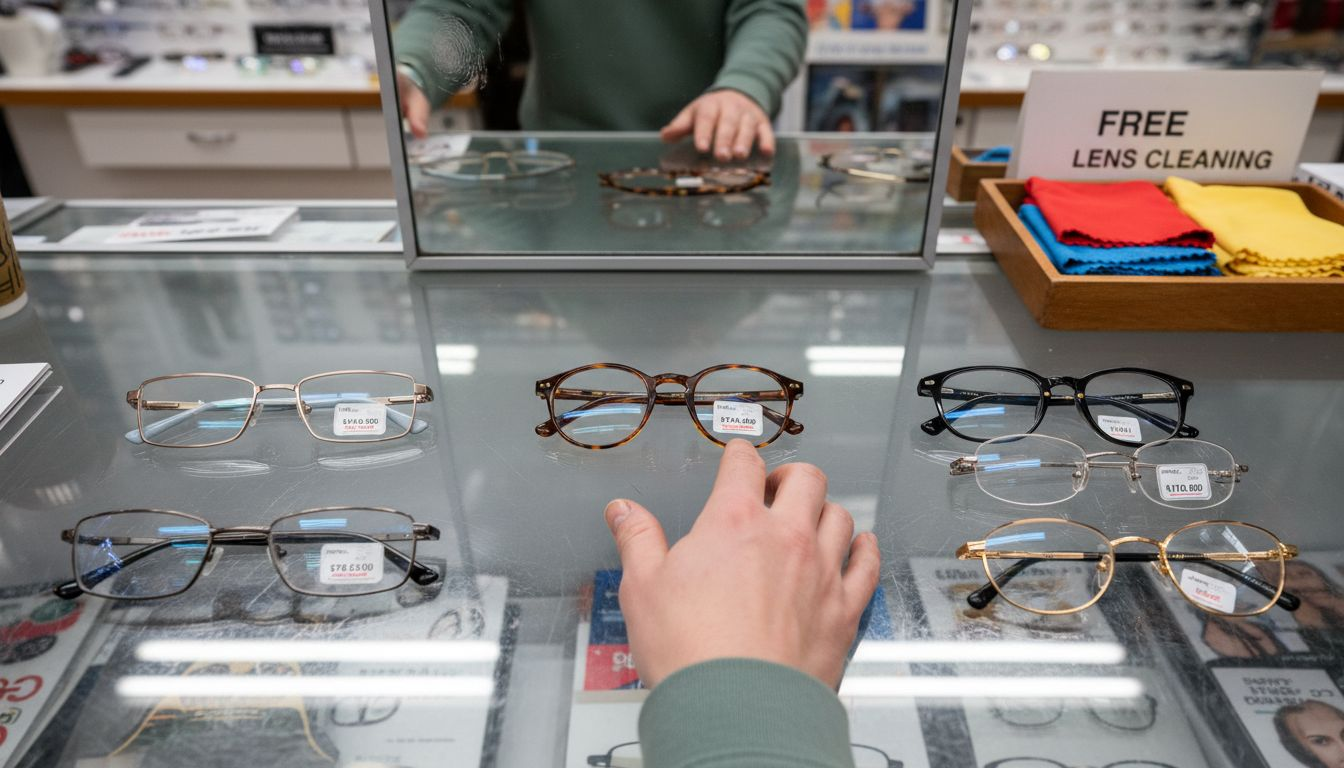
For Australian adults over 40, the aesthetic choice often comes down to lifestyle and personal preference. If you spend your day in corporate environments, sleek metal frames or understated tortoiseshell acetate typically feel appropriate and professional. If you’re more casual or creative, bolder colours and distinctive shapes let your personality shine through. The beauty of reading glasses is that you can actually own several pairs in different styles—one for reading at home, another for professional settings, perhaps a fun pair for hobbies or social occasions. This flexibility means you’re not locked into a single aesthetic choice. Consider the bridge fit and temple length carefully. A frame that sits too wide will slide down constantly, whilst one that’s too narrow will pinch your temples during extended wear.
Here’s how different frame shapes and construction styles influence comfort and style:
| Frame Shape or Style | Visual Effect | Suitability |
|---|---|---|
| Rectangular Frames | Sharpens soft features | Best for round faces |
| Oval Frames | Softens angular faces | Suits square faces |
| Cat-eye Frames | Adds lift and flair | Popular with women |
| Full-rim Construction | Most durable | All activity levels |
| Half-rim Construction | Lightweight, modern look | Everyday use |
| Rimless Construction | Minimal profile | Minimalist appeal |
- Full-rim frames: Maximum durability and lens protection, suits all activities
- Half-rim frames: Contemporary style with reduced weight, great for everyday wear
- Rimless frames: Virtually invisible, perfect for minimalist aesthetics
- Metal construction: Professional appearance, excellent longevity
- Plastic acetate: Colour options unlimited, comfortable for extended wear
Pro tip: Select frame colours in neutral tones like black, brown, or tortoiseshell if you own only one pair, since these coordinate with most clothing and work in virtually any setting.
Choosing Quality Lenses And Features
The lens is where your reading glasses actually do their job, so this is where quality truly matters. A cheap lens might look fine in the box, but when you put it on, you’ll notice distortion, blurriness at the edges, or unexpected glare that makes reading exhausting rather than enjoyable. Quality lenses start with the correct magnification power for your specific needs. For a 3.5 prescription, you need lenses calibrated precisely to that diopter strength—not approximately that strength, but exactly that strength. Even small variations create eye strain, headaches, and the frustration of constantly adjusting your viewing angle to find the sweet spot. Beyond magnification accuracy, anti-reflective coatings reduce the glare bouncing off your lens surfaces, which is particularly important if you read near lamps or windows. This coating also minimises the reflections other people see when looking at your glasses, giving them a more refined appearance. If you spend considerable time on screens, blue light filters become genuinely valuable. Digital displays emit significant blue light that can suppress melatonin and leave your eyes feeling tired after extended use. A quality blue light filter reduces this effect without dramatically altering the colour balance of what you’re viewing.
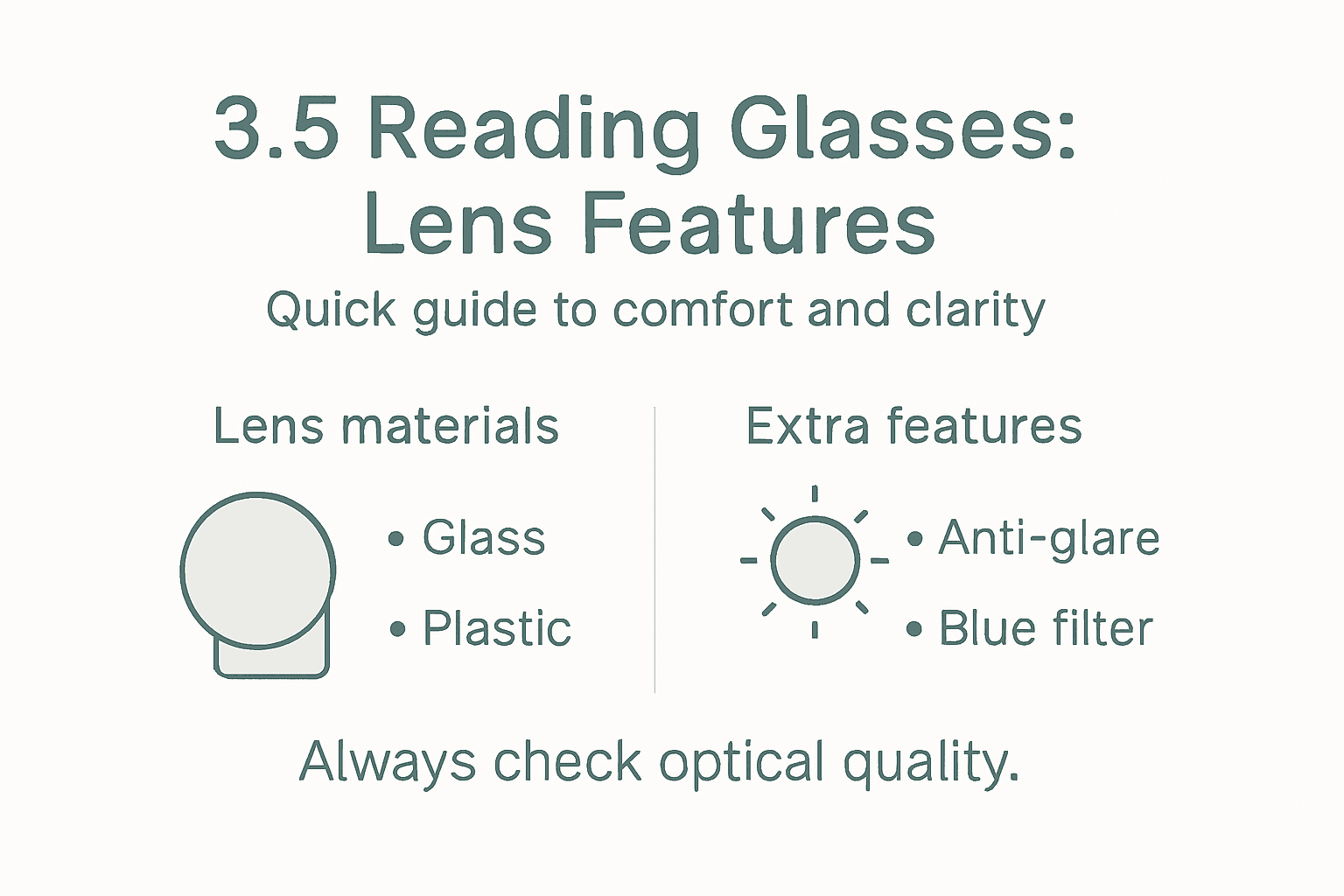
Lens material selection influences both comfort and durability. Traditional glass lenses offer excellent optical clarity but are heavier and more prone to breaking if dropped. Plastic or polycarbonate lenses weigh considerably less, making them more comfortable for all-day wear, and they’re significantly more impact-resistant. Polycarbonate specifically includes built-in UV protection, which is essential for eye health during outdoor reading sessions. What makes quality lenses stand out is protective coating investment. A scratch-resistant coating extends lens life considerably, meaning your glasses maintain clarity for years rather than months. UV protection prevents cumulative damage to your retina and lens from sun exposure, something many Australians underestimate given our intense sunlight. Understanding what quality means in reading glasses helps you recognise features worth paying for and those that are pure marketing. The coatings add genuine value by reducing eye fatigue, extending product lifespan, and protecting your vision long-term.
When evaluating lens options, consider your primary use case. If you read predominantly indoors under artificial light, anti-reflective coating becomes your priority. If you’re outdoors frequently or work near windows, UV protection and scratch resistance jump to the top. If you’re managing screen time alongside physical reading, blue light filtering addresses both concerns. Budget considerations matter too. Premium lenses with multiple coatings cost more upfront, but they last longer and perform better, often representing better value over time. Ask about lens warranties when purchasing. A retailer confident in their product quality typically offers 12 months or more of protection against defects. Pay attention to how lenses feel during initial wear. Quality lenses should provide immediate clarity without requiring adjustment periods or noticeable edge distortion. If something feels off, don’t convince yourself you’ll adjust. Optical quality should feel comfortable from the moment you put them on.
Here’s a summary of lens features and their distinct benefits:
| Lens Feature | Main Benefit | Best For |
|---|---|---|
| Anti-reflective Coating | Minimises glare and reflections | Reading under bright lights |
| Blue Light Filter | Cuts digital eye strain | Regular computer users |
| Scratch Resistance | Prolongs lens clarity | Long-term durability |
| UV Protection | Shields eyes outdoors | Outdoor reading sessions |
| Polycarbonate Material | Lightweight & impact-resistant | All-day comfort |
- Anti-reflective coating: Reduces glare and lens reflections, improves clarity
- Blue light filtering: Decreases digital eye strain for screen users
- UV protection: Essential defence against cumulative sun damage
- Scratch-resistant coating: Extends lens lifespan significantly
- Impact-resistant material: Polycarbonate offers safety and comfort
Pro tip: Request a trial period or satisfaction guarantee when ordering online, allowing you to verify lens quality and comfort before fully committing to the purchase.
Risks Of High Magnification Readers
It’s tempting to think that if 3.5 magnification helps you read comfortably, then 4.5 or 5.0 would be even better. That logic doesn’t work with reading glasses. Going significantly stronger than your actual prescription creates a cascade of problems that can actually damage your vision comfort rather than improve it. High magnification readers force your eyes to work harder, not easier, because they over-correct your vision. When you wear glasses stronger than you need, your eyes must over-accommodate to focus properly, which triggers rapid fatigue, discomfort, and persistent headaches. Think of it like turning up the volume on speakers past the optimal level—more isn’t better, it’s just louder and more uncomfortable. The immediate symptoms include eye strain after just 20 or 30 minutes of wear, pressure sensations around your eye sockets, and difficulty maintaining focus. Some people experience temporary myopia (short-sightedness) when wearing high-magnification readers for extended periods. This occurs because your eyes adapt to the over-correction, and when you remove the glasses, your vision temporarily shifts towards short-sightedness until your eyes readjust. This isn’t permanent, but it’s certainly unsettling when you’re trying to function without your glasses.
The problem intensifies when you’re working with screens. Digital devices already demand intense eye focus and processing power from your eyes. Pair screen work with overly strong reading glasses, and you’re compounding eye fatigue exponentially. Your accommodation system becomes exhausted, blinking frequency decreases (which causes dry eyes), and headaches become not just occasional but predictable and severe. People often blame their presbyopia getting worse or assume they need an even stronger prescription when really the problem is they’re already over-corrected. This leads to a cycle where they keep requesting stronger lenses, actually making their vision comfort progressively worse. What you need to know about highest strength reading glasses explains the specific scenarios where stronger prescriptions become genuinely necessary versus when they simply create unnecessary problems. The 3.5 strength sits in that sweet spot for most Australian adults experiencing moderate presbyopia—strong enough to provide genuine clarity without triggering the compensation mechanisms that lead to fatigue and discomfort.
The key risk factor isn’t high magnification in isolation but rather mismatch between your actual prescription needs and what you’re wearing. A proper eye examination determines your exact diopter requirement by testing your near-vision clarity at standard reading distances. Using reading glasses significantly stronger than this prescription is genuinely harmful to your eye health and comfort. If you’re experiencing persistent headaches, eye strain, or blurred distance vision after starting new reading glasses, don’t assume you need them stronger. Instead, have your prescription verified by an optometrist. Many people purchase reading glasses online without professional assessment, guessing at strength based on how they felt in previous glasses. This guesswork frequently results in over-correction because people unconsciously choose strength that feels impressive rather than strength that actually suits their needs.
- Eye strain and fatigue: High magnification forces over-accommodation
- Persistent headaches: Result from sustained accommodation effort
- Temporary myopia: Over-correction causes temporary short-sightedness
- Digital eye strain: Intensified when high magnification meets screen work
- Blurred distance vision: Occurs when removing high-magnification glasses
Pro tip: Have your reading prescription professionally verified before purchasing, especially if you’re tempted to go stronger than your previous glasses, as your actual needs may differ from your assumptions.
Alternatives To 3.5 Readers Compared
Not everyone needs a 3.5 prescription strength. Your actual vision requirements depend on how much presbyopia you’ve developed and what tasks dominate your day. Lower magnification options like 1.0, 1.5, 2.0, and 2.5 diopters suit people in earlier stages of presbyopia who experience only mild difficulty focusing on close objects. If you can still read small print with effort but struggle with extended reading sessions, a 1.5 or 2.0 strength might be all you need. These lighter prescriptions provide relief without over-correction, and they’re particularly popular with people who want reading glasses they can wear intermittently rather than as daily equipment. The advantage here is comfort and the absence of adjustment strain. However, if your presbyopia has progressed to moderate or advanced levels, lower magnifications won’t deliver the clarity you’re seeking, and you’ll find yourself frustrated by blurriness that lower strength simply cannot address.
Multifocal and progressive lenses represent an entirely different approach. Instead of a single magnification strength, these lenses incorporate multiple focal points in a single lens, allowing you to see clearly at distance, intermediate, and near ranges without switching glasses. Progressive lenses offer smooth, gradual transitions between these zones, making them seamless for daily life. Multifocal lenses, sometimes called bifocals or trifocals, have visible segments where the power changes, which some find aesthetically less refined but functionally excellent. The trade off is cost—progressive lenses typically cost significantly more than single-vision reading glasses—and there’s an adjustment period where you must learn to position your head correctly to access each focal zone. For Australian adults managing multiple vision demands throughout the day, progressives eliminate the frustration of constantly removing and replacing reading glasses, but they require commitment to learning proper positioning techniques.
Digital screen focused alternatives have emerged as presbyopia management evolves. Blue light filtering lenses, sometimes called computer glasses, are optimised for screen work without the high magnification of traditional reading glasses. These suit people whose primary strain comes from digital device use rather than physical reading. Some optometrists now recommend occupational progressive lenses that prioritise intermediate and near vision rather than distance vision, making them ideal for desk-based work. These aren’t replacements for 3.5 readers if you need strong magnification for physical reading, but they address a specific modern problem that traditional readers cannot solve. The choice between these alternatives genuinely depends on your lifestyle. If you read books and documents extensively, 3.5 single-vision readers remain unbeatable for clarity and simplicity. If you split your time between screens and physical reading, progressives offer versatility. If screens dominate your day, specialised digital glasses reduce eye fatigue more effectively than over-magnified readers ever could.
| Alternative | Best For | Advantages | Disadvantages |
|---|---|---|---|
| Lower strength (1.0-2.5) | Mild presbyopia | Affordable, comfortable, minimal adjustment | Insufficient for moderate presbyopia |
| Progressive lenses | Multiple focal distances | Seamless all-distance vision, no switching | Expensive, learning curve required |
| Multifocal lenses | Multiple focal distances | Functional, clear focal zones, less costly | Visible segments, adjustment needed |
| Digital screen glasses | Predominantly screen work | Reduces digital strain, specialised design | Limited reading magnification |
| Single-vision 3.5 | Moderate presbyopia, reading | Maximum clarity, simplicity, affordability | Works only for near vision |
Pro tip: If you’re uncertain whether 3.5 is right for you, order a lower strength first and monitor whether you’re struggling with clarity; it’s easier to upgrade to 3.5 later than to return higher-strength glasses that cause eye strain.
Discover the Perfect 3.5 Reading Glasses for Style and Comfort
Struggling with moderate presbyopia and searching for reading glasses that combine fashion with the precise 3.5 magnification your eyes need? At Ministry of Sight, we understand how essential it is to find glasses that offer both exceptional clarity and a comfortable fit for daily wear. Whether you prefer sleek rectangular frames to balance softer facial features or want to try timeless retro styles, our curated collections have you covered for all occasions.
Enhance your near vision with confidence by exploring our wide range of Rectangular Reading Glasses, Retro Reading Glasses, or opt for elegant options at our main website. Enjoy free shipping across Australia, delightful buy-one-get-one offers, and a satisfaction guarantee that ensures you will love your new 3.5 readers. Don’t settle for eye strain or discomfort any longer – shop now and read with perfect focus and style.
Frequently Asked Questions
What are 3.5 reading glasses?
3.5 reading glasses are optical lenses designed for individuals experiencing moderate presbyopia, helping them focus on objects between 25 and 40 centimetres away. The ‘3.5’ refers to the diopter power, indicating the strength of the magnification.
How do I choose the right frame shape for my 3.5 reading glasses?
When selecting a frame shape, consider your face proportions. Rectangular frames suit round faces, oval frames work well for angular faces, and cat-eye frames add flair for women. Comfort and fit should also influence your choice to ensure you enjoy wearing them daily.
What features should I look for in the lenses of my reading glasses?
Opt for lenses with anti-reflective coatings to reduce glare, scratch resistance for durability, and blue light filters if you spend time on digital screens. It’s essential to have lenses matched precisely to your 3.5 prescription strength for optimal clarity and comfort.
Can I use higher magnification glasses than 3.5 for better reading clarity?
No, using higher magnification glasses can lead to eye strain and discomfort instead of improved clarity. It forces your eyes to over-accommodate, causing headaches and temporary myopia. It’s crucial to stick to the magnification prescribed based on your vision needs.


