

You glance at a book or message, squinting as the words blur before your eyes. For many Australians aged 40 and over, this gradual shift in vision is a familiar part of daily life. Understanding these age-related changes is vital for choosing comfortable and stylish reading glasses that fit your needs. Discover how to spot early signs, find tailored eyewear solutions, and unlock savings that help you read with confidence.
Table of Contents
- Understanding Age-Related Vision Changes
- Common Signs You Need Reading Glasses
- Variations in Reading Glasses and Their Uses
- When to Book an Eye Test in Australia
- Avoiding Eye Strain and Mistakes with Correction
Key Takeaways
| Point | Details |
|---|---|
| Age-Related Vision Changes | Most Australians experience gradual vision changes after 40, affecting daily tasks. Regular eye examinations are crucial for maintaining eye health. |
| Signs You Need Reading Glasses | Key indicators include difficulty reading at arm’s length and persistent headaches. Early recognition can significantly improve visual comfort. |
| Types of Reading Glasses | Different glasses cater to specific vision challenges, such as single vision and multifocal lenses. Consulting an optometrist is essential for personalised solutions. |
| Regular Eye Tests | Adults aged 40-64 should have tests every 2-3 years, increasing to annual checks after 65. Timely eye care can prevent long-term issues. |
Understanding Age-Related Vision Changes
Our eyesight naturally transforms as we age, and understanding these vision changes is crucial for maintaining optimal eye health. Most Australians will experience gradual shifts in their visual perception, particularly after turning 40, which can impact daily activities like reading, driving, and using digital devices.
Primary age-related vision changes typically involve several key physiological shifts:
- Presbyopia: Reduced ability to focus on close-range objects
- Decreased lens flexibility: Harder time adjusting focus between near and far distances
- Reduced pupil size: Less light reaches the retina, causing increased light sensitivity
- Diminished colour perception: Colours may appear less vibrant or distinct
These changes occur due to natural biological processes affecting eye structures. The crystalline lens becomes less elastic over time, making it progressively harder to adjust focus. This gradual transformation means many adults will require reading glasses to maintain visual clarity.
Here’s a summary of common age-related vision changes and their impacts:
| Vision Change | Description | Daily Impact |
|---|---|---|
| Presbyopia | Difficulty focusing on close objects | Trouble reading fine print |
| Reduced lens flexibility | Slower focus between distances | Challenges driving at night |
| Smaller pupil size | Less light enters the eye | Increased light sensitivity |
| Diminished colour vision | Colours appear less vibrant | Harder to distinguish shades |
Research indicates that approximately 80% of Australians over 45 experience some form of age-related vision modification. These changes aren’t just about needing glasses - they represent complex interactions between neurological, muscular, and optical systems in our eyes.
Pro tip: Schedule an annual eye examination to track your vision changes and address potential issues early.
Common Signs You Need Reading Glasses
Recognising the early signs that you might need reading glasses can help you maintain optimal visual comfort and prevent unnecessary eye strain. As Australians age, several distinctive indicators emerge that suggest it’s time to consider vision correction.
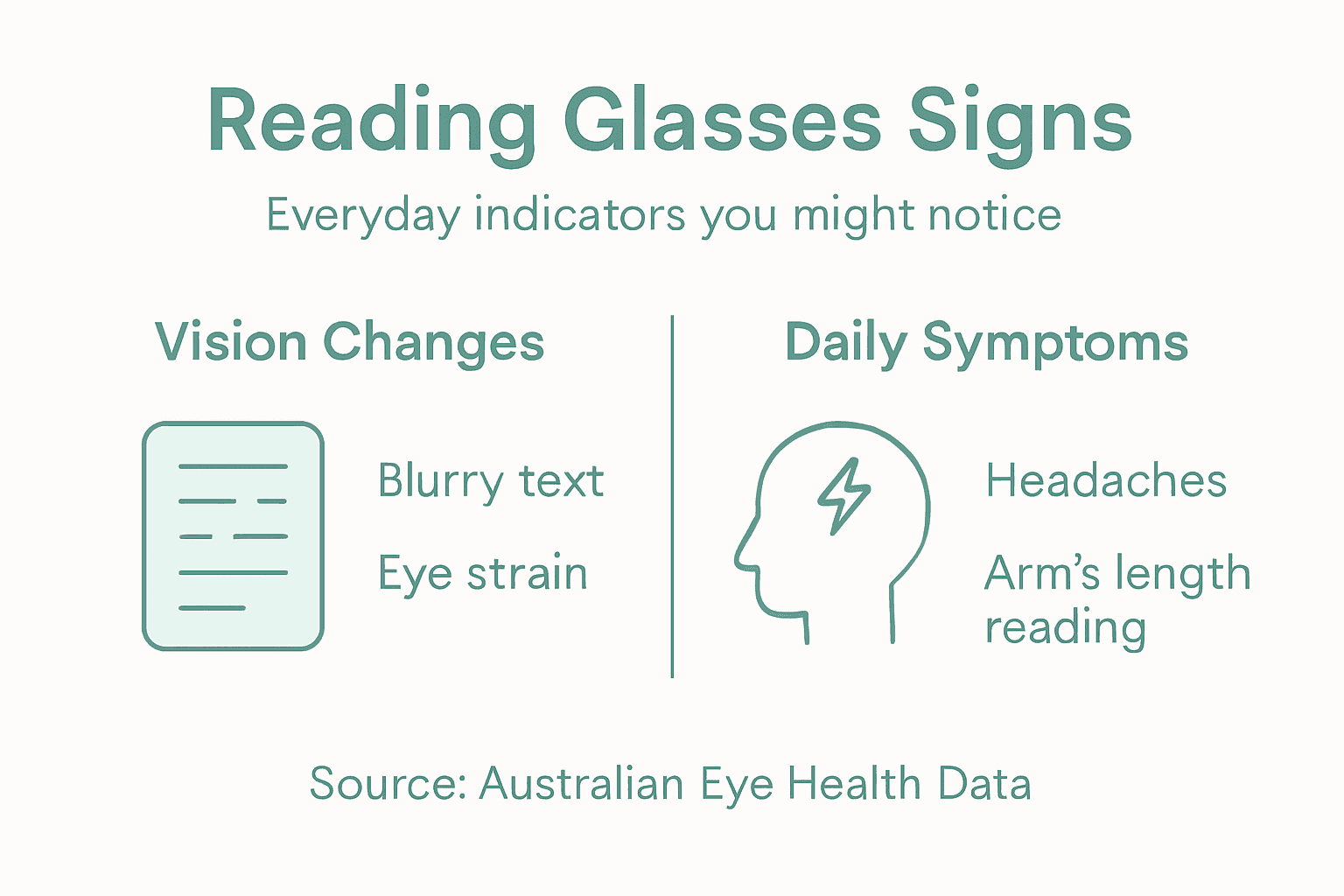
Here are the most common signs that you may need reading glasses:
- Arm’s Length Reading: Consistently holding books, newspapers, or your mobile phone at an extended arm’s length to read clearly
- Squinting and Straining: Frequently squinting or scrunching your eyes to focus on small text
- Digital Device Challenges: Struggling to read text messages, emails, or website content without zooming or adjusting screen brightness
- Persistent Headaches: Experiencing frequent headaches, particularly after reading or performing close-up visual tasks
- Reduced Night Vision: Noticing increased difficulty reading in low-light environments
These symptoms typically indicate presbyopia, a natural age-related vision change that affects most people over 40. When your eyes struggle to focus on close-range objects, reading glasses can provide the necessary visual clarity.

Research suggests that approximately 1 in 3 Australians over 45 experience significant near-vision challenges. These vision changes are progressive and often go unnoticed until daily activities become consistently frustrating. Professional eye examinations can help diagnose and address these issues early.
Pro tip: Consider scheduling an eye test if you’re experiencing multiple vision-related symptoms, as early intervention can prevent long-term discomfort.
Variations in Reading Glasses and Their Uses
Reading glasses aren’t a one-size-fits-all solution. Different visual challenges require specific types of glasses designed to address unique vision needs. Understanding these variations can help you select the most appropriate eyewear for your lifestyle and comfort.
The primary types of reading glasses include:
- Single Vision Reading Glasses: Standard glasses with uniform magnification, ideal for close-up tasks
- Bifocal Glasses: Featuring two distinct lens sections for near and distance vision
- Progressive Lenses: Offering seamless transition between near, intermediate, and distance vision
- Computer Glasses: Specifically designed to reduce digital screen eye strain
- Multifocal Reading Glasses: Providing multiple focal points for versatile visual support
Each glass type serves a specific purpose. Bifocals, for instance, allow wearers to see clearly at both close and distant ranges by incorporating two different prescriptions in a single lens. Reading glasses can be tailored to individual visual requirements, ensuring maximum comfort and functionality.
To help you choose suitable reading glasses, here’s a comparison of lens types and ideal uses:
| Glass Type | Key Benefit | Best For |
|---|---|---|
| Single Vision | Uniform magnification | Reading books and newspapers |
| Bifocal | Two prescriptions in one lens | Switching between tasks |
| Progressive | Smooth transition between focal zones | All-purpose daily activities |
| Computer Glasses | Reduce digital screen eye fatigue | Office or home computer use |
| Multifocal | Multiple focal points | Flexible vision requirements |
Research indicates that Australian adults over 45 increasingly require personalised vision solutions. Factors like occupation, screen time, and specific visual tasks play crucial roles in determining the most suitable reading glasses. Professional eye examinations remain the most reliable method for identifying your precise vision correction needs.
Pro tip: Consider consulting an optometrist to determine the most appropriate reading glasses for your specific lifestyle and visual challenges.
When to Book an Eye Test in Australia
Maintaining optimal eye health requires proactive and strategic approach to scheduling regular eye examinations. For most Australians, the frequency of eye tests depends on age, existing health conditions, and individual risk factors.
Key recommendations for booking eye tests include:
- Adults Aged 40-64: Schedule an eye test every 2-3 years
- Adults Over 65: Annual eye examinations recommended
- People with Diabetes: At least annual comprehensive eye screening
- Family History of Eye Diseases: More frequent testing as advised by healthcare professionals
- Contact Lens Wearers: Annual check-ups to monitor eye health and lens fit
Medicare provides partial coverage for eye tests, making professional eye care more accessible. Professional eye examinations can detect early signs of vision changes before they significantly impact daily life.
Specific health conditions can accelerate vision changes and require more vigilant monitoring. High blood pressure, diabetes, and autoimmune disorders can potentially impact eye health, making regular professional assessments crucial for early intervention and management.
Pro tip: Maintain a personal eye health calendar and set digital reminders for your next scheduled eye examination to ensure consistent monitoring.
Avoiding Eye Strain and Mistakes with Correction
Digital devices have transformed how Australians work and communicate, but prolonged screen time can significantly impact eye health. Understanding and implementing strategies to reduce digital eye strain is crucial for maintaining visual comfort and preventing long-term vision problems.
Key strategies for minimising eye strain include:
- 20-20-20 Rule: Every 20 minutes, look at something 20 feet away for 20 seconds
- Proper Screen Positioning: Keep screens at arm’s length and slightly below eye level
- Correct Lighting: Reduce glare by adjusting screen brightness and room lighting
- Regular Blinking: Consciously blink more to prevent dry eyes
- Ergonomic Workspace: Set up workstations to support natural eye movement
Proper vision correction plays a critical role in managing eye strain. Reading glasses tailored to your specific needs can dramatically reduce visual fatigue by ensuring your eyes don’t overwork during close-up tasks.
Many Australians unknowingly compound eye strain by using incorrect prescription glasses or avoiding necessary vision corrections. Regular eye examinations help identify the right corrective measures, whether that involves updating your current glasses, changing lens coatings, or adopting specific eye care techniques.
Pro tip: Invest in computer glasses with blue light filtering to reduce digital screen-related eye fatigue and improve overall visual comfort.
Discover the Perfect Reading Glasses to Match Your Changing Vision
If you have noticed signs like holding reading material at arm’s length or frequent eye strain you might be experiencing presbyopia and need reading glasses tailored to your needs. The article highlights everyday indicators that many Australians over 40 face as their near vision challenges grow. You deserve clear comfortable vision supported by quality eyewear designed to ease these specific issues.
Explore our elegant collection of Rectangular Reading Glasses and Round Reading Glasses that combine style with function. Every pair is crafted to help reduce eye strain and keep your vision sharp. Take advantage of free shipping across Australia and satisfaction guaranteed offers right now. Visit Ministry of Sight today and find your perfect reading glasses to improve your daily comfort and confidence.
Frequently Asked Questions
What are the signs that indicate I need reading glasses?
Common signs include holding reading material at an arm’s length, squinting to focus on small text, experiencing headaches after close work, and difficulties seeing well in low light.
How does presbyopia affect my vision as I age?
Presbyopia is a natural age-related condition that affects your ability to focus on close objects, making it progressively harder to read and perform tasks that require near vision.
Are there different types of reading glasses available, and how do I choose the right one?
Yes, options include single vision glasses for close tasks, bifocals for both near and distance vision, and progressive lenses for a smooth transition between different focal lengths. Consulting with an optometrist can help determine the best option for your needs.
How can I reduce eye strain when using digital devices?
To minimize eye strain, use the 20-20-20 rule by looking at something 20 feet away for 20 seconds every 20 minutes, ensure proper screen positioning and lighting, blink frequently, and consider using computer glasses that reduce glare and blue light exposure.
Recommended
- Understanding Your Reading Glasses Checklist for Better Vision – ministry of sight
- Understanding What are Reading Glasses and Their Importance – ministry of sight
- Best Reading Glasses for Mature Men – Expert Comparison 2025 – ministry of sight
- Uses for Prescription Reading Glasses in Daily Life – ministry of sight


