

Many believe thicker lenses always mean clearer vision, but this common misconception leads to poor buying decisions. Understanding the main parts of reading glasses—lenses, frames, nose pads, temples, and hinges—empowers you to choose affordable, comfortable, and stylish eyewear. This guide breaks down each component to help Australian consumers make informed decisions that balance quality, style, and value.
Table of Contents
- Introduction To Reading Glasses Anatomy
- Basic Parts Of Reading Glasses
- Material And Design Impact On Comfort And Style
- Common Misconceptions About Reading Glasses Parts
- Maximizing Benefits Using Promotional Offers
- Summary And Practical Buying Tips
- Discover Affordable, Stylish Reading Glasses At Ministry Of Sight
- Frequently Asked Questions
Key Takeaways
| Point | Details |
|---|---|
| Five main components | Reading glasses consist of lenses, frame, nose pads, temples, and hinges that work together for vision and comfort. |
| High-index lens advantage | These lenses deliver equal clarity with 30% thinner profile compared to standard options. |
| Material matters | Frame material and nose pad type directly affect comfort, durability, and skin compatibility. |
| Spring hinges extend life | Spring hinges can increase durability by up to 50% over standard barrel hinges. |
| Smart promotion use | Balancing promotional offers with quality features maximizes value without sacrificing performance. |
Introduction to Reading Glasses Anatomy
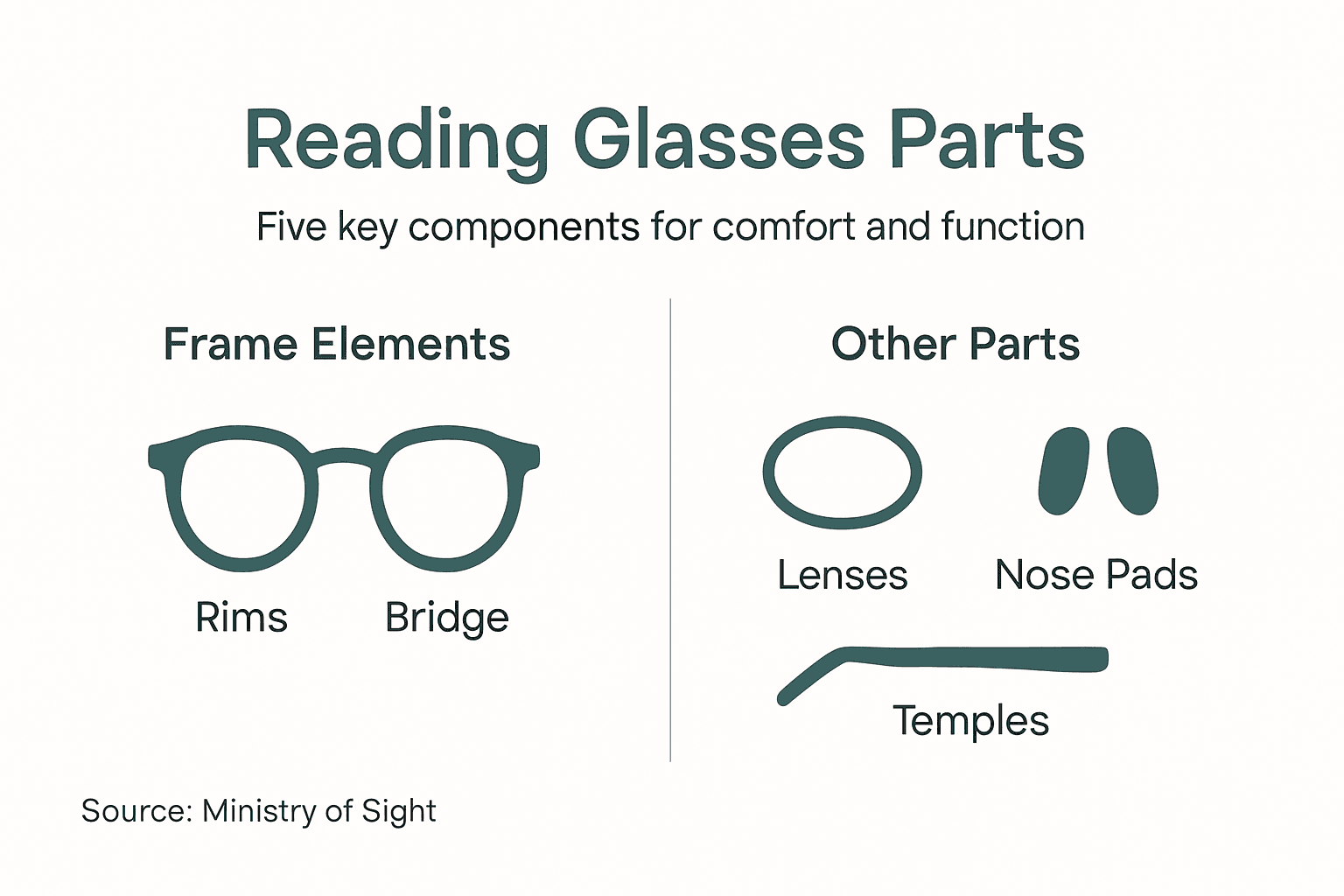
Reading glasses contain five essential components that work together to provide clear near vision and comfortable wear. Each part serves a specific function that contributes to overall effectiveness. Understanding these components helps you make smarter choices when shopping for affordable and stylish options.
The five main parts include:
- Lenses: The optical elements that magnify text and close objects for clear near vision
- Frame: The structural component including rims and bridge that holds lenses and gives shape
- Nose pads: Small cushions that distribute weight and keep glasses positioned correctly
- Temples: The arms that extend over your ears to secure glasses in place
- Hinges: Connection points between frame and temples that provide flexibility and movement
Knowing how these parts function together helps you evaluate quality and comfort features. This knowledge becomes particularly valuable when comparing different models and price points. The parts of reading glasses guide at Ministry of Sight offers detailed insights into selecting the right combination for your needs.
Each component affects your wearing experience differently. Lenses determine vision clarity, frames impact style and durability, nose pads influence comfort during extended wear, temples ensure secure fit, and hinges affect longevity. Making informed decisions about each part leads to better value and satisfaction with your purchase.
Basic Parts of Reading Glasses
Lenses form the foundation of any reading glasses by correcting near vision through magnification. Common lens materials include plastic, polycarbonate, and high-index options that offer varying levels of thickness, weight, and impact resistance. The right lens choice depends on your prescription strength and lifestyle needs.

The frame consists of rims that encircle the lenses and a bridge that connects them across your nose. Frame anatomy plays a crucial role in both structural integrity and aesthetic appeal. Full-rim frames offer maximum durability, while semi-rimless and rimless designs provide lighter weight options.
Nose pads serve as the primary contact points between glasses and your face. These small cushions distribute weight evenly to prevent pressure marks and slipping. Adjustable nose pads allow customization for different nose shapes and bridge widths, significantly improving comfort during long wearing periods.
Temple arms extend from the frame front to rest behind your ears. These components keep glasses securely positioned throughout daily activities. Temple styles vary from straight designs to curved ends that wrap around ears. Some incorporate flexible materials at tips for added comfort and grip.
Hinges connect temples to the frame front, allowing them to open and close smoothly. Quality hinges determine how long your glasses last and how well they maintain proper alignment. The connection point experiences constant stress from daily wear, making hinge durability a critical factor in overall longevity. Understanding how reading glasses work helps you appreciate why each part matters for long-term satisfaction.
Material and Design Impact on Comfort and Style
Frame materials significantly affect comfort, durability, and appearance. Acetate frames offer vibrant colors and patterns with moderate flexibility and hypoallergenic properties. Metal frames provide sleek, professional aesthetics with adjustable nose pads and excellent durability. Plastic frames deliver lightweight, affordable options in numerous styles and colors.
| Material | Pros | Cons |
|---|---|---|
| Acetate | Hypoallergenic, colorful, moderately flexible | Heavier than some alternatives, can warp in heat |
| Metal | Durable, adjustable, professional look | May cause allergies, can feel cold initially |
| Plastic | Lightweight, affordable, style variety | Less durable, limited adjustment options |
Nose pad materials impact grip and comfort levels throughout the day. Silicone pads conform to your nose shape better than hard plastic versions, providing superior comfort and stability. They resist slipping during physical activity and feel softer against skin. Hard plastic pads cost less but may cause pressure points during extended wear.
Temple styles affect how securely glasses stay positioned. Straight temples work well for most face shapes and fit easily under hats. Curved or skull temples wrap around ears for enhanced security during active movement. Some designs incorporate spring-loaded tips that automatically adjust to head width.
Hinge types determine flexibility and lifespan. Standard barrel hinges use small screws to connect parts, offering basic functionality at lower cost. Spring hinges include internal mechanisms that allow temples to flex outward beyond 90 degrees, reducing breakage risk. Rivet hinges provide permanent connections with no moving parts, though they lack adjustability. Understanding reading glasses frame materials helps match your lifestyle needs with the right construction.
Pro Tip: Choose frame materials based on your daily activities. If you work outdoors or lead an active lifestyle, opt for flexible materials like acetate or frames with spring hinges. For office environments, metal frames with adjustable nose pads offer professional appearance and customizable comfort. Always consider skin sensitivity when selecting materials that contact your face directly.
Common Misconceptions about Reading Glasses Parts
Several myths about reading glasses parts lead consumers to make poor purchasing decisions. Clearing up these misconceptions helps you focus on features that truly matter for vision and comfort.
-
Thicker lenses mean clearer vision: Lens thickness relates to prescription strength and material choice, not clarity quality. High-index lenses reduce thickness by 30% while maintaining or improving optical quality. These advanced materials refract light more efficiently, allowing thinner profiles with identical magnification power.
-
Only expensive glasses have adjustable comfort features: Many affordable reading glasses now include adjustable nose pads and spring hinges. Budget-friendly options have improved significantly in recent years. The key is knowing what features to look for rather than assuming price always equals quality.
-
Frame style matters only for fashion: While aesthetics are important, frame design directly impacts functionality. The bridge width affects how glasses sit on your nose, temple length determines secure fit, and frame shape influences your field of view. Choosing based solely on appearance often results in uncomfortable or impractical glasses.
-
All hinges perform equally: Standard barrel hinges work adequately but lack the flexibility and durability of spring mechanisms. Investing in better hinges extends glasses lifespan and reduces maintenance needs. This single component often determines whether glasses last months or years.
-
Nose pads are all the same: Material and adjustability vary widely between models. Fixed plastic pads offer basic functionality, while adjustable silicone versions provide customizable comfort. This small component significantly affects whether you can wear glasses comfortably for extended periods.
“A common misconception is that lens thickness always correlates with reading clarity; however, high-index lenses allow thinner lenses with equal or better magnification, reducing weight by up to 30% while maintaining optical performance.”
Learn to spot quality reading glasses by examining specific components rather than relying on price or brand recognition alone. Focus on tangible features like hinge type, nose pad adjustability, and lens material rather than marketing claims.
Maximizing Benefits Using Promotional Offers
Australian retailers frequently offer promotions that make quality reading glasses more accessible. Common deals include buy-one-get-one offers, free shipping, seasonal sales, and bundle discounts on accessories. These promotions provide excellent opportunities to stock multiple pairs for different situations without exceeding your budget.
Evaluating quality within promotional deals requires attention to specific component details. Check product descriptions for hinge type, with spring hinges indicating better value despite discounted pricing. Verify nose pad adjustability and material composition. Confirm lens material matches your needs, whether standard plastic, polycarbonate, or high-index options.
Key evaluation points when shopping sales:
- Review detailed specifications for frame material and construction quality
- Confirm return policies allow testing comfort and fit at home
- Compare regular prices across retailers to ensure genuine savings
- Check for included accessories like cases or cleaning cloths that add value
- Verify prescription strength accuracy and lens coating options
Pro Tip: Before purchasing during promotional periods, make note of specific features you need based on this guide. Create a checklist including preferred frame material, required nose pad type, and minimum hinge quality. This prevents impulse buying of discounted glasses that lack essential comfort or durability features. Strategic use of promotions means getting premium components at reduced prices, not sacrificing quality for savings.
Balance price considerations with functional requirements. A heavily discounted pair with fixed plastic nose pads may cost less initially but cause discomfort that prevents regular use. Slightly higher-priced options with adjustable features and spring hinges often provide better long-term value through extended wear and durability.
Summary and Practical Buying Tips
The five essential parts of reading glasses each contribute uniquely to your wearing experience. Lenses provide vision correction, frames offer structure and style, nose pads ensure comfortable positioning, temples secure fit, and hinges enable smooth movement and durability. Understanding how these components work together empowers confident purchasing decisions.
When evaluating reading glasses, assess frame materials for your lifestyle needs and skin sensitivity. Metal frames suit professional environments and offer adjustability, while acetate provides colorful options with hypoallergenic properties. Check nose pad type and adjustability, as this small feature dramatically affects comfort during extended wear. Examine hinge construction, with spring mechanisms offering superior durability worth the modest price increase.
Leverage promotional offers strategically by focusing on component quality rather than just price reduction. Verify that discounted glasses include features like adjustable nose pads and quality hinges. Compare specifications across multiple retailers to ensure you receive genuine value. Remember that investing in better components upfront reduces replacement costs and improves daily comfort.
Key evaluation points at purchase:
- Confirm lens material matches your prescription strength and weight preferences
- Test nose pad comfort and verify adjustability for your nose bridge width
- Check temple length and curvature for secure, comfortable fit behind ears
- Examine hinge type and flex range to assess durability expectations
- Review frame construction quality through material composition and finish
- Verify prescription accuracy and lens coating options for your needs
Make balanced decisions that consider your specific requirements alongside budget constraints. The goal is finding glasses that you will wear consistently because they feel comfortable and suit your lifestyle. Choosing glasses frames involves evaluating multiple factors simultaneously, but understanding each component simplifies the process significantly. Quality reading glasses combine well-designed parts with proper fitting to deliver clear vision and lasting comfort.
Discover Affordable, Stylish Reading Glasses at Ministry of Sight
Now that you understand what makes quality reading glasses, explore Ministry of Sight’s curated collection designed for Australian consumers seeking both style and value. The range features frames with adjustable nose pads, durable spring hinges, and high-index lens options that deliver the 30% thinner profile discussed earlier.

Take advantage of ongoing promotions including free shipping across Australia and seasonal sales that make premium features accessible. Browse the fashionable reading glasses guide to find styles that match your personal aesthetic while incorporating the functional components you need. The eyewear styles explained resource helps narrow choices based on face shape and lifestyle requirements. Check the current summer sale on reading glasses for exceptional deals on quality frames with the features covered in this guide.
Frequently Asked Questions
What are the main parts of reading glasses?
Reading glasses comprise five key components that work together for vision and comfort. The lenses correct near vision, the frame provides structure, nose pads distribute weight, temples secure positioning, and hinges connect moving parts. Each element affects your overall wearing experience and should be evaluated when selecting new glasses.
How do adjustable nose pads improve comfort?
Adjustable nose pads let you customize fit to reduce slippage and eliminate pressure points on your nose bridge. Silicone pads provide better grip and softer feel than fixed plastic versions, especially during extended wearing periods. This adjustability accommodates different nose shapes and bridge widths for personalized comfort.
What hinge type lasts longest in reading glasses?
Spring hinges extend lifespan by up to 50% compared to standard barrel hinges through built-in flexibility. They allow temples to flex outward beyond normal range without breaking, reducing stress on connection points. This design feature proves particularly valuable if you frequently remove and replace glasses throughout the day.
Does lens thickness affect vision clarity?
Lens thickness is not a reliable indicator of clarity, as high-index lenses provide thinner profiles with equal or superior optical performance. These advanced materials refract light more efficiently, allowing comfortable glasses without compromising magnification power. Thickness primarily relates to prescription strength and material choice rather than vision quality.
Can I find quality features in affordable reading glasses?
Yes, many budget-friendly options now include adjustable nose pads, spring hinges, and quality frame materials. The key is knowing which specific features to look for and checking product specifications carefully. Strategic use of promotional offers allows you to access premium components at reduced prices without sacrificing comfort or durability.


